
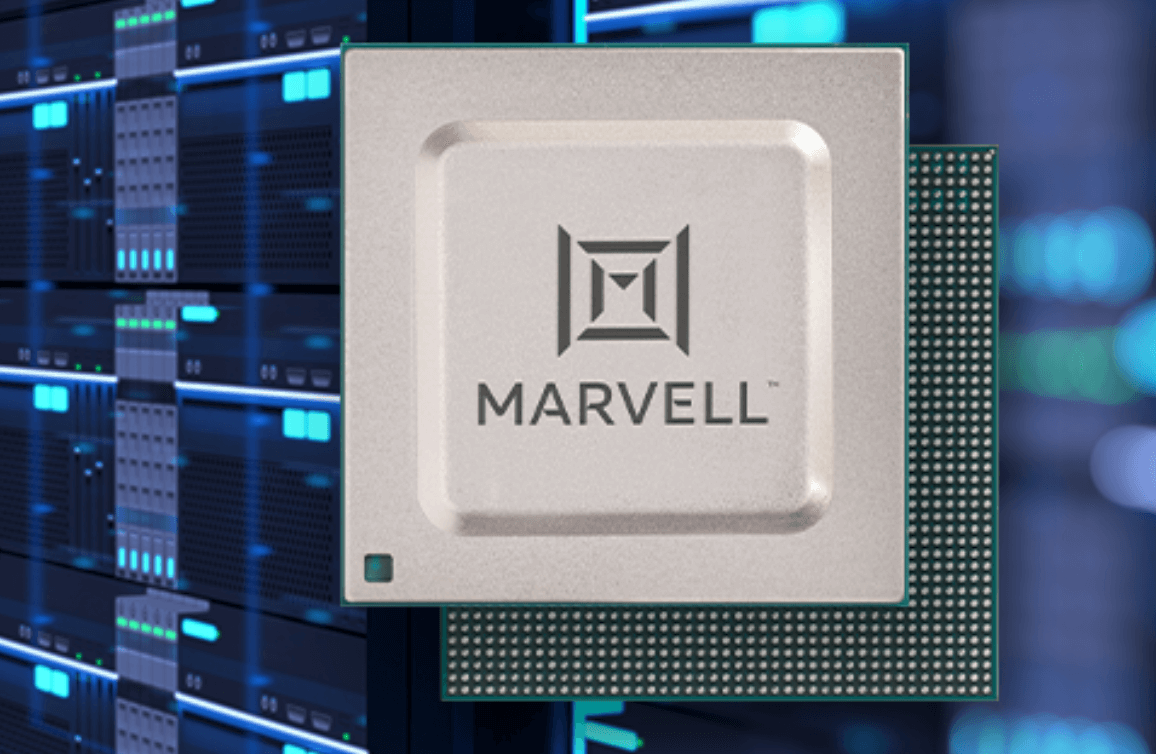
Marvell Technology has agreed to acquire XConn Technologies in a transaction valued at approximately $540 million, strengthening its position in PCIe and CXL switching for AI data center infrastructure. The deal, structured as roughly 60% cash and 40% stock, is expected to close in early calendar 2026, subject to regulatory approvals and customary closing conditions.
Marvell said the acquisition adds XConn’s PCIe and CXL switching silicon portfolio to its existing connectivity offerings and expands its Ultra Accelerator Link (UALink) scale-up switch engineering team. As AI platforms evolve from single-rack systems to multi-rack configurations, Marvell is targeting demand for ultra-low-latency, high-bandwidth fabrics that enable efficient scale-up connectivity across large accelerator clusters.
XConn is currently engaged with more than 20 customers. Its PCIe 5 and CXL 2.0 switches are in production, while PCIe 6 and CXL 3.1 products are sampling. Marvell expects XConn’s products to begin contributing revenue in the second half of fiscal 2027 and projects approximately $100 million in revenue in fiscal 2028, at which point the business is expected to be accretive to non-GAAP earnings.
- Transaction value: ~$540 million, ~60% cash / ~40% stock
- Close timing: Expected early calendar 2026
- Product status: PCIe 5 + CXL 2.0 in production; PCIe 6 + CXL 3.1 sampling
- Customer traction: More than 20 customers engaged
- Financial outlook: Revenue contribution starting 2H FY2027; ~$100M projected in FY2028
“At XConn we have built the industry’s highest-port-count advanced PCIe 5 and PCIe 6 switching portfolio to support the next generation of accelerated infrastructure,” said Gerry Fan, CEO of XConn. “Marvell brings cutting-edge SerDes technology, a leading process roadmap, deep hyperscale customer relationships, and global scale.”
🌐 Analysis: XConn Technologies is based in San Jose, California, and was founded in 2020. The company was established by Gerry Fan, who previously held senior engineering and leadership roles in high-performance interconnect silicon, most notably at Broadcom, including during the era of PLX Technology–derived PCIe switching platforms. That background shaped XConn’s early focus on merchant PCIe switching as a foundational building block for next-generation data center systems.
XConn has described itself as privately funded and has not publicly disclosed total venture funding amounts or a full investor list. Industry tracking services consistently characterize the company as well capitalized, with at least one institutional investor reported, but no formal round sizes or dates have been announced. Rather than frequent funding announcements, XConn’s public visibility has centered on product milestones, ecosystem demos, and standards engagement. These include early delivery of a hybrid PCIe/CXL switch supporting both protocols on a single device, public demonstrations of CXL 2.0 composable memory with partners such as Liqid, and more recent interoperability work aligned with CXL 3.1 use cases.
Beyond Fan, XConn assembled a technical team drawn largely from established interconnect and switch silicon vendors, with deep experience in PCIe, memory fabrics, and high-port-count switch architectures. While individual executives beyond the CEO have kept a low public profile, Marvell explicitly cited the acquisition as a way to add “highly experienced engineering talent with deep domain expertise in high-performance switching,” underscoring that people and IP were central to the deal.
For Marvell, the acquisition fits into a broader push to position PCIe and CXL not just as peripheral I/O technologies but as core fabrics for AI scale-up systems. Marvell has been investing heavily in advanced SerDes, coherent interconnects, and UALink, and the addition of XConn gives it in-house PCIe and CXL switching silicon to pair with its existing connectivity and memory-expansion controllers. Together with Marvell’s pending Celestial AI acquisition, the move signals a strategy to cover multiple layers of AI system interconnect—from chip-to-chip links inside racks to multi-rack scale-up fabrics.
🌐 We’re tracking the latest developments in networking silicon. Follow our ongoing coverage at:
https://convergedigest.com/category/semiconductors