


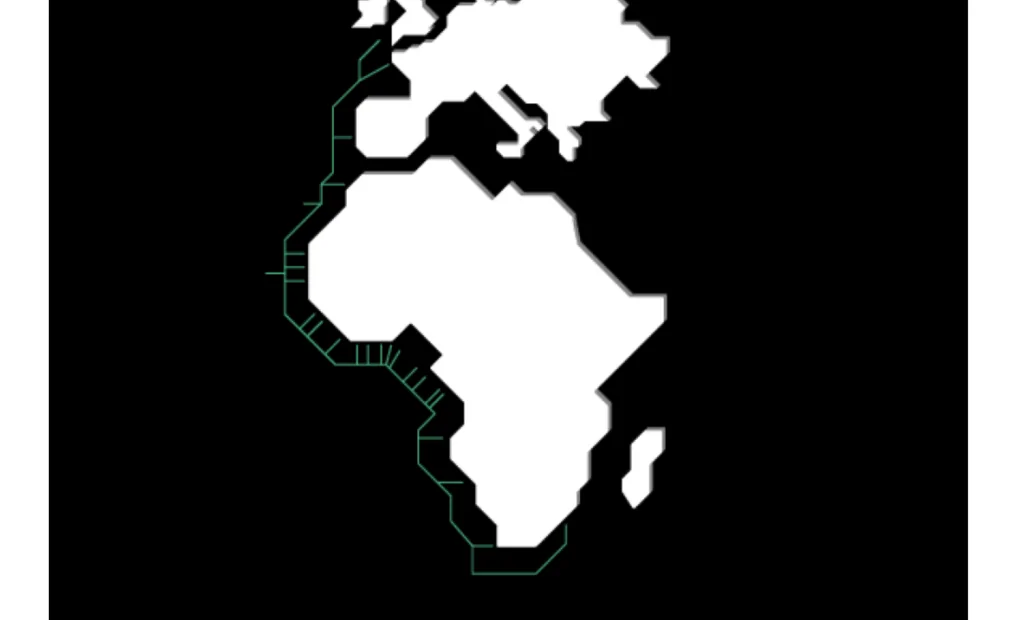
A new Atlantic subsea cable initiative aims to reshape digital connectivity between Europe and Africa by adding a fresh high-capacity route designed to improve resilience, sovereignty, and international bandwidth diversity across West Africa.
A consortium including Canalink, GUILAB, International Mauritania Telecom, Orange Group, Orange Côte d’Ivoire, Sonatel, and Silverlinks signed an MoU to launch Via Africa, a submarine cable project that would connect Europe to South Africa along the Atlantic coastline. The planned system includes landing points in the United Kingdom, France, and Portugal, with additional connections through the Canary Islands, Mauritania, Senegal, Guinea, Côte d’Ivoire, and Nigeria, plus further southern extensions.
The consortium said the project addresses growing demand for international bandwidth and improved network resilience across Africa. Via Africa is designed as an open cable system using a consortium governance model that allows participating operators and digital infrastructure players to co-invest in the infrastructure and directly participate in strategic decisions covering system design, deployment, and operations. The structure also leaves the door open for additional partners to join the initiative.
The project has now entered its initial development phase. Consortium members will jointly fund a cable route study intended to identify the optimal balance between resilience, technical feasibility, and economic efficiency. In parallel, the group is preparing a procurement process to select a cable supplier for the system.
- Project name: Via Africa
- Status: MoU signed; route study and supplier procurement planning underway
- Planned route: Europe to South Africa along the Atlantic coast
- European landing targets: United Kingdom, France, Portugal
- African/Atlantic landing targets: Canary Islands, Mauritania, Senegal, Guinea, Côte d’Ivoire, Nigeria, with additional southern extensions
- Consortium members: Canalink, GUILAB, International Mauritania Telecom, Orange Group, Orange Côte d’Ivoire, Sonatel, Silverlinks
- Strategic focus: Connectivity diversity, subsea resilience, and international bandwidth expansion for Africa
“The Via Africa system is managed as a consortium, enabling participating partners seeking autonomy and sovereignty to co-invest in the infrastructure and take part in its governance.”
🌐 Analysis: Via Africa reflects the continuing expansion of subsea infrastructure investment focused on Africa’s Atlantic corridor, where operators increasingly prioritize route diversity and resilience alongside raw capacity growth. The project also aligns with a broader industry trend toward consortium-led cable systems that give regional operators greater ownership and governance participation instead of relying exclusively on hyperscaler-led deployments.
🌐 We’re tracking the latest developments in subsea cable infrastructure, policy, and deployments. Follow our ongoing coverage at: https://convergedigest.com/category/subsea/Major Subsea Cable Systems Reaching Africa (2014–2026)
Timeline includes major subsea cable systems that have reached Africa or are currently in deployment and expansion phases.
| Cable | Status | Key African Landings |
|---|---|---|
| ACE |
2012+ Operational |
Mauritania, Senegal, Côte d’Ivoire, Ghana, Nigeria, Angola, South Africa |
| DARE1 |
2021 Operational |
Djibouti, Bosaso, Mogadishu, Mombasa |
| PEACE |
2022 Operational |
Egypt, Djibouti, Somalia, Kenya, Seychelles |
| Equiano |
2022–2023 Operational |
South Africa, Namibia, Nigeria, Togo |
| 2Africa |
2025–2026 Finalizing |
South Africa, Angola, Nigeria, Ghana, Senegal, Morocco, Kenya, Djibouti, Egypt and others |
| Medusa |
2025–2026 Rolling Deployment |
Morocco, Algeria, Tunisia, Egypt, Guinea |
| Via Africa |
May 2026 MoU In Development |
Planned landings in Mauritania, Senegal, Guinea, Côte d’Ivoire, Nigeria and South Africa |