


LAS VEGAS — Quantum computing is steadily moving from experimental physics laboratories into mainstream scientific computing environments, but researchers at leading U.S. research institutions say its future lies in close integration with high-performance computing (HPC) and artificial intelligence rather than as a standalone technology.
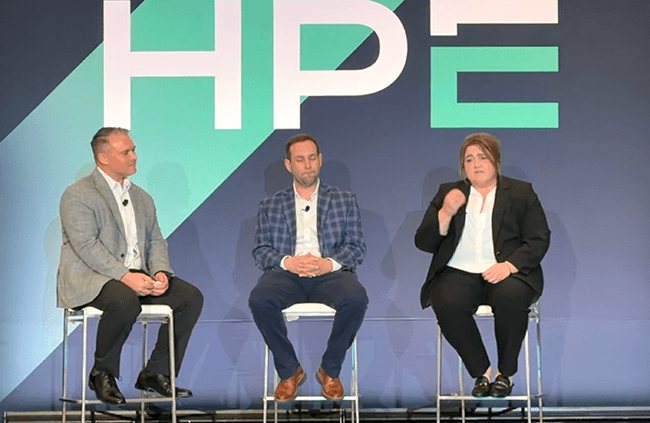
Speaking at HPE Discover last week during a panel titled “Quantum Leap: Insights from Scientific Lab Pioneers,”representatives from the Argonne National Laboratory and the Pittsburgh Supercomputing Center described quantum computing as an emerging component of a broader computational ecosystem that will increasingly combine classical supercomputing, AI, and quantum resources.
Laura Schulz, who leads quantum integration efforts at Argonne, said the challenge is no longer simply building quantum hardware. National laboratories are now focused on integrating quantum systems into production HPC environments, creating software stacks, scheduling systems, security frameworks, data management tools, and operational models that allow scientists to use quantum resources alongside traditional supercomputers.
“We want to build abstraction layers that remove the necessity of being a PhD physicist to operate these systems,” Schulz explained. “Quantum computing has to become part of a continuum rather than a separate environment.”

The panel highlighted the growing complexity of quantum infrastructure. Unlike conventional HPC systems, many quantum platforms require specialized facilities, including cryogenic cooling systems, helium and nitrogen support, and highly controlled operating environments. Researchers must also contend with a rapidly evolving hardware landscape that includes multiple qubit modalities—including superconducting, trapped-ion, neutral atom, and photonic architectures—each offering different tradeoffs in performance, scalability, and operational requirements.
Bruno Abreu noted that supercomputing centers face a difficult balancing act: supporting multiple quantum technologies while avoiding overcommitment to any single platform. Instead, centers are increasingly focusing on developing expertise, access frameworks, and integration capabilities that allow researchers to utilize the most appropriate quantum resource for a given problem.
Both speakers emphasized that the most promising near-term applications involve hybrid workflows that combine classical HPC simulations with quantum processing. Areas such as materials science, chemistry, pharmaceutical research, molecular modeling, and biological simulations were identified as early candidates where quantum systems could accelerate or enhance portions of larger computational workflows.
Rather than focusing solely on the often-discussed concept of “quantum advantage” over classical supercomputers, the panelists suggested a broader definition. Quantum systems may first demonstrate value by enabling new types of scientific inquiry or improving the fidelity of simulations that are currently approximated using classical methods.
The discussion also explored the growing convergence of AI and quantum computing. AI is increasingly being used to optimize quantum operations, improve circuit design, reduce the effects of hardware noise, and automate system operations. Researchers are also investigating AI-driven predictive maintenance and telemetry systems to improve the reliability and utilization of quantum infrastructure.
Panelists argued that the long-term vision is not an HPC environment, an AI environment, and a separate quantum environment, but a unified computing architecture capable of orchestrating workloads across all three domains. That integration challenge is creating a growing role for system integrators and infrastructure providers such as Hewlett Packard Enterprise, which are helping research institutions connect quantum resources into broader computational ecosystems.
🌐 Analysis The most significant takeaway from the discussion was the shift away from viewing quantum computing as a future replacement for supercomputers. Instead, national laboratories increasingly see quantum as another accelerator within a heterogeneous computing stack.
The panel also underscored an important reality often overlooked in industry announcements: operational integration may be as difficult as advancing quantum hardware itself. Scheduling, resource management, networking, security, data movement, telemetry, and orchestration all remain major research challenges.
Another notable theme was the growing influence of AI on quantum development. While much public attention focuses on AI versus quantum computing, researchers increasingly view the technologies as complementary. AI is already being applied to quantum system operations, noise mitigation, circuit optimization, and algorithm development, creating a feedback loop that could accelerate progress in both fields.
Perhaps most importantly, both panelists expressed confidence that quantum computing will ultimately deliver practical value, though neither attempted to predict a specific timeline. Instead, they argued that the focus should be on building the infrastructure, software environments, and user communities necessary to ensure that when quantum hardware reaches critical performance thresholds, scientists will be ready to use it.