


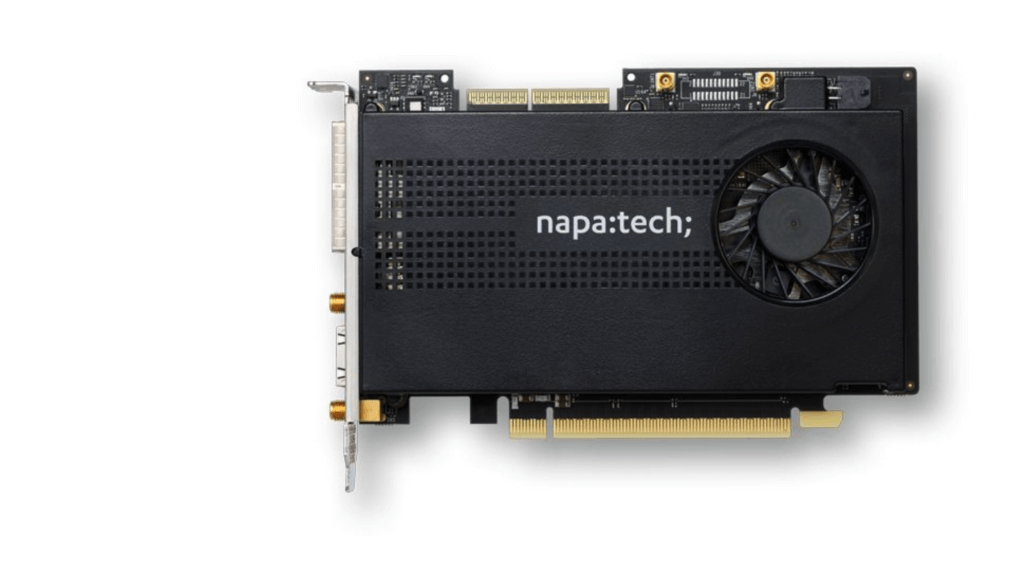
Napatech announced a multi-year design win with a tier-1 global financial institution, expanding its footprint in latency-sensitive core infrastructure environments. The agreement is expected to exceed $3 million over two years, with $1.5 million scheduled for 2026, reinforcing the company’s position in high-performance networking for financial services.
The deployment centers on Napatech’s NT400 SmartNIC, which targets ultra-low latency and deterministic performance at 400G. The platform integrates programmable hardware and software to support application-aware packet processing, a requirement for trading, market data distribution, and other time-sensitive financial workloads. The company said the win adds to a base of more than 50 fintech customers, including exchanges, trading firms, and banks.
Napatech continues to position its programmable NIC portfolio across both core infrastructure and emerging AI infrastructure use cases. While AI workloads drive significant investment in accelerated computing, the company highlights ongoing demand in financial systems where deterministic packet handling and predictable latency remain critical to operational performance.
- Multi-year design win with tier-1 global financial institution
- Contract value expected to exceed $3 million over two years
- $1.5 million revenue contribution anticipated in 2026
- Deployment based on NT400 SmartNIC with 400G deterministic performance
- Focus on ultra-low latency, application-aware packet processing
- Expands footprint across more than 50 global fintech customers
- No change to full-year 2026 financial guidance
“This design win reflects the growing demand for deterministic performance in Core Infrastructure environments,” said Kartik Srinivasan, Chief Executive Officer of Napatech. “Financial institutions push the limits of latency and determinism, and our platform is designed to meet those requirements.”
🌐 Analysis: Napatech’s win underscores a persistent segment of the infrastructure market where latency determinism—not just raw throughput—remains the primary differentiator. Financial trading environments continue to invest in specialized SmartNIC and DPU architectures even as hyperscale AI infrastructure dominates broader silicon demand.
🌐 Analysis: The deal also highlights how vendors like Napatech compete alongside larger ecosystem players such as NVIDIA, AMD, and Intel by focusing on niche, high-value workloads. As AI infrastructure evolves, similar programmable data path technologies may converge across fintech and AI clusters, particularly in areas requiring real-time data ingestion and processing.