


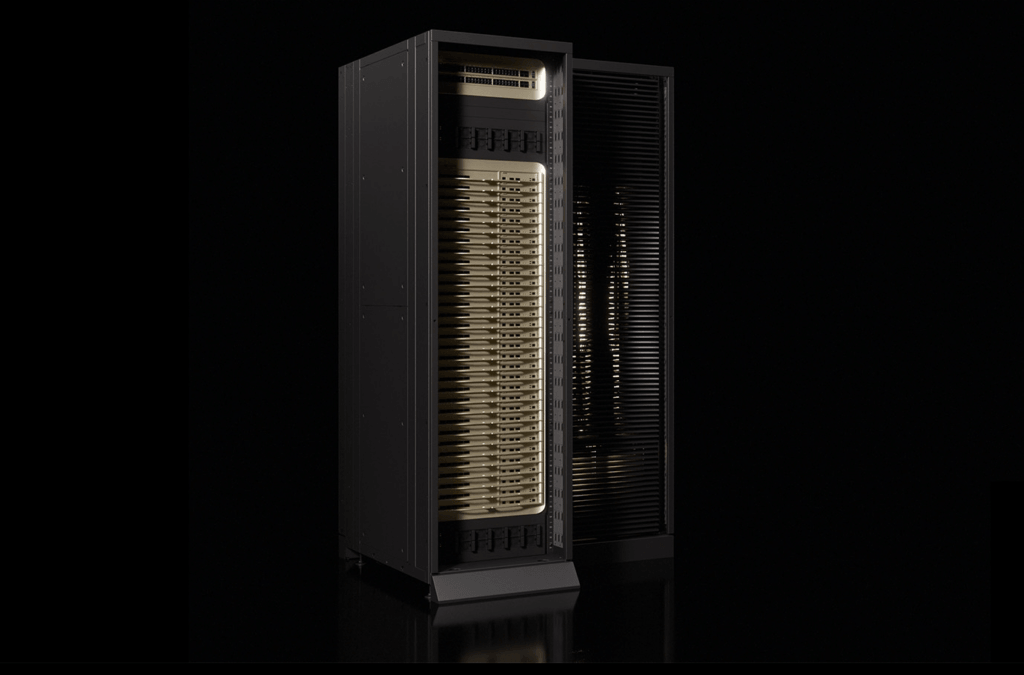
NVIDIA introduced its Vera Rubin DSX AI Factory reference design and made its Omniverse DSX Blueprint generally available, positioning both as foundational frameworks for building large-scale, energy-optimized AI infrastructure. Announced at GTC 2026, the DSX architecture defines a codesigned approach that integrates compute, networking, storage, power, and cooling to maximize tokens per watt while accelerating time to production for AI factories.
The DSX reference design extends beyond hardware to include a modular software stack that connects IT infrastructure with operational systems such as power grids and cooling plants. Components including DSX Max-Q, DSX Flex, DSX Exchange, and DSX Sim enable operators to optimize compute efficiency under fixed power budgets, dynamically orchestrate energy usage, and validate full-system designs through high-fidelity digital twins. NVIDIA positions this approach as critical for scaling AI infrastructure amid growing constraints around power availability, thermal management, and system complexity.
In parallel, the Omniverse DSX Blueprint provides a unified digital twin environment for simulating AI factory design and operations. Built on NVIDIA Omniverse, the platform enables real-time modeling of layouts, thermal dynamics, power distribution, and workload behavior prior to physical deployment. A broad ecosystem of partners—including Cadence, Dassault Systèmes, Schneider Electric, Siemens, Vertiv, and Jacobs—are integrating simulation tools, infrastructure models, and lifecycle management platforms to create interoperable, simulation-ready environments for AI factory planning and optimization.
- Vera Rubin DSX defines a full-stack AI factory architecture spanning compute, Spectrum-X Ethernet networking, storage, power, and cooling
- DSX Max-Q optimizes token throughput per watt within fixed power envelopes
- DSX Flex enables dynamic interaction with power grids and hybrid energy sources
- DSX Exchange integrates telemetry across IT and operational systems for coordinated control
- DSX Sim and SimReady assets enable high-fidelity digital twin validation before deployment
- Omniverse DSX Blueprint supports real-time simulation of thermal, electrical, and operational behavior
- Ecosystem partners provide simulation models, infrastructure assets, and lifecycle tools for end-to-end AI factory design
- Energy providers including GE Vernova, Hitachi, Siemens Energy, and Emerald AI are aligning grid and AI infrastructure planning
- Early deployments include multi-gigawatt AI factory projects such as Nscale’s West Virginia campus
“In the age of AI, intelligence tokens are the new currency, and AI factories are the infrastructure that generates them. With the NVIDIA Vera Rubin DSX AI Factory reference design and Omniverse DSX Blueprint, we are providing the foundation to build the world’s most productive AI factories, accelerating time to first revenue and maximizing scale and energy efficiency,” said Jensen Huang, founder and CEO of NVIDIA.
NVIDIA introduced its Vera Rubin DSX AI Factory reference design and made its Omniverse DSX Blueprint generally available, positioning both as foundational frameworks for building large-scale, energy-optimized AI infrastructure. Announced at GTC 2026, the DSX architecture defines a codesigned approach that integrates compute, networking, storage, power, and cooling to maximize tokens per watt while accelerating time to production for AI factories.
The DSX reference design extends beyond hardware to include a modular software stack that connects IT infrastructure with operational systems such as power grids and cooling plants. Components including DSX Max-Q, DSX Flex, DSX Exchange, and DSX Sim enable operators to optimize compute efficiency under fixed power budgets, dynamically orchestrate energy usage, and validate full-system designs through high-fidelity digital twins. NVIDIA positions this approach as critical for scaling AI infrastructure amid growing constraints around power availability, thermal management, and system complexity.
In parallel, the Omniverse DSX Blueprint provides a unified digital twin environment for simulating AI factory design and operations. Built on NVIDIA Omniverse, the platform enables real-time modeling of layouts, thermal dynamics, power distribution, and workload behavior prior to physical deployment. A broad ecosystem of partners—including Cadence, Dassault Systèmes, Schneider Electric, Siemens, Vertiv, and Jacobs—are integrating simulation tools, infrastructure models, and lifecycle management platforms to create interoperable, simulation-ready environments for AI factory planning and optimization.
- Vera Rubin DSX defines a full-stack AI factory architecture spanning compute, Spectrum-X Ethernet networking, storage, power, and cooling
- DSX Max-Q optimizes token throughput per watt within fixed power envelopes
- DSX Flex enables dynamic interaction with power grids and hybrid energy sources
- DSX Exchange integrates telemetry across IT and operational systems for coordinated control
- DSX Sim and SimReady assets enable high-fidelity digital twin validation before deployment
- Omniverse DSX Blueprint supports real-time simulation of thermal, electrical, and operational behavior
- Ecosystem partners provide simulation models, infrastructure assets, and lifecycle tools for end-to-end AI factory design
- Energy providers including GE Vernova, Hitachi, Siemens Energy, and Emerald AI are aligning grid and AI infrastructure planning
- Early deployments include multi-gigawatt AI factory projects such as Nscale’s West Virginia campus
“In the age of AI, intelligence tokens are the new currency, and AI factories are the infrastructure that generates them. With the NVIDIA Vera Rubin DSX AI Factory reference design and Omniverse DSX Blueprint, we are providing the foundation to build the world’s most productive AI factories, accelerating time to first revenue and maximizing scale and energy efficiency,” said Jensen Huang, founder and CEO of NVIDIA.
🌐 Analysis: NVIDIA continues to extend its control beyond silicon into full-stack AI infrastructure design, similar to earlier moves with DGX and NVL systems but now expanded to include power, cooling, and grid orchestration. This positions DSX as a competitive blueprint against emerging AI factory initiatives from hyperscalers and infrastructure providers, while reinforcing NVIDIA’s role as the central architect of next-generation AI data center ecosystems.🌐 Analysis: NVIDIA continues to extend its control beyond silicon into full-stack AI infrastructure design, similar to earlier moves with DGX and NVL systems but now expanded to include power, cooling, and grid orchestration. This positions DSX as a competitive blueprint against emerging AI factory initiatives from hyperscalers and infrastructure providers, while reinforcing NVIDIA’s role as the central architect of next-generation AI data center ecosystems.