


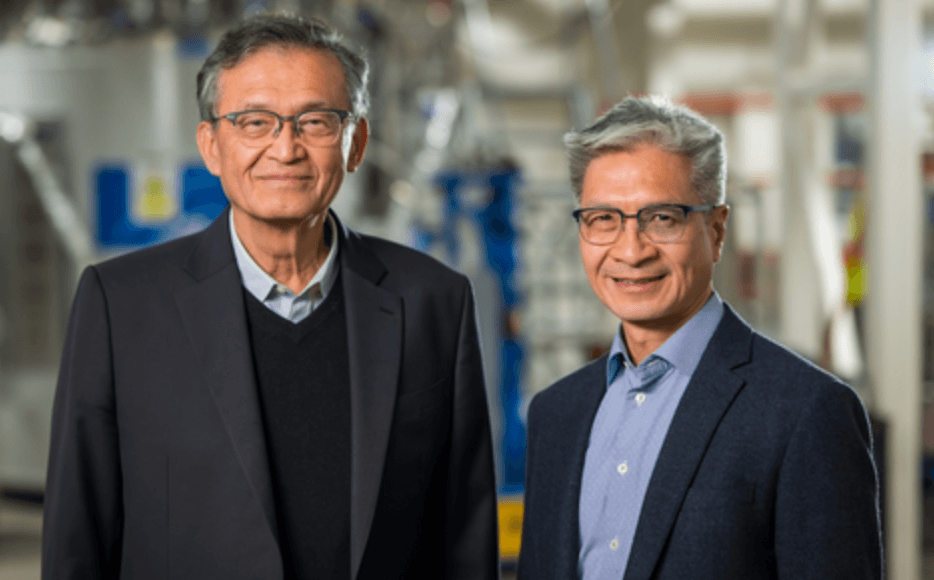
PsiQuantum named Lip-Bu Tan to its board of directors, strengthening its ties to the semiconductor ecosystem as it advances toward utility-scale quantum computing systems. Tan currently serves as CEO of Intel Corporation and brings decades of experience spanning chip design, EDA, and venture investment. His appointment comes at a pivotal stage as PsiQuantum scales its silicon photonics-based architecture for fault-tolerant quantum computing.
Tan previously led Cadence Design Systems as CEO, where he helped expand its leadership in electronic design automation, a critical layer in modern semiconductor development. He also serves as Chairman of Walden International and has played a key role as an investor and board member across the global semiconductor landscape. PsiQuantum positions his expertise in advanced manufacturing, ecosystem development, and high-performance computing as directly aligned with its strategy to leverage existing chip fabrication infrastructure.
The appointment follows leadership changes at PsiQuantum, including Victor Peng as interim CEO and co-founder Jeremy O’Brien transitioning to executive chairman. Peng previously served as CEO of Xilinx and president at Advanced Micro Devices, bringing additional semiconductor industry depth to the company’s leadership team. PsiQuantum continues to pursue large-scale deployments in the U.S., Australia, and the U.K., including projects in Chicago and Brisbane.
- Board addition signals deeper alignment with global semiconductor manufacturing and design ecosystems
- Reinforces PsiQuantum’s strategy to build fault-tolerant quantum systems using silicon photonics and existing fabs
- Leadership bench now includes executives from Intel, AMD, Xilinx, and Cadence backgrounds
- Focus remains on utility-scale quantum computing targeting chemistry, materials science, and energy applications
- Ongoing infrastructure projects span multiple geographies with government and industry partnerships
“I’ve known the PsiQuantum team for many years as an investor and have followed their progress closely as they’ve built one of the most compelling and differentiated approaches in quantum computing,” said Lip-Bu Tan.
🌐 Analysis: PsiQuantum continues to position itself as the leading proponent of a semiconductor-first approach to quantum computing, in contrast to competitors pursuing trapped ions or superconducting qubits. By adding Lip-Bu Tan—one of the most influential figures in semiconductor design and venture ecosystems—the company strengthens its credibility with foundry partners and large-scale manufacturing stakeholders, which will be critical as quantum systems move from lab-scale prototypes to industrial deployment.
🌐 Analysis: The move also aligns with broader industry momentum toward photonics-based interconnects and compute architectures, where companies such as NVIDIA, Intel Corporation, and IBM are increasing investments. PsiQuantum’s emphasis on leveraging CMOS-compatible processes could provide a scaling advantage if it successfully demonstrates fault tolerance at commercially relevant qubit counts.
| Profile: PsiQuantum | |
|---|---|
| Headquarters | Palo Alto, California, USA |
| Founded | 2016 |
| Founders |
Jeremy O’Brien (quantum physicist; former University of Bristol professor) Mark Thompson (silicon photonics expert; University of Bristol) Terry Rudolph (quantum computing theorist; Imperial College London) Pete Shadbolt (quantum photonics researcher; former University of Bristol) |
| Leadership (2026) |
Victor Peng – Interim CEO (former CEO of Xilinx; former AMD President) Jeremy O’Brien – Executive Chairman Lip-Bu Tan – Board Member (CEO of Intel) |
| Core Technology | Silicon photonics–based quantum computing platform using photons as qubits, leveraging CMOS semiconductor manufacturing and integrated photonic circuits |
| Architecture Approach | Fault-tolerant quantum computing from the outset using photonic qubits, quantum error correction, and a modular, scalable system design |
| Manufacturing Strategy | Partnership with global semiconductor foundries (including GlobalFoundries) to fabricate photonic chips at scale using established high-volume processes |
| Product Roadmap | Development of utility-scale, fault-tolerant quantum computers with millions of physical qubits; focus on commercially relevant applications in chemistry, materials science, and energy |
| System Design | Modular architecture enabling incremental scaling via upgrades to photonic chips, interconnects, and cryogenic subsystems |
| Major Projects |
Chicago, USA – Quantum computing facility (Illinois Quantum & Microelectronics Park) Brisbane, Australia – Utility-scale quantum computing project with Queensland Government United Kingdom – Ongoing R&D and national quantum initiatives |
| Key Milestones |
2021 – Partnership announced with GlobalFoundries for photonic chip manufacturing 2023–2024 – Secured large-scale government-backed quantum projects (U.S. and Australia) 2025 – Leadership transition; Victor Peng appointed Interim CEO 2026 – Lip-Bu Tan joins Board of Directors |
| Funding | Raised over $700 million from investors including BlackRock, Microsoft’s M12, Temasek, Atomico, and others (latest publicly disclosed figures) |
| Competitive Positioning | Differentiated by photonic qubits and a semiconductor manufacturing approach, contrasted with superconducting (IBM, Google) and trapped-ion (IonQ) systems |
| Target Applications | Drug discovery, advanced materials, energy optimization, and large-scale simulation problems beyond classical computing limits |