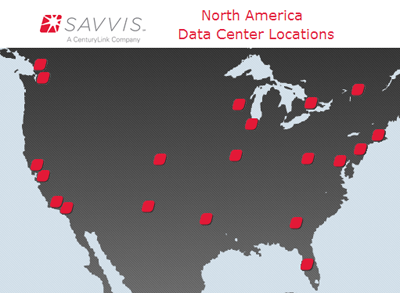
Savvis announced plans to open a new data center in the Minneapolis-St. Paul area in spring 2014.
MN2 will serve as the Minneapolis area’s first multitenant Tier III data center to receive certification from both the Uptime Institute and the U.S. Green Building Institute’s Leadership in Energy & Environmental Design. It will be built to support 4.8 megawatts of IT load on 100,000 square feet of raised floor space. Savvis plans to with an initial 1.2 megawatts and 13,000 square feet of raised floor space.
“We are investing in technology infrastructure that allows our diverse business community to continue to grow and innovate,” said Duane Ring, CenturyLink Midwest region president. “We’re pleased to announce the first phase of development for this new data center and look forward to the opportunities this creates for businesses in the Twin Cities and around the world.”
Compass Datacenters will develop the data center on 10 acres of property it owns in Shakopee, Minn., a Minneapolis suburb, and lease the facility to Savvis.
Every article published by Converge Digest is researched, curated, fact-checked and editorially reviewed by Jim Carroll, Editor & Publisher. AI-assisted drafting may be used to accelerate production, but all content is reviewed, refined and approved prior to publication.
You just read about CenturyLink. One of the companies whose work it now carries:
Level 3 Communications built Global fiber backbone, IP transit and enterprise carrier. What became of it?
Level 3 Communications brought Global fiber backbone, IP transit and enterprise carrier to Telecom. That work was distinctive enough to lead to its acquisition by CenturyLink for US$34B. The standalone name now passes into the archive — but the team and technology continue inside CenturyLink today. One of 430 names here whose work outlived the company.
You just read about All. A technology from the archive that helped get us here:
Google/Alphabet Project Loon served 2011–2021. What ultimately replaced it?
Google/Alphabet Project Loon solar-powered balloons drifting in the stratosphere (~20 km), steering by rising and falling into different wind layers, relaying LTE from ground stations to phones far below. Its job passed to Unit economics — but the problem it solved, and the ideas it proved, live on in what replaced it. The standard rests here in the archive. One of 198 technologies here that opened a door and then held it for the next.