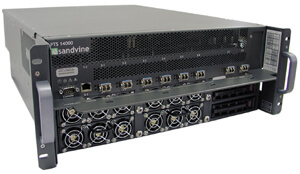
Sandvine Confirms $6.5 Million in Follow-on Orders, Adds Dermot O’Carroll to Board
Sandvine confirmed the receipt of more than $6.5 million in follow-on Network Policy Control orders from a Top-5 Asian communications service provider. Sandvine announced initial orders from the customer in May 2012. Since May 2012, Sandvine has announced orders from certain Tier-1 Asian operators that total approximately $20 million and has reported the highest market share in the region.
“This is a multi-phase project and the deployment has proceeded as expected. We are just beginning the second phase,” said Tom Donnelly, COO, Sales and Global Services. “We have been able to demonstrate our ability to measure application usage on a granular basis and provide meaningful streaming video metrics based on device, display characteristics and transport quality. We will now start to expand those capabilities as well as our traffic management solution across additional network locations.”
Sandvine also announced that Dermot O’Carroll has joined its Board of Directors. Mr. O’Carroll has spent almost 40 years in the telecommunications industry, the last twenty of which as a senior executive in various roles, including with Rogers Communications.
Every article published by Converge Digest is researched, curated, fact-checked and editorially reviewed by Jim Carroll, Editor & Publisher. AI-assisted drafting may be used to accelerate production, but all content is reviewed, refined and approved prior to publication.
You just read about Sandvine. One of the companies whose work it now carries:
Procera Networks built DPI, policy enforcement and network intelligence. What became of it?
Procera Networks brought DPI, policy enforcement and network intelligence to Telecom. That work was distinctive enough to lead to its acquisition by Sandvine for US$444M. The standalone name now passes into the archive — but the team and technology continue inside Sandvine today. One of 430 names here whose work outlived the company.
You just read about All. A technology from the archive that helped get us here:
Google/Alphabet Project Loon served 2011–2021. What ultimately replaced it?
Google/Alphabet Project Loon solar-powered balloons drifting in the stratosphere (~20 km), steering by rising and falling into different wind layers, relaying LTE from ground stations to phones far below. Its job passed to Unit economics — but the problem it solved, and the ideas it proved, live on in what replaced it. The standard rests here in the archive. One of 198 technologies here that opened a door and then held it for the next.