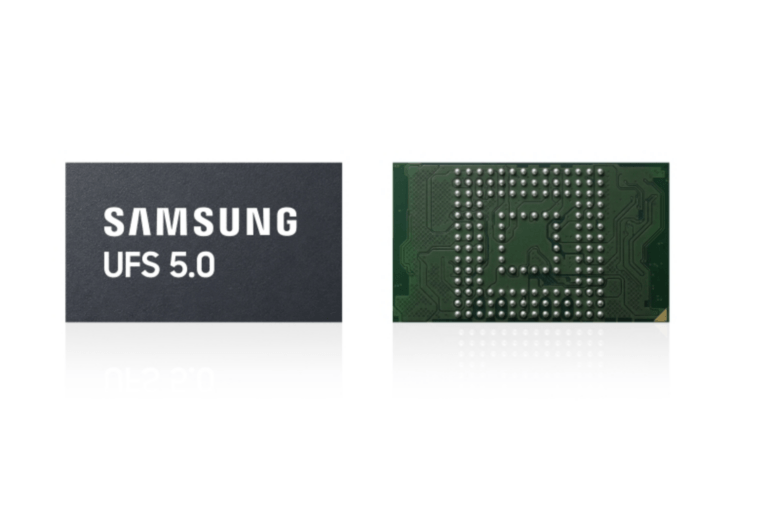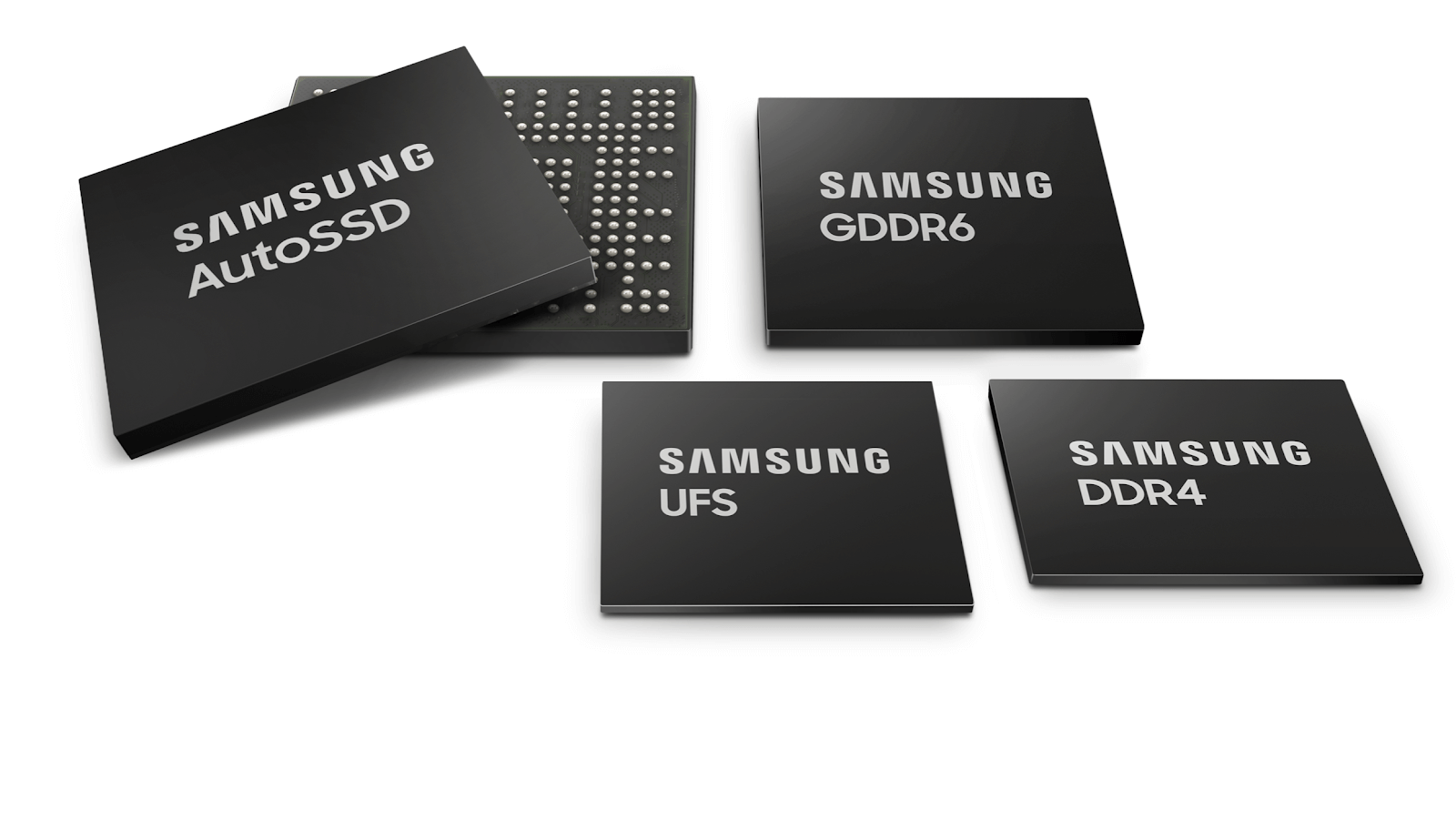
Samsung Electronics unveiled a portfolio of automotive memory solutions designed for next-generation autonomous electric vehicles. The new lineup includes a 256-gigabyte (GB) PCIe Gen3 NVMe ball grid array (BGA) SSD, 2GB GDDR6 DRAM and 2GB DDR4 DRAM for high-performance infotainment systems, as well as 2GB GDDR6 DRAM and 128GB Universal Flash Storage (UFS) for autonomous driving systems.
The need for high-capacity, high-performance SSDs and graphics DRAM is driven by advanced features in infotainment systems such as high-definition maps, video streaming and 3D gaming, together with the growing use of autonomous driving systems.
Samsung’s 256GB BGA SSD controller and firmware are developed in-house for optimized performance, offering a sequential read speed of 2,100 megabytes per second (MB/s) and a sequential write speed of 300MB/s, which are seven and two times faster than today’s eMMC, respectively. Furthermore, the 2GB GDDR6 DRAM features up to a 14 gigabit-per-second (Gbps) data rate per pin. Such exceptional speeds and bandwidth will support complex processing of various multimedia applications as well as large amounts of autonomous driving data, contributing to a safer, more dynamic and more convenient driving experience.

“With the recent proliferation of electric vehicles and the rapid advancement of infotainment and autonomous driving systems, the semiconductor automotive platform is facing a paradigm shift. What used to be a seven to eight-year replacement cycle is now being compressed into a three to four-year cycle, and at the same time, performance and capacity requirements are advancing to levels commonly found in servers,” said Jinman Han, executive vice president and head of Memory Global Sales & Marketing at Samsung Electronics. “Samsung’s reinforced lineup of memory solutions will act as a major catalyst in further accelerating the shift toward the ‘Server on Wheels’ era.”