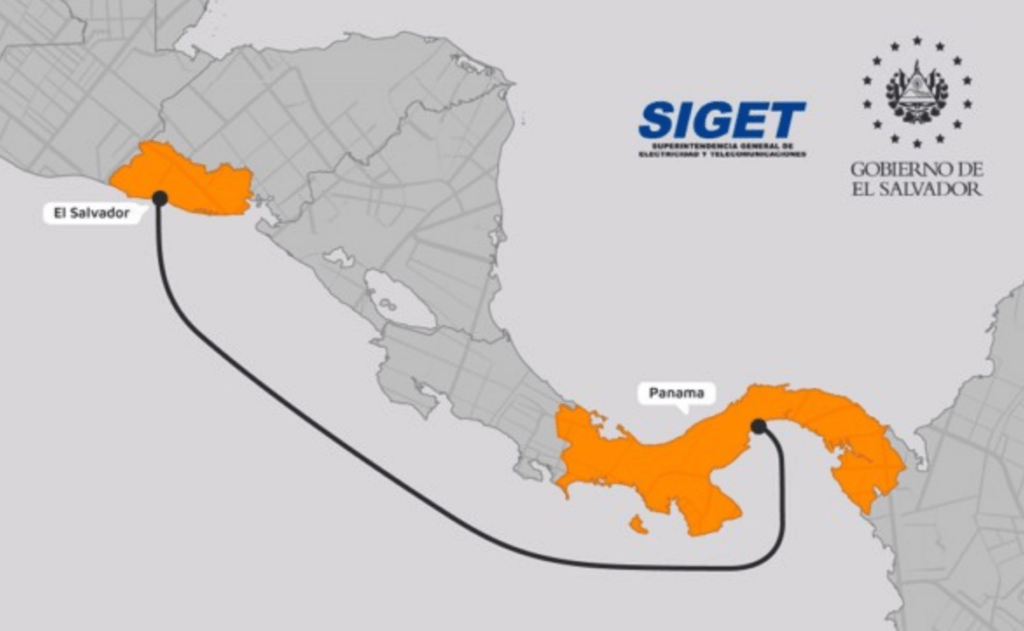
SIGET, El Salvador’s telecommunications regulator, has selected Liberty Networks to design, construct, deploy, and operate the country’s first-ever submarine cable system. The project marks a structural shift in how El Salvador connects to the global internet, ending its exclusive reliance on terrestrial cross-border links with neighboring countries.
The new approximately 1,800-kilometer subsea cable will connect El Salvador directly to major international connectivity hubs, expanding high-speed capacity while improving network resiliency and redundancy. Today, the country has no direct international subsea connectivity, a limitation that constrains bandwidth growth and exposes national networks to single-point failures across land routes.
Liberty Networks expects the submarine cable system to enter service in the second half of 2028. The company has not yet disclosed the selected technology or cable manufacturing partners. Once operational, the system will provide El Salvador’s population of roughly 6.3 million with improved access to global networks, supporting economic development, digital services, and long-term infrastructure resilience.
- SIGET selected Liberty Networks as the end-to-end provider, covering design, construction, deployment, and long-term operation
- The subsea system spans approximately 1,800 km
- The cable establishes El Salvador’s first direct international submarine connection
- Service is targeted for H2 2028
- Liberty Networks will announce its technology partner at a later date
“We are proud to have been selected for this historic project that will advance El Salvador’s digital future,” said Ray Collins, SVP of Infrastructure and Corporate Strategy at Liberty Latin America. “This investment goes beyond building critical infrastructure; it lays the foundation for economic growth, innovation, and opportunity for all Salvadorans.”