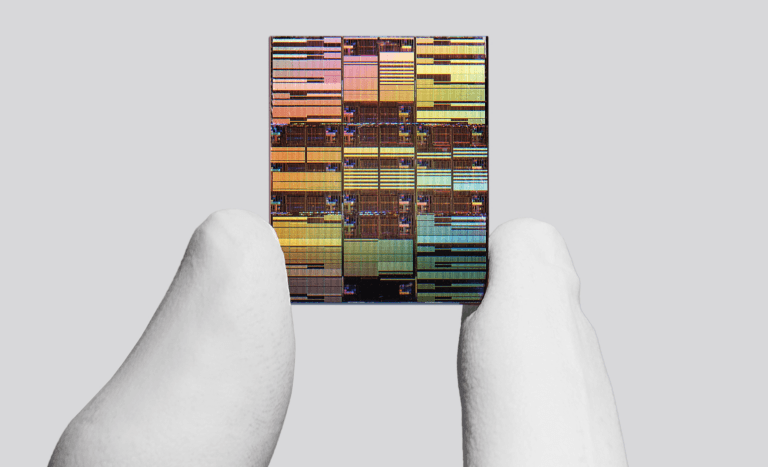
IBM inaugurated its global headquarters for Watson Internet of Things (IoT) in Munich, launching a series of new offerings, capabilities and ecosystem partners designed to extend the power of cognitive computing to the billions of connected devices, sensors and systems that comprise the IoT. These new offerings will be available through the IBM Watson IoT Cloud, the company’s global platform for IoT business and developers.
IBM said its campus in Munich will bring together 1,000 IBM developers, consultants, researchers and designers to drive deeper engagement with clients and partners, and will also serve as an innovation lab for data scientists, engineers and programmers building a new class of connected solutions at the intersection of cognitive computing and the IoT.
http://www.ibm.com
Share this article
Help others discover this reporting.
Editorial responsibility
Staff
Editor & Publisher
Every article published by Converge Digest is researched, curated, fact-checked and editorially reviewed by Jim Carroll, Editor & Publisher. AI-assisted drafting may be used to accelerate production, but all content is reviewed, refined and approved prior to publication.
You just read about IBM. One of the companies whose work it now carries:
Texas Memory Systems built High-performance RAM- and flash-based solid-state storage systems. What became of it?
Texas Memory Systems brought High-performance RAM- and flash-based solid-state storage systems to Storage. That work was distinctive enough to lead to its acquisition by IBM. The standalone name now passes into the archive — but the team and technology continue inside IBM today. One of 430 names here whose work outlived the company.
You just read about All. A technology from the archive that helped get us here:
Google/Alphabet Project Loon served 2011–2021. What ultimately replaced it?
Google/Alphabet Project Loon solar-powered balloons drifting in the stratosphere (~20 km), steering by rising and falling into different wind layers, relaying LTE from ground stations to phones far below. Its job passed to Unit economics — but the problem it solved, and the ideas it proved, live on in what replaced it. The standard rests here in the archive. One of 198 technologies here that opened a door and then held it for the next.

 IBM inaugurated its global headquarters for Watson Internet of Things (IoT) in Munich, launching a series of new offerings, capabilities and ecosystem partners designed to extend the power of cognitive computing to the billions of connected devices, sensors and systems that comprise the IoT. These new offerings will be available through the IBM Watson IoT Cloud, the company’s global platform for IoT business and developers.