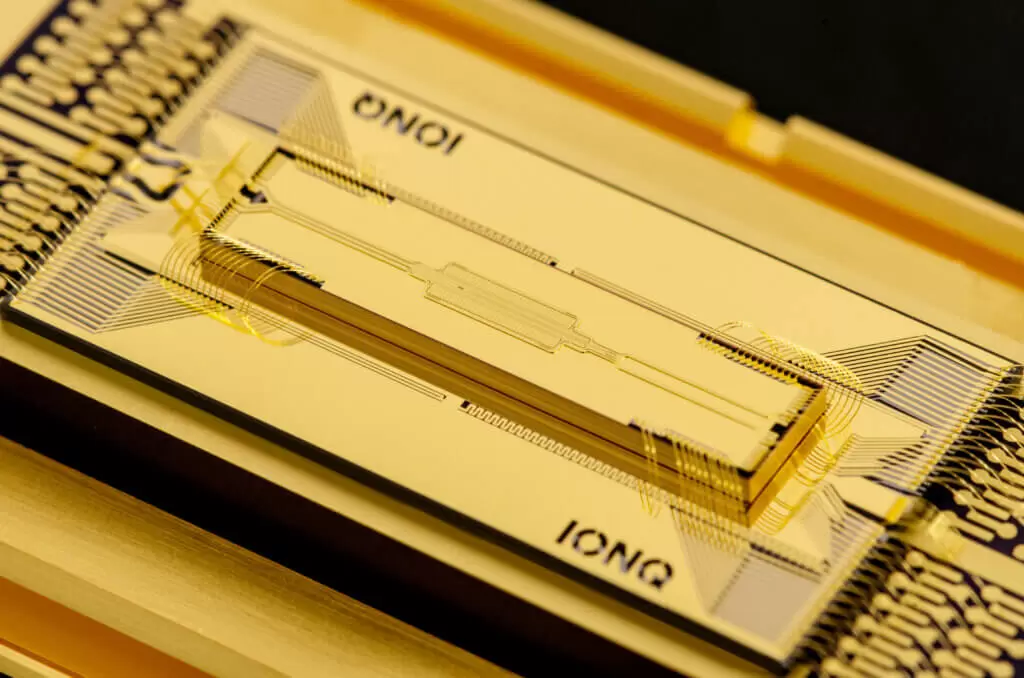
IonQ signed a finalized agreement with the Korea Institute of Science and Technology Information (KISTI) to deliver a 100-qubit trapped-ion quantum system to South Korea, advancing the country’s National Quantum Computing Center of Excellence. The agreement confirms the deployment of IonQ’s next-generation Tempo 100 system at KISTI’s national supercomputing facility.
IonQ will integrate the Tempo 100 system into KISTI-6, known as HANKANG, South Korea’s largest high-performance computing cluster. The installation creates the country’s first onsite hybrid quantum-classical environment, combining a production quantum system with an operational national HPC platform. KISTI will make the hybrid infrastructure available through a secure private cloud, enabling access for researchers across academia, government, and enterprise.
KISTI will operate the quantum computing service and lead application development for scientific and industrial use cases, while identifying IonQ as its primary quantum hardware provider. Megazone Cloud will support cloud and infrastructure services for the project. The agreement also extends IonQ’s footprint across Asia-Pacific, following earlier collaborations in Japan and partnerships with South Korean telecom, automotive, and industrial technology companies.
• Delivery of a 100-qubit IonQ Tempo quantum system to KISTI
• First onsite hybrid quantum-classical integration in South Korea
• Integration with KISTI-6 (HANKANG), the nation’s flagship HPC system
• Secure private-cloud access for universities, research institutes, and enterprises
• IonQ named primary quantum technology provider for the national program
“This collaboration with KISTI represents a defining step in deploying advanced quantum systems into national research infrastructure,” said Niccolo de Masi, Chairman and CEO of IonQ. “By integrating our Tempo system with South Korea’s leading supercomputing resources, we are enabling practical hybrid quantum-classical research at scale.”
🌐 Analysis
South Korea’s move mirrors a broader global shift toward tightly coupled quantum-HPC deployments, following similar national initiatives in the U.S., Europe, and Japan that prioritize hybrid architectures over standalone quantum access. For IonQ, the KISTI deployment reinforces its strategy of embedding systems directly into sovereign computing environments, positioning trapped-ion platforms alongside national supercomputers rather than limiting access to public cloud endpoints.
🌐 We’re tracking the latest developments in quantum networking. Follow our ongoing coverage at: https://convergedigest.com/category/quantum