Microsoft Azure to connect to the International Space Station with HPE
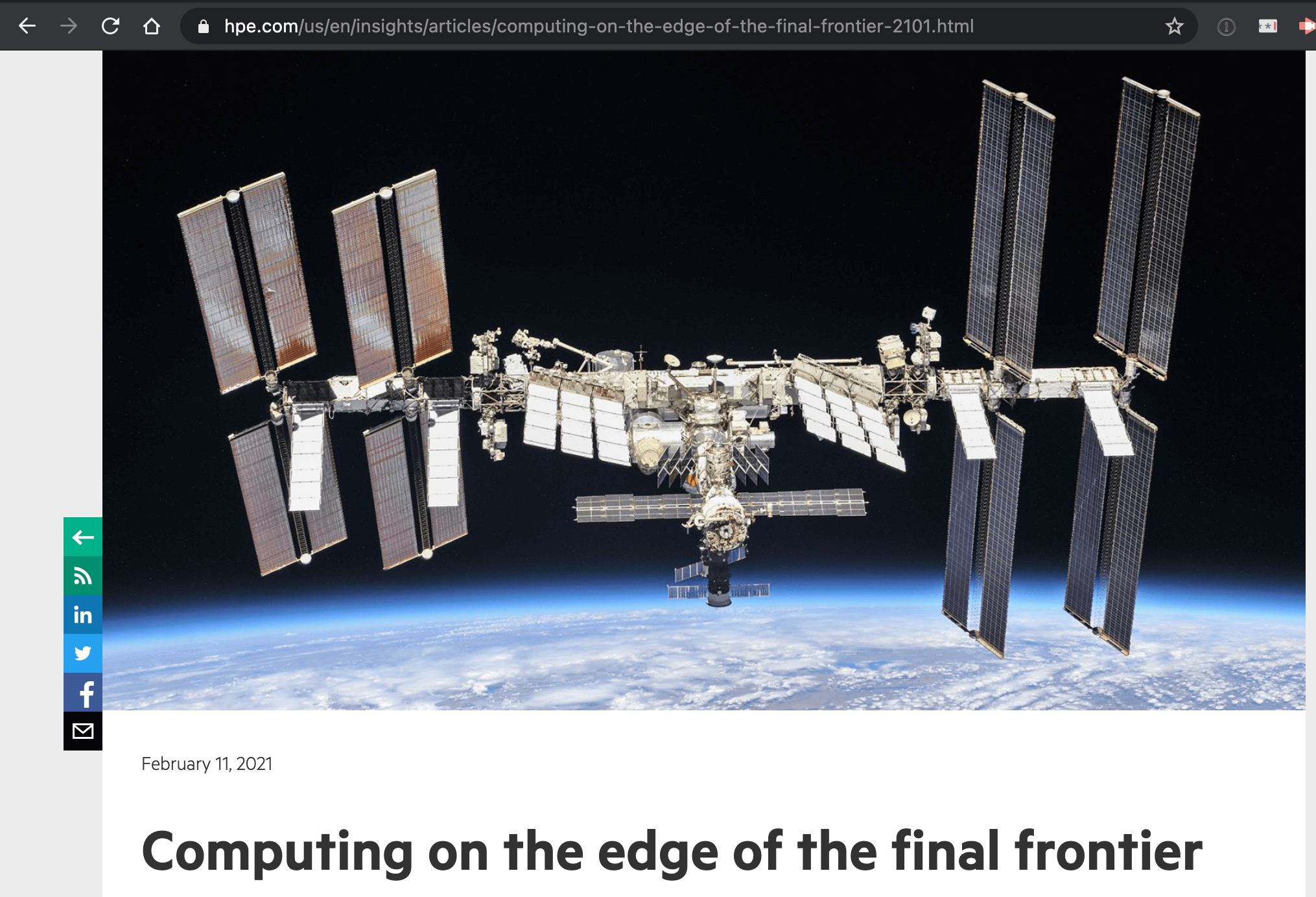
Microsoft is working with Hewlett Packard Enterprise (HPE) to connect Azure directly to space using HPE’s upcoming launch of its Spaceborne Computer-2 (SBC-2), which will deliver edge computing and artificial intelligence (AI) capabilities together for the first time on the International Space Station (ISS).
HPE’s Spaceborne Computer-2, which is scheduled to launch into orbit for the ISS on the 15th Northrop Grumman Resupply Mission to Space Station (NG-15), is built on the HPE Edgeline Converged Edge system for harsh edge environments. A connection from Spaceborne Computer-2 to Microsoft Azure will be established through NASA and the HPE ground station.
Microsoft Research and Azure Space engineering teams are evaluating the potential of HPE’s space, state-of-the-art processing in conjunction with hyperscale Azure.
Every article published by Converge Digest is researched, curated, fact-checked and editorially reviewed by Jim Carroll, Editor & Publisher. AI-assisted drafting may be used to accelerate production, but all content is reviewed, refined and approved prior to publication.
You just read about Microsoft. One of the companies whose work it now carries:
Affirmed Networks built Virtualized and cloud-native mobile core. What became of it?
Affirmed Networks brought Virtualized and cloud-native mobile core to Telecom. That work was distinctive enough to lead to its acquisition by Microsoft for US$1.35B. The standalone name now passes into the archive — but the team and technology continue inside Microsoft today. One of 430 names here whose work outlived the company.
You just read about All. A technology from the archive that helped get us here:
Google/Alphabet Project Loon served 2011–2021. What ultimately replaced it?
Google/Alphabet Project Loon solar-powered balloons drifting in the stratosphere (~20 km), steering by rising and falling into different wind layers, relaying LTE from ground stations to phones far below. Its job passed to Unit economics — but the problem it solved, and the ideas it proved, live on in what replaced it. The standard rests here in the archive. One of 198 technologies here that opened a door and then held it for the next.