NXP Semiconductors introduced a new software layer for edge intelligence with the launch of its eIQ Agentic AI Framework, extending its edge AI platform to support autonomous, agent-based decision making directly on devices. Announced at CES 2026, the framework targets real-time applications that require deterministic latency, local data processing, and built-in security, without reliance on cloud connectivity.
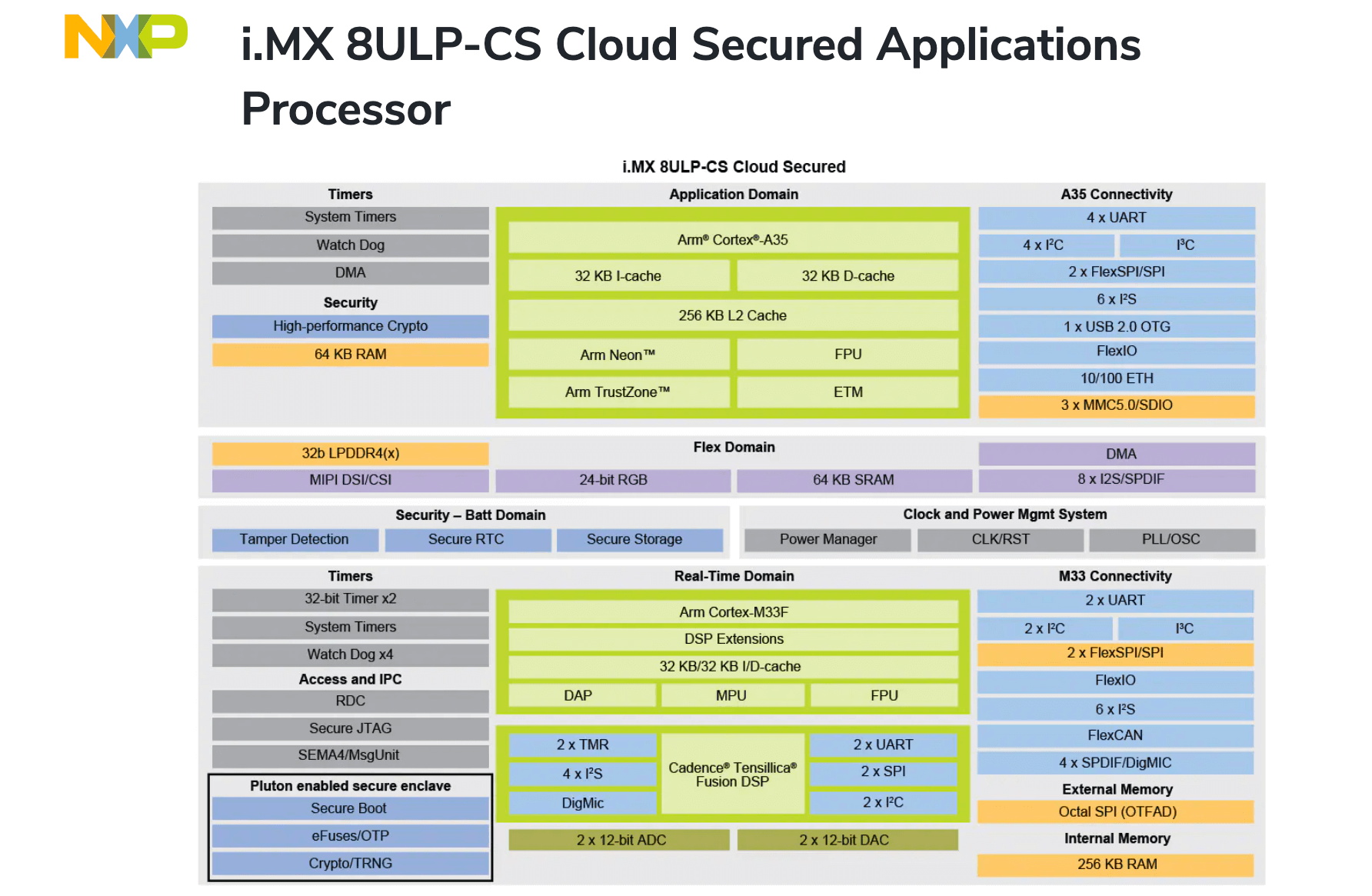
The eIQ Agentic AI Framework allows developers to orchestrate multi-step AI workflows—spanning perception, inference, and control—entirely at the edge. It supports NXP’s i.MX 8 and i.MX 9 application processors as well as Ara discrete NPUs, and aligns with emerging agent standards such as A2A (Agent-to-Agent) and Model Context Protocol. An integrated scheduling engine distributes workloads across CPUs, NPUs, and accelerators to enable concurrent vision, audio, time-series, and control tasks in constrained environments.
Security and reliability remain central to the design. NXP positions the framework as a complement to its secure edge hardware portfolio, combining software protections against adversarial inputs and prompt injection with hardware features such as secure boot, runtime isolation, and hardware root of trust. The company also introduced the cloud-based eIQ AI Hub, giving developers immediate access to tools for prototyping, tuning, and deployment, with the option to transition projects to on-premise environments.
- Introduces agentic AI workflows optimized for deterministic, real-time edge execution
- Supports i.MX 8, i.MX 9, and Ara NPU platforms for scalable edge deployments
- Enables multi-model, parallel AI workloads across heterogeneous compute resources
- Aligns with open agentic standards to ease integration and portability
- Integrates security features across software and hardware layers
- Extends NXP’s eIQ ecosystem with cloud-based prototyping via eIQ AI Hub
“With the new agentic AI capabilities delivered by the eIQ Agentic AI Framework, NXP is bringing autonomy to edge AI devices and delivering a crucial building block for our long-term edge AI vision,” said Charles Dachs, Executive Vice President and General Manager, Secure Connected Edge at NXP.
🌐 Analysis
The eIQ Agentic AI Framework reinforces NXP’s broader strategy to concentrate on high-value, software-enabled edge platforms, a theme that also featured prominently in the company’s 2025 financial results and roadmap. As NXP continues to prioritize automotive, industrial, and IoT markets, it has emphasized tighter hardware–software integration, longer product lifecycles, and higher attach rates for software and system solutions. Agentic AI at the edge fits squarely into this approach by increasing the role of NXP software in customer deployments while leveraging its existing processor and NPU portfolio.
At the same time, NXP’s roadmap reflects a measured response to uneven macro demand in 2025, with continued investment in edge AI, security, and industrial automation, while maintaining disciplined capital allocation. Compared with peers pursuing cloud-centric or data-center-heavy AI strategies, NXP is doubling down on deterministic, safety-critical edge use cases where latency, resilience, and regulatory requirements favor on-device intelligence.
🌐 We’re tracking the latest developments in networking silicon. Follow our ongoing coverage at: https://convergedigest.com/category/semiconductors/