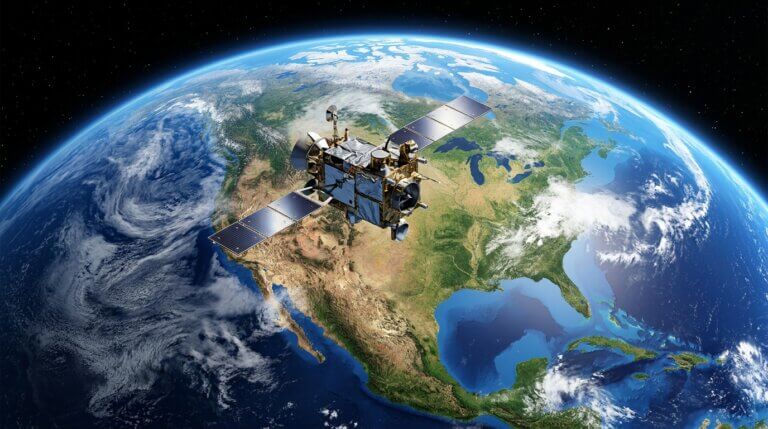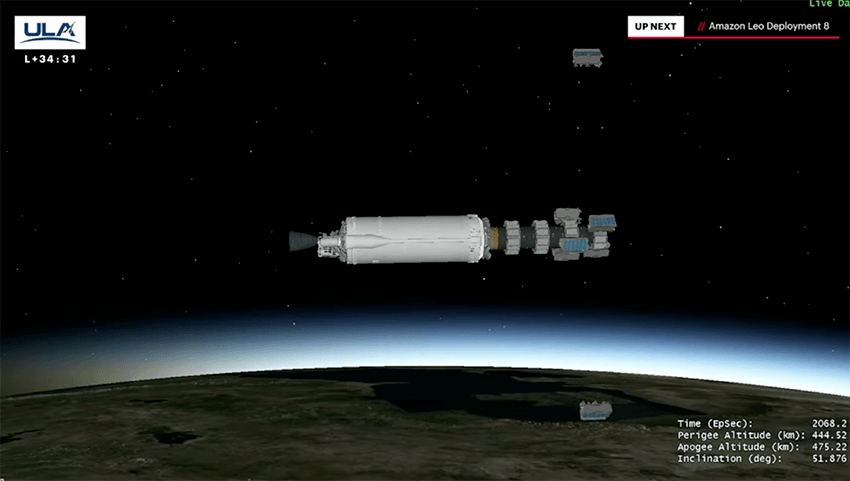
United Launch Alliance advanced Amazon’s low Earth orbit broadband buildout with another Atlas V mission, deploying 29 operational satellites for the company’s LEO constellation on April 27, 2026. The launch, conducted from Cape Canaveral Space Force Station, marked the sixth Atlas V mission supporting Amazon’s initiative to deliver global broadband connectivity using a planned network of more than 3,000 satellites.
The mission brings the total number of Amazon LEO satellites launched by ULA to 168, contributing to an overall constellation now approaching roughly 270 deployed satellites, including earlier prototype spacecraft. ULA continues to expand its role in commercial launch services, which now account for approximately half of its business mix, reflecting increased demand from large-scale satellite constellations and commercial space ventures.
ULA executed the Leo 6 mission on a compressed operational timeline, rolling the Atlas V to the pad and completing launch within approximately 14 hours. The company positions this faster turnaround as a step toward higher launch cadence. Two additional Atlas V missions remain under contract for Amazon, with the next launch—Leo 7—scheduled for May 22, 2026.
- Atlas V launched 29 satellites for Amazon’s LEO broadband constellation (Leo 6 mission)
- Total Amazon satellites launched by ULA now stands at 168
- Overall deployed constellation estimated at ~270 satellites, including prototypes
- Amazon targets ~3,236 satellites for full global coverage
- Commercial missions now represent ~50% of ULA’s launch business
- Compressed 14-hour rollout-to-launch timeline demonstrated for this mission
- Two remaining Atlas V launches planned for Amazon, with Leo 7 targeted for May 22, 2026
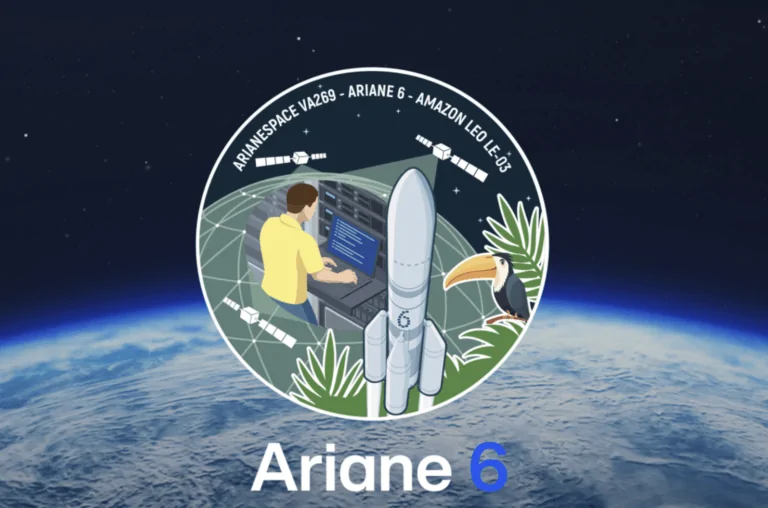
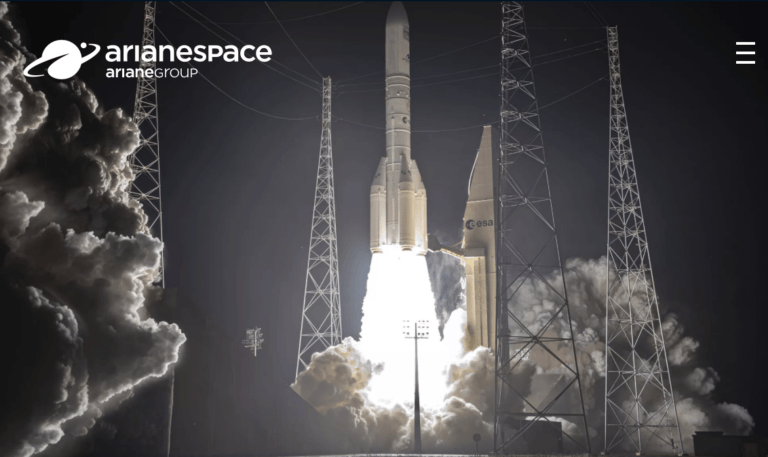
- Additional launches underway with other providers, including Arianespace (Ariane 6) and SpaceX (Falcon 9)
“ULA has precisely delivered a total of 168 satellites for Amazon Leo enabling rapid expansion of their Leo constellation,” said Gary Wentz, ULA vice president of Atlas and Vulcan programs. “ULA is focused on launch and delivery of our customer’s payloads to orbit. This launch continues our legacy of empowering our customers’ mission, and through launch, partnering to unlock value for their commercial business goals.”
🌐 Analysis
Amazon’s LEO deployment strategy reflects a multi-launch-provider model designed to accelerate time-to-coverage while mitigating launch risk. By distributing missions across ULA, Arianespace, and SpaceX, Amazon increases schedule flexibility as it races to scale against established competitors such as SpaceX and OneWeb.
The demonstrated 14-hour launch readiness window signals ULA’s effort to compete on cadence as well as reliability, a key factor as megaconstellations demand rapid, repeatable access to orbit. With Atlas V nearing retirement and newer vehicles like Vulcan Centaur and New Glenn entering service, launch economics and cadence will play a central role in determining how quickly Amazon can close the deployment gap in the global satellite broadband market.