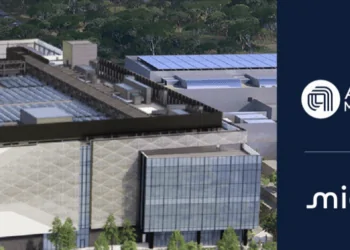

Micron Technology will break ground on January 16, 2026, on its long-planned semiconductor megafab in Onondaga County, New York, formally launching construction of what the company describes as the largest semiconductor manufacturing site in U.S. history. The project follows completion of environmental reviews and permit approvals and marks the start of site preparation and early construction activity in Central New York.
The New York megafab represents a long-term investment of up to $100 billion and is designed to scale to as many as four advanced memory fabrication plants. Micron positions the site as a cornerstone of its U.S. manufacturing strategy, aimed at expanding domestic production of advanced DRAM to support rising demand from AI systems, cloud data centers, and high-performance computing platforms.
Micron executives, led by Chairman, President and CEO Sanjay Mehrotra, will join federal, state, and local officials for the groundbreaking ceremony, followed by a public program at Syracuse University’s National Veterans Resource Center. The event underscores the project’s significance for regional economic development and for national semiconductor supply-chain policy.
- Groundbreaking scheduled for January 16, 2026, in Onondaga County, New York
- Up to four advanced memory fabs planned on the site
- Total investment potential of up to $100 billion over multiple phases
- Focus on advanced DRAM manufacturing to support AI and data-center demand
- Largest private investment in New York state history
“Breaking ground at Micron’s New York megafab is a pivotal moment for Micron and the United States,” said Sanjay Mehrotra, Chairman, President and CEO of Micron Technology. “As the global economy enters the AI era, leadership in advanced semiconductors will be the cornerstone of innovation and economic prosperity. Our investments and progress solidify our position as the only United States manufacturer of memory.”
🌐 Analysis
Micron has previously outlined the New York megafab as a multi-decade build-out, with initial production expected later in the decade and additional fabs added as demand and workforce scale. The company has stated that the site will ultimately employ tens of thousands of workers, including several thousand Micron employees and a much larger construction and supplier ecosystem, reinforcing Central New York as a long-term U.S. memory manufacturing hub.
In the broader industry context, Micron’s New York investment complements its U.S. DRAM expansion in Idaho and aligns with federal incentives aimed at reshoring advanced semiconductor manufacturing, as competitors continue to concentrate leading-edge memory production primarily in East Asia.