Veeco Instruments announced more than $250 million in equipment orders tied to the production of Indium Phosphide (InP) lasers used in high-speed optical transceivers for AI data center infrastructure. The orders span Veeco’s Spector Ion Beam Deposition (IBD), Lumina MOCVD, and WaferEtch wet processing platforms, with shipments beginning in 2026 and ramping significantly in 2027.
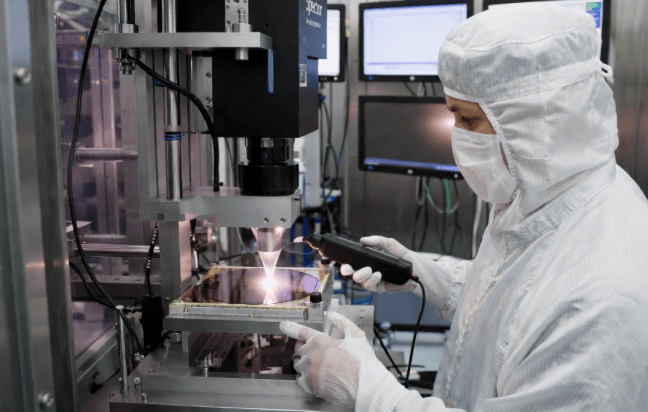
A substantial portion of the bookings comes from manufacturers building 800G and 1.6T optical transceivers for hyperscale data centers. Veeco said its Spector IBD systems are being deployed to produce low-absorption laser facet coatings required for high-power InP laser operation. The company positioned the orders as evidence of accelerating investment in silicon photonics manufacturing capacity as AI clusters drive demand for higher-bandwidth optical interconnects.
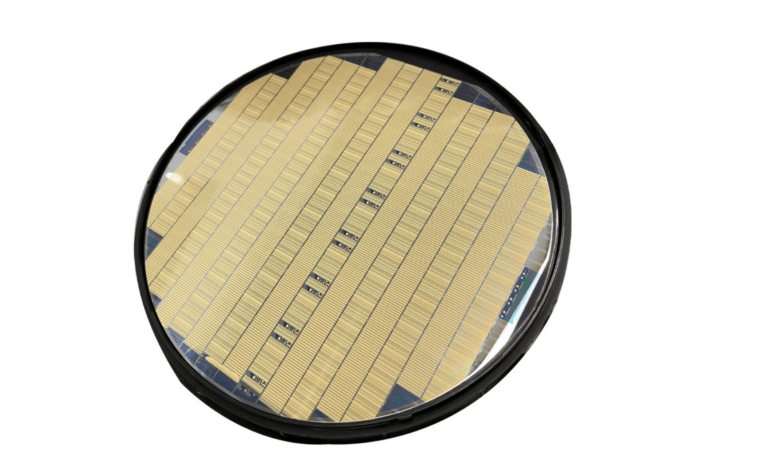
The announcement highlights growing industry concern over InP laser supply constraints as AI infrastructure transitions from copper interconnects toward optics at higher speeds. InP lasers remain a critical component in silicon photonics architectures, particularly for external laser source designs used in high-performance pluggable optics and emerging co-packaged optics platforms. Veeco’s Lumina MOCVD systems support InP epitaxy production, while its WaferEtch systems target high-volume wet processing steps with tight repeatability requirements.
- Orders exceed $250 million across Veeco’s Spector IBD, Lumina MOCVD, and WaferEtch platforms
- Customers include manufacturers of 800G and 1.6T optical transceivers for hyperscale AI data centers
- Deliveries begin in 2026 with larger-scale deployment expected in 2027
- Spector IBD systems are used for laser facet coatings required in high-power InP lasers
- Lumina MOCVD systems support high-volume InP epitaxy manufacturing
- WaferEtch systems target repeatable high-throughput wet processing workflows
- Veeco cited accelerating demand for optical interconnects driven by AI infrastructure scaling
- LightCounting projects continued growth in 800G and 1.6T optical transceiver demand
“Veeco’s differentiated portfolio of Ion Beam, MOCVD and Wet Processing technologies enables our customers to scale up advanced InP laser production with high performance, yield, and reliability,” said Adrian Devasahayam, Senior Vice President of Veeco Instruments. “These orders reflect the strength of our long-standing customer partnerships, many spanning more than two decades, and our ability to support the evolving requirements of silicon photonics and the optical interconnect market.”
🌐 Analysis: The scale of Veeco’s bookings signals that InP laser manufacturing capacity is becoming a strategic chokepoint in the AI infrastructure supply chain. Industry discussions over the past year increasingly focused on shortages of qualified laser production capacity as hyperscalers and optical module vendors accelerate deployment of 800G and 1.6T Ethernet optics. Unlike silicon photonics waveguides and CMOS processes, InP laser fabrication requires specialized epitaxy, coating, and packaging expertise that remains concentrated among a relatively small number of suppliers. The announcement also reinforces the broader shift toward optical interconnect scaling inside AI clusters. As GPU clusters grow beyond tens of thousands of accelerators, power consumption and signal integrity challenges are driving more aggressive adoption of optical connectivity across both front-end and back-end networks.
🌐 Analysis: The market for Indium Phosphide (InP) lasers used in high-speed optical interconnects remains relatively concentrated, particularly for devices qualified for hyperscale AI and cloud deployments. Key manufacturers include Coherent, Lumentum Holdings, Broadcom (through its optical components and former Avago assets), Innolight Technology, Source Photonics, Hisense Broadband, Accelink Technologies, Eoptolink Technology, and Mitsubishi Electric. Several vertically integrated transceiver vendors also manufacture or package InP-based laser devices internally for 800G and emerging 1.6T optical modules.
The supply chain spans multiple layers. Some firms focus on InP epitaxial wafer growth and discrete laser chip production, while others integrate InP lasers into silicon photonics engines or pluggable optical transceivers. Companies including Cisco (through Acacia), Nokia, and Intel have also developed silicon photonics platforms that rely heavily on external or integrated InP laser technologies.
Manufacturing InP lasers at hyperscale volumes remains technically difficult because the process requires highly controlled epitaxy, facet coating, thermal management, and packaging workflows. Industry analysts increasingly view qualified InP laser production as one of the key constraints in scaling AI optical interconnect supply, especially as deployments move from 400G toward 800G and 1.6T architectures. ics.