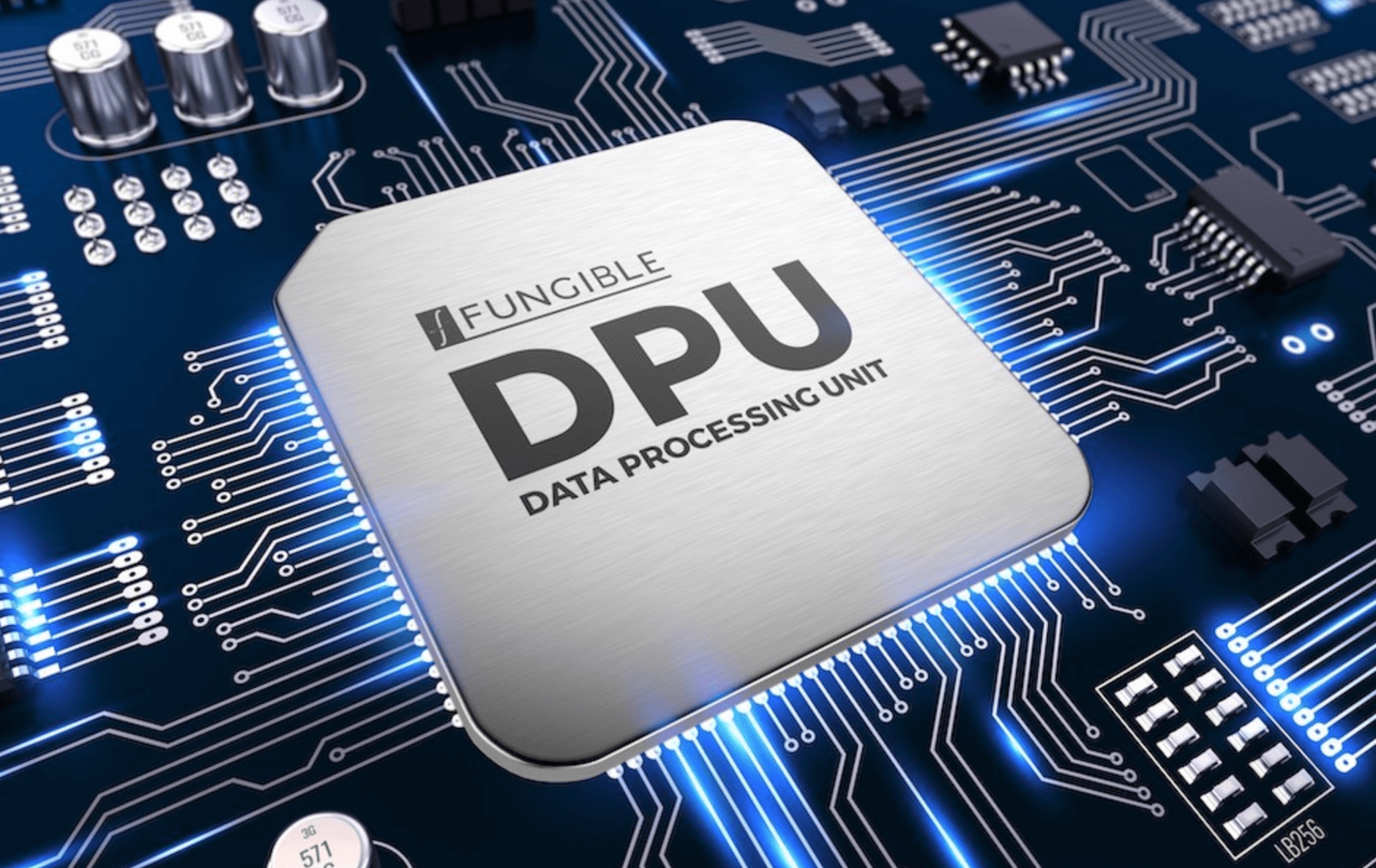
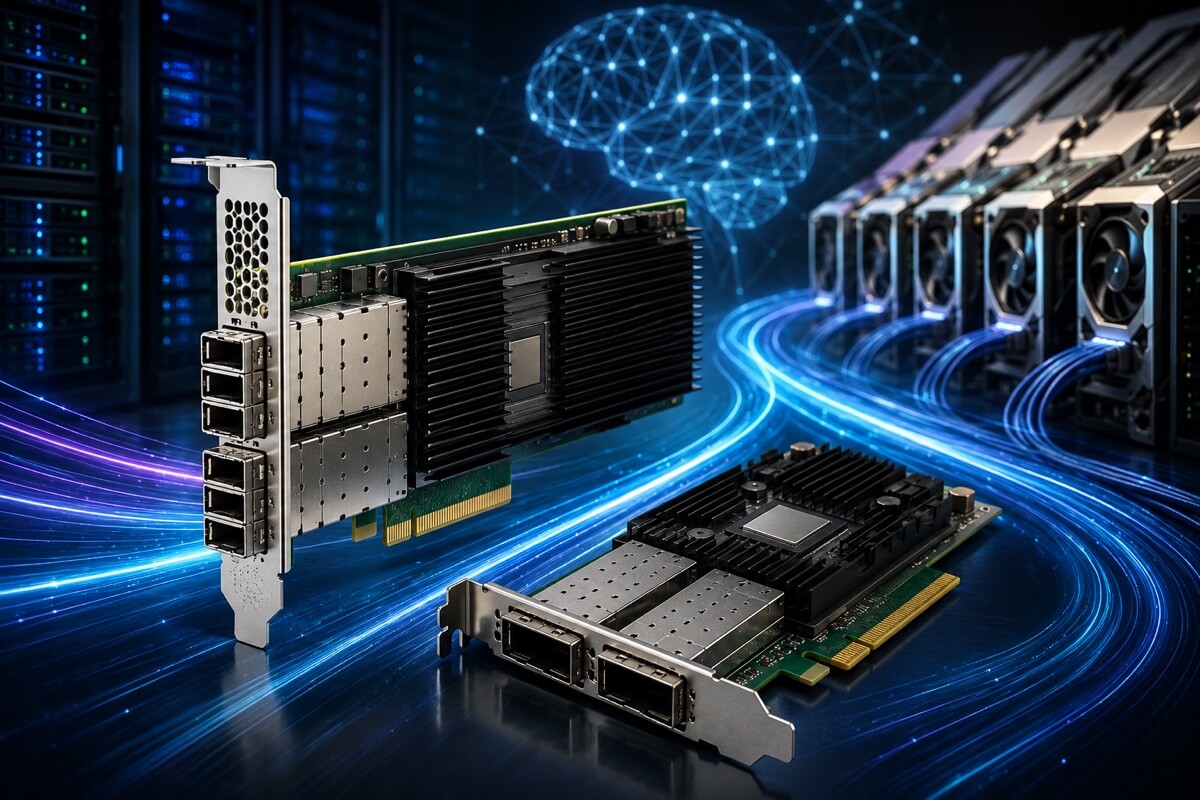
Chelsio Communications introduced its seventh-generation AI Interconnect Platform, adding a new family of 400Gb Ethernet SmartNICs, storage controllers, and Data Processing Units (DPUs) aimed at AI training clusters, inference infrastructure, cloud networking, and disaggregated storage. Built on the company’s Unified Wire architecture, the platform supports native 400Gb Ethernet along with Unified RDMA using both iWARP and RoCEv2, hardware storage acceleration, programmable data paths, and integrated security acceleration. SmartNICs and storage controllers are available immediately, while T7 DPUs are available as evaluation platforms ahead of planned production availability in December 2026.
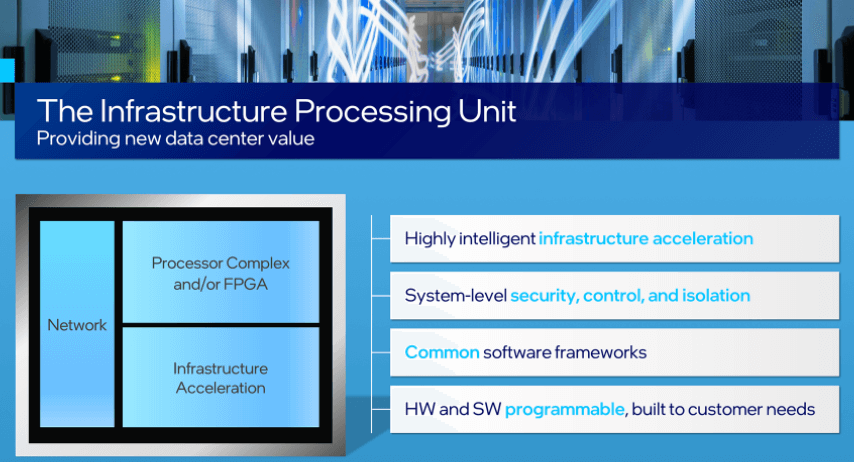
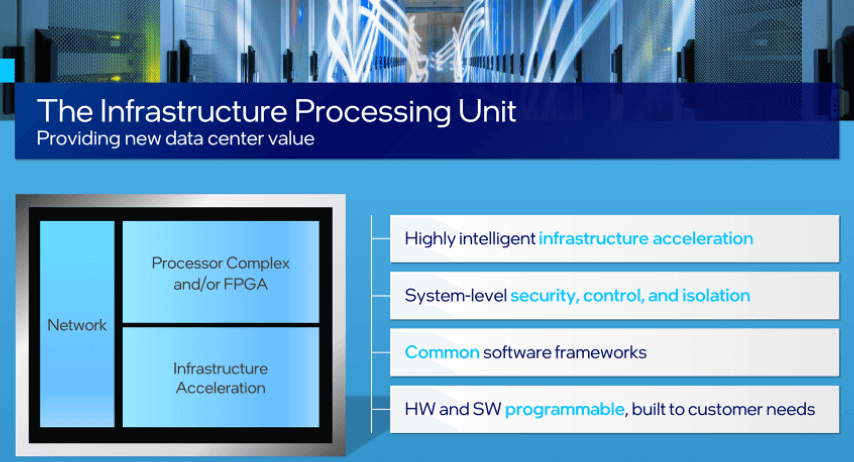
The platform spans three product families. The S7 SmartNIC portfolio ranges from 25GbE through 400GbE adapters for cloud, enterprise, edge, and AI deployments. Dedicated storage controllers accelerate NVMe/TCP, NVMe-oF, iSCSI, RDMA, and TOE workloads for modern storage systems. The programmable T7 DPU family targets AI networking, storage, and security acceleration while supporting protocol offloads including TCP/IP, UDP/IP, NVMe/TCP, NVMe-oF, VXLAN, NVGRE, TLS, IPsec, QUIC, and kernel TLS. Chelsio said the seventh-generation architecture maintains software compatibility with previous T4, T5, and T6 products, allowing customers to migrate existing deployments without rewriting software.
For AI infrastructure, Chelsio positions Ethernet as an open alternative to proprietary AI interconnects by combining 400Gb RDMA, lossless Ethernet, congestion management, direct data placement, zero-copy transfers, CPU bypass, and programmable packet processing. The company says the architecture improves GPU utilization and reduces synchronization overhead during distributed AI training while supporting PCIe Gen5, OCP 3.0, SR-IOV, container networking, and virtual switching for hyperscale and enterprise deployments.
• Seventh-generation Unified Wire architecture powers SmartNICs, storage controllers, and DPUs.
• Native support for 1/10/25/40/50/100/200/400Gb Ethernet.
• Unified RDMA supports both iWARP and RoCEv2.
• Hardware acceleration for NVMe/TCP, NVMe-oF, iSCSI, TOE, TLS, IPsec, QUIC, and kTLS.
• 400Gb SmartNIC available with flexible 4×100GbE and 2×200GbE operating modes.
• PCIe Gen5, OCP 3.0, and mezzanine card options supported.
• SmartNICs and storage controllers ship immediately; T7 DPU production is scheduled for December 2026.
“Kianoosh Naghshineh, CEO of Chelsio Communications, said the seventh-generation AI Interconnect Platform positions Ethernet as a scalable, standards-based AI interconnect while preserving the flexibility, software continuity, and cost advantages of open networking.”
🌐 Analysis
Chelsio joins a growing wave of vendors repositioning Ethernet as the preferred fabric for AI infrastructure. While NVIDIA continues to advance InfiniBand alongside Spectrum-X Ethernet, companies including Broadcom, Marvell, Cisco, Arista, AMD Pensando, Intel, and Astera Labs have all expanded investments around Ethernet-based AI networking, SmartNICs, DPUs, and congestion management technologies. The market increasingly focuses on enabling large GPU clusters using open Ethernet standards rather than proprietary interconnects.
Chelsio differentiates itself through long-standing expertise in protocol offload technology and its support for both iWARP and RoCEv2 RDMA, an increasingly uncommon combination in the industry. The company’s emphasis on software continuity across multiple hardware generations may appeal to OEM storage vendors, enterprise customers, and cloud providers seeking to modernize infrastructure without extensive software migration.