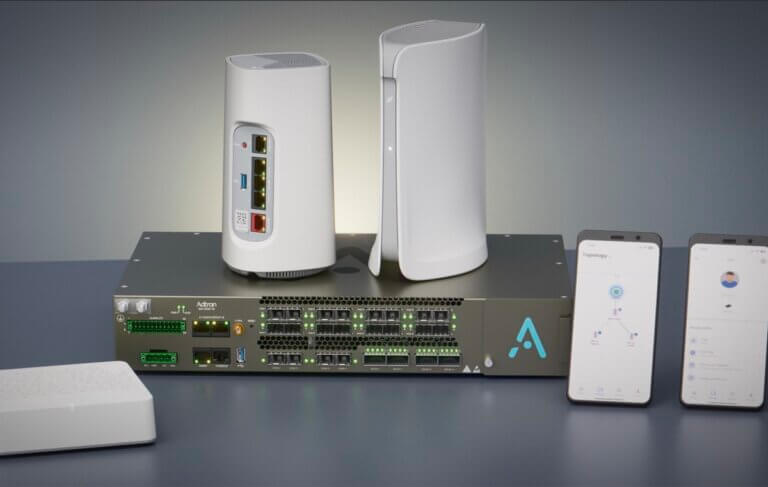
Unlike FiOS, Verizon’s “One Fiber” program is deploying is a higher-count cable deep in the network that can be used for all services, whether enterprise, residential, wireless or internal, says Glenn Wellbrock, Director, Backbone Network Design, Verizon.
In this video, Glenn and Robert Conger, AVP Cloud and Portfolio Strategy for ADTRAN, discuss next-gen network architecture.
Every article published by Converge Digest is researched, curated, fact-checked and editorially reviewed by Jim Carroll, Editor & Publisher. AI-assisted drafting may be used to accelerate production, but all content is reviewed, refined and approved prior to publication.
You just read about Verizon. One of the companies whose work it now carries:
XO Communications built Competitive local, metro fiber and enterprise network operator. What became of it?
XO Communications brought Competitive local, metro fiber and enterprise network operator to Telecom. That work was distinctive enough to lead to its acquisition by Verizon for US$1.8B. The standalone name now passes into the archive — but the team and technology continue inside Verizon today. One of 430 names here whose work outlived the company.
You just read about All. A technology from the archive that helped get us here:
H.320 ISDN videoconferencing served 1990–2000. What ultimately replaced it?
H.320 ISDN videoconferencing room systems bonded several ISDN B-channels to scrape together enough bandwidth, coding video with H.261 over circuit-switched lines billed by the minute. Its job passed to IP video (H.323 — but the problem it solved, and the ideas it proved, live on in what replaced it. The standard rests here in the archive. One of 198 technologies here that opened a door and then held it for the next.