Google Relaunches Self-driving Car Project as Waymo
The Google self-driving car project has been relaunched as an independent company called Waymo.
Waymo’s focus is on fully self-driving cars that operate without steering wheels or human guidance. Its test fleet currently includes modified Lexus SUVs and custom-built prototype vehicles. The company plans to add modified Chrysler Pacifica minivans soon.
Fiat Chrysler Automobiles (FCA) will integrate Google’s self-driving technology into all-new 2017 Chrysler Pacifica Hybrid minivans to expand Google’s existing self-driving test program.
This is the first time that Google has worked directly with an automaker to integrate its self-driving system, including its sensors and software, into a passenger vehicle.
By later this year, around 100 Pacifica minivans will be built for Google’s self-driving technology. Google will integrate the suite of sensors and computers that the vehicles will rely on to navigate roads autonomously.
Google, which is testing its self-driving cars in four U.S. cities, said the self-driving Chrysler Pacifica Hybrid minivans will be tested on its private test track in California prior to operating on public roads.
Every article published by Converge Digest is researched, curated, fact-checked and editorially reviewed by Jim Carroll, Editor & Publisher. AI-assisted drafting may be used to accelerate production, but all content is reviewed, refined and approved prior to publication.
You just read about All. A name from the archive that helped shape it:
Dimension Data built Global network integration, managed services and enterprise IT infrastructure. What became of it?
Dimension Data brought Global network integration, managed services and enterprise IT infrastructure to Networking. That work was distinctive enough to lead to its merger with NTT DATA / NTT Ltd. for £2.1B. The standalone name now passes into the archive — but the team and technology continue inside NTT DATA / NTT Ltd. today. One of 430 names here whose work outlived the company.
You just read about All. A technology from the archive that helped get us here:
Google/Alphabet Project Loon served 2011–2021. What ultimately replaced it?
Google/Alphabet Project Loon solar-powered balloons drifting in the stratosphere (~20 km), steering by rising and falling into different wind layers, relaying LTE from ground stations to phones far below. Its job passed to Unit economics — but the problem it solved, and the ideas it proved, live on in what replaced it. The standard rests here in the archive. One of 198 technologies here that opened a door and then held it for the next.

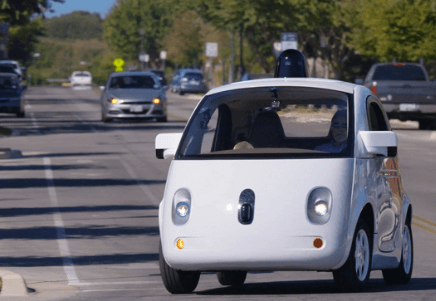
 The Google self-driving car project has been relaunched as an independent company called Waymo.