China Unicom Expands Deployment of Nokia Core Routers
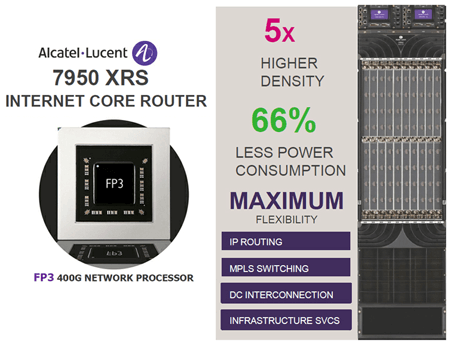
China Unicom selected the Nokia 7950 XRS core router family for additional deployments across China. Financial terms were not disclosed.
China Unicom initially deployed the 7950 XRS into metro networks in six provinces – Beijing, Shandong, Jiangsu, Jiangxi, Inner Mongolia and Qinghai – and this year plans to scale out to an additional four including Heilongjiang, Henan, Zhejiang and Hunan to improve speed and response times for the fixed and mobile broadband subscribers.
In 2013 China launched its Broadband China initiative to invest $182 billion to boost the speed and quality of Internet services across the country. The aim is to reduce the digital divide by providing businesses and urban and rural citizens with national broadband coverage by 2020. In keeping with this initiative, China Unicom has been continually improving the scale and capacity of its networks.
http://www.nokia.com
Share this article
Help others discover this reporting.
Editorial responsibility
Staff
Editor & Publisher
Every article published by Converge Digest is researched, curated, fact-checked and editorially reviewed by Jim Carroll, Editor & Publisher. AI-assisted drafting may be used to accelerate production, but all content is reviewed, refined and approved prior to publication.
You just read about Nokia. One of the companies whose work it now carries:
Infinera built Coherent optical transport, photonic integration and DCI. What became of it?
Infinera brought Coherent optical transport, photonic integration and DCI to Optical. That work was distinctive enough to lead to its acquisition by Nokia for US$2.3B. The standalone name now passes into the archive — but the team and technology continue inside Nokia today. One of 430 names here whose work outlived the company.
You just read about All. A technology from the archive that helped get us here:
Google/Alphabet Project Loon served 2011–2021. What ultimately replaced it?
Google/Alphabet Project Loon solar-powered balloons drifting in the stratosphere (~20 km), steering by rising and falling into different wind layers, relaying LTE from ground stations to phones far below. Its job passed to Unit economics — but the problem it solved, and the ideas it proved, live on in what replaced it. The standard rests here in the archive. One of 198 technologies here that opened a door and then held it for the next.

 China Unicom initially deployed the 7950 XRS into metro networks in six provinces – Beijing, Shandong, Jiangsu, Jiangxi, Inner Mongolia and Qinghai – and this year plans to scale out to an additional four including Heilongjiang, Henan, Zhejiang and Hunan to improve speed and response times for the fixed and mobile broadband subscribers.