Nokia Optimizes 3G Signaling and Boosts Smartphone Performance
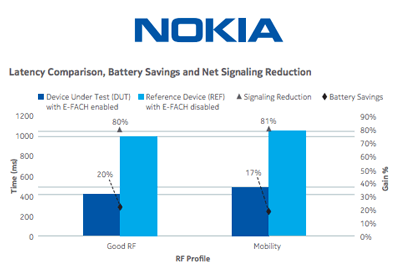
Nokia Networks announced a High Speed Cell FACH software feature that significantly improves smartphone performance on 3G networks, cutting smartphone-generated network signaling by up to 80%, boosting response time by up to 65% and achieving up to 20% faster browsing.
The figures were obtained from tests run on the commercial 3G/HSPA network of a major European operator using test devices fitted with Qualcomm Snapdragon™ processors that support High Speed Cell FACH.
Nokia said its High Speed Cell FACH can handle small data packets from popular apps more efficiently to improve the overall customer experience and enable operators to support a higher number of smartphones on their networks.
Every article published by Converge Digest is researched, curated, fact-checked and editorially reviewed by Jim Carroll, Editor & Publisher. AI-assisted drafting may be used to accelerate production, but all content is reviewed, refined and approved prior to publication.
You just read about Nokia. One of the companies whose work it now carries:
Alcatel-Lucent built IP, optical, wireless, fixed access and telecom software. What became of it?
Alcatel-Lucent brought IP, optical, wireless, fixed access and telecom software to Telecom. That work was distinctive enough to lead to its acquisition by Nokia for €15.6B. The standalone name now passes into the archive — but the team and technology continue inside Nokia today. One of 430 names here whose work outlived the company.
You just read about All. A technology from the archive that helped get us here:
Google/Alphabet Project Loon served 2011–2021. What ultimately replaced it?
Google/Alphabet Project Loon solar-powered balloons drifting in the stratosphere (~20 km), steering by rising and falling into different wind layers, relaying LTE from ground stations to phones far below. Its job passed to Unit economics — but the problem it solved, and the ideas it proved, live on in what replaced it. The standard rests here in the archive. One of 198 technologies here that opened a door and then held it for the next.