AST SpaceMobile reported that its BlueBird 7 satellite will be de-orbited after being placed into a lower-than-planned orbit during the New Glenn 3 mission. The satellite successfully separated from the launch vehicle and powered on, but the reduced altitude prevents sustained operations using its onboard propulsion system.
The company confirmed that the cost of BlueBird 7 is expected to be recovered through insurance. BlueBird 7 would have been the eighth satellite in AST SpaceMobile’s growing low Earth orbit (LEO) constellation designed to deliver direct-to-device cellular broadband connectivity. The setback does not appear to impact the broader deployment roadmap.
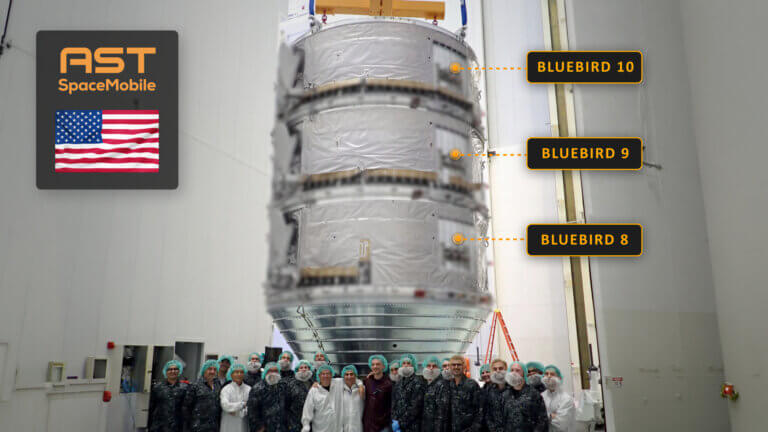
AST SpaceMobile continues to scale production, with satellites through BlueBird 32 currently in manufacturing. The next tranche—BlueBird 8 through 10—is expected to be ready for shipment within approximately 30 days. The company reiterated plans for an average launch cadence of one to two missions per month in 2026, targeting roughly 45 satellites in orbit by year-end, supported by multiple launch providers including Blue Origin and others.
- BlueBird 7 placed into lower-than-planned orbit during New Glenn 3 mission
- Satellite powered on but cannot maintain operational altitude
- Satellite will be de-orbited; loss covered by insurance
- BlueBird 7 would have been the 8th satellite in AST’s LEO constellation
- BlueBird 8–10 expected to ship within ~30 days
- Production underway through BlueBird 32
- Targeting ~45 satellites in orbit by end of 2026
- Launch cadence projected at 1–2 missions per month
“We continue to expect an orbital launch every one to two months on average during 2026, supported by agreements with multiple launch providers, and we remain on track to deploy approximately 45 satellites in orbit by the end of 2026,” the company stated.
| New Glenn NG-3 Launch Anomaly |
|---|
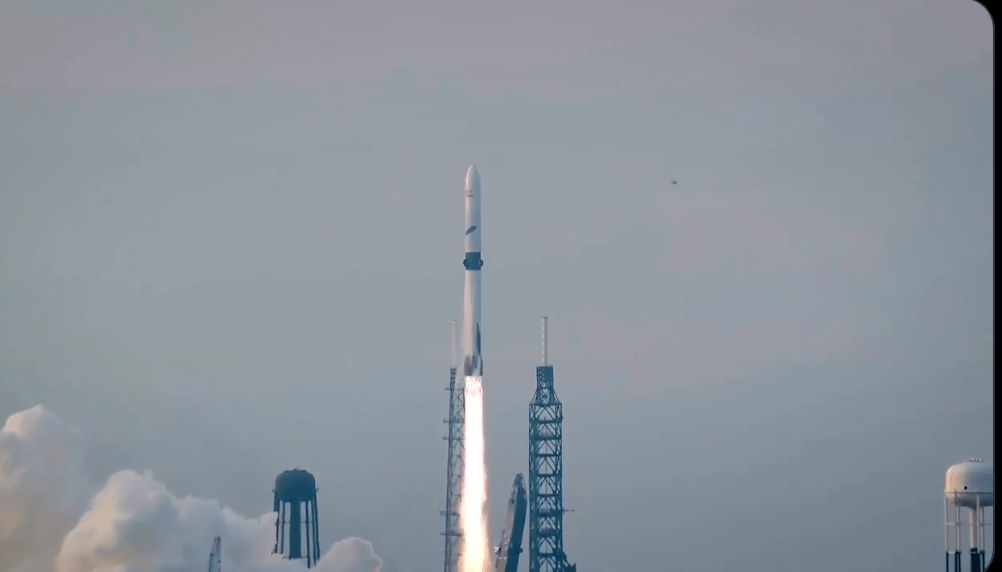
| On April 19, 2026, Blue Origin conducted its third New Glenn mission (NG-3) from Launch Complex 36 at Cape Canaveral, carrying AST SpaceMobile’s BlueBird 7 satellite. Liftoff occurred during a morning launch window, with the heavy-lift vehicle ascending on a southeasterly trajectory over the Atlantic. The mission marked the first reflight of a New Glenn first-stage booster, which successfully separated and executed a controlled landing on the drone ship Jacklyn, demonstrating progress toward the company’s reusability goals. However, the upper stage placed the payload into a lower-than-planned orbit. Although the satellite successfully separated and powered on, the reduced altitude is insufficient for sustained operations using onboard propulsion, and the spacecraft is expected to de-orbit. The anomaly represents a payload shortfall for the mission even as the booster recovery milestone underscores incremental progress in launch system maturity. |
| New Glenn Key Specs • Height: ~320 ft (98 meters) • Configuration: Two-stage, partially reusable heavy-lift rocket • First Stage: 7 × BE-4 engines (LOX + LNG), designed for ~25 reuses • Upper Stage: BE-3U engines (LOX + LH2) • Payload Capacity: ~45 metric tons (≈99,000 lbs) to LEO; ~13 metric tons (≈28,600 lbs) to GTO • Fairing Diameter: 23 ft (7 meters) • Launch Site: Launch Complex 36, Cape Canaveral, Florida • Program Timeline: First launch January 2025; third flight within ~15 months • Market Positioning: Competes with SpaceX Falcon 9/Falcon Heavy for commercial, government, and deep space missions |
🌐 Analysis: The loss of BlueBird 7 highlights ongoing execution risk in scaling LEO constellations, particularly as new heavy-lift platforms like Blue Origin’s New Glenn enter early operational phases. AST SpaceMobile has pursued an aggressive deployment strategy to support its direct-to-smartphone architecture, which depends on large phased-array satellites and precise orbital parameters.
🌐 Analysis: The company’s ability to recover costs through insurance and maintain production momentum aligns with recent progress, including expanded launch agreements and continued satellite manufacturing scale-up.