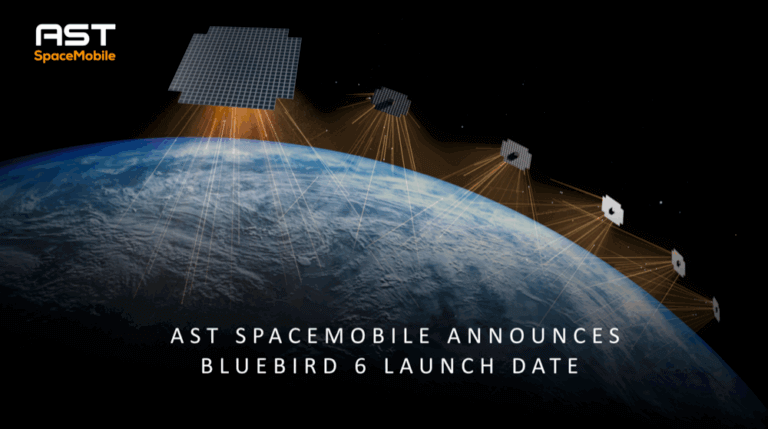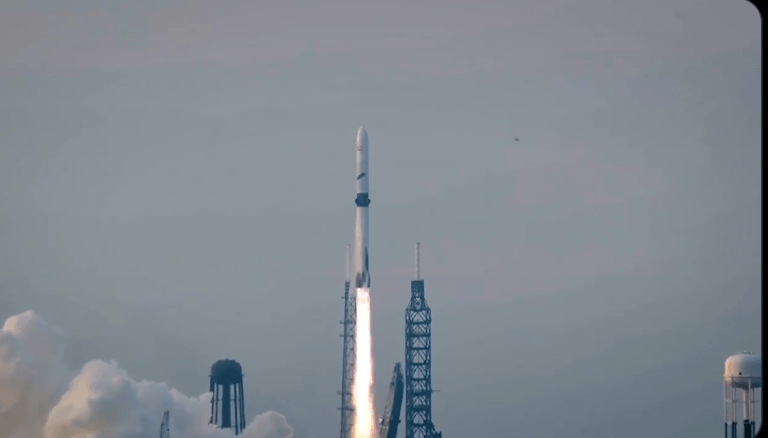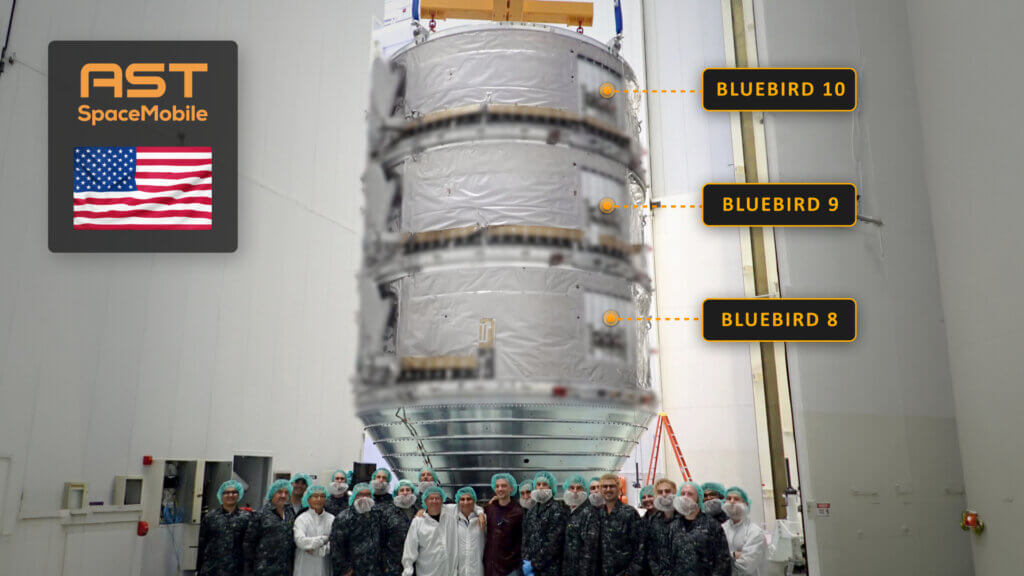
AST SpaceMobile announced that its BlueBird 8, 9, and 10 satellites are scheduled to launch on June 17, 2026, from Cape Canaveral aboard a SpaceX Falcon 9 rocket. The mission will deploy three next-generation BlueBird satellites designed to expand the company’s direct-to-device cellular broadband constellation, enabling voice, data, and video services directly to standard, unmodified smartphones.
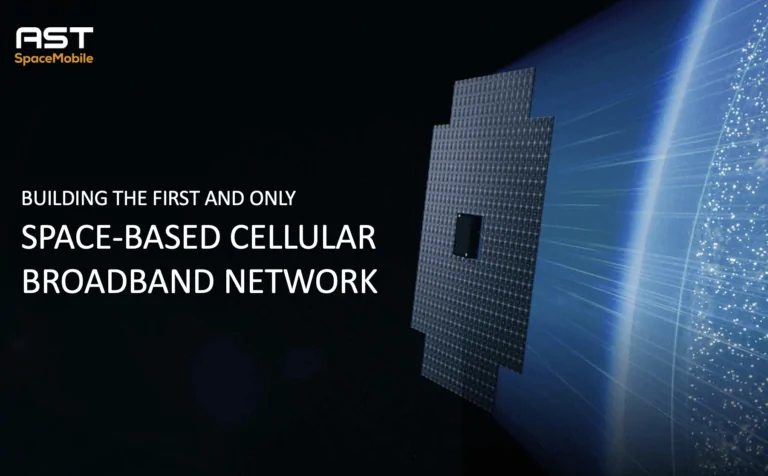
The satellites incorporate AST SpaceMobile’s new stackable satellite architecture, including advanced carbon composite structures intended to support multi-satellite launches and accelerate constellation deployment. The company said the new satellites are expected to deliver nearly double the peak performance of its initial Block 1 BlueBird spacecraft, which recently achieved download speeds of 98.9 Mbps directly to conventional smartphones. Like the previously launched BlueBird 6 satellite, each spacecraft deploys an approximately 2,400-square-foot (223-square-meter) communications array, among the largest commercial communications arrays ever deployed in low Earth orbit.
AST SpaceMobile said the mission represents another step toward continuous global direct-to-device cellular coverage. The company currently reports agreements with nearly 60 mobile network operators representing more than 3 billion subscribers worldwide, including partnerships with AT&T, Verizon, Vodafone, Rakuten, Google, Bell, Telus, stc Group, and American Tower. The satellites were designed and manufactured largely in-house, with approximately 95% of the technology developed internally across the company’s global manufacturing facilities.
- Launch scheduled for June 17, 2026
- Three satellites: BlueBird 8, 9, and 10
- Launch vehicle: SpaceX Falcon 9
- Supports direct-to-device voice, data, and video services
- Nearly double the peak performance of initial Block 1 BlueBird satellites
- Previous BlueBird satellites demonstrated 98.9 Mbps downloads to standard smartphones
- Each satellite deploys a 2,400-square-foot (223-square-meter) communications array
- Agreements with nearly 60 mobile operators serving more than 3 billion subscribers
- Partnerships include AT&T, Verizon, Vodafone, Rakuten, Bell, Telus, Google, and American Tower
“Our upcoming launch marks another important milestone as we continue advancing the deployment of our space-based cellular broadband network,” said Scott Wisniewski, President of AST SpaceMobile.
🌐 Analysis
The June launch follows a significant shift in AST SpaceMobile’s launch strategy. Earlier plans called for deploying satellites using multiple launch providers, including Blue Origin’s New Glenn rocket. However, repeated delays in New Glenn’s operational schedule forced AST SpaceMobile to increasingly rely on SpaceX Falcon 9 missions to maintain its constellation deployment timeline. The company’s new stackable satellite architecture appears designed in part to reduce dependence on any single launch provider while improving flexibility as launch availability fluctuates across the industry.
The launch also highlights the growing competition in the direct-to-device satellite market. AST SpaceMobile continues to differentiate itself through large phased-array satellites designed to connect directly with existing mobile spectrum and standard smartphones. Competitors including SpaceX Starlink Direct-to-Cell, Lynk Global, and several emerging satellite operators are pursuing similar opportunities, but AST’s strategy centers on larger satellites capable of delivering higher throughput and broadband-class performance. The company’s reported 98.9 Mbps demonstration and broad operator partnership base suggest it remains one of the leading contenders in the emerging satellite-to-smartphone sector.
| Company Profile: AST SpaceMobile | |
|---|---|
| Ticker | NASDAQ: ASTS |
| Headquarters | Midland, Texas, USA |
| Founder & CEO | Abel Avellan |
| Mission | Direct-to-device cellular broadband from space utilizing unmodified, standard smartphones. |
| Technology | Large, stackable low-Earth orbit (LEO) phased-array satellites operating with existing terrestrial mobile spectrum. |
| Latest Mission | BlueBird 8, 9, and 10: Scheduled for launch on June 17, 2026 from Cape Canaveral, FL via a SpaceX Falcon 9 rocket. |
| Satellite Array Size | ~2,400 sq ft (223 sq m) commercial communications arrays per satellite. |
| Demonstrated Speeds | Peak: 98.9 Mbps to smartphones (Block 1). ※ Next-gen BlueBirds are designed to target nearly double these peak data speeds. |
| Global Reach | Agreements with nearly 60 mobile network operators, representing a combined pool of over 3 billion subscribers. |
| Strategic Partners | AT&T, Verizon, Vodafone, Rakuten, Google, Bell, Telus, stc Group, and American Tower. |
| Manufacturing Model | Vertically integrated; roughly 95% of satellite tech is designed, engineered, and built in-house. |
| Operational Scale | Over 2,250 employees utilizing more than 500,000 sq ft of global operations and manufacturing space. |