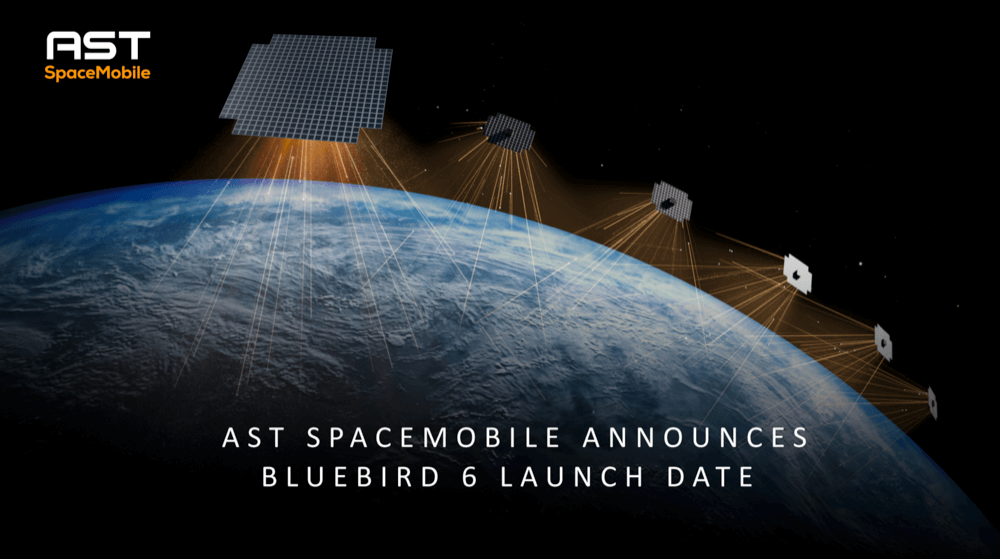
AST SpaceMobile is advancing its effort to extend cellular networks into space, providing an update on the deployment of its direct-to-device satellite infrastructure while confirming the timing of its first quarter 2026 financial results. The update highlights continued progress on the company’s BlueBird satellite constellation and its integration with mobile network operator (MNO) partners.
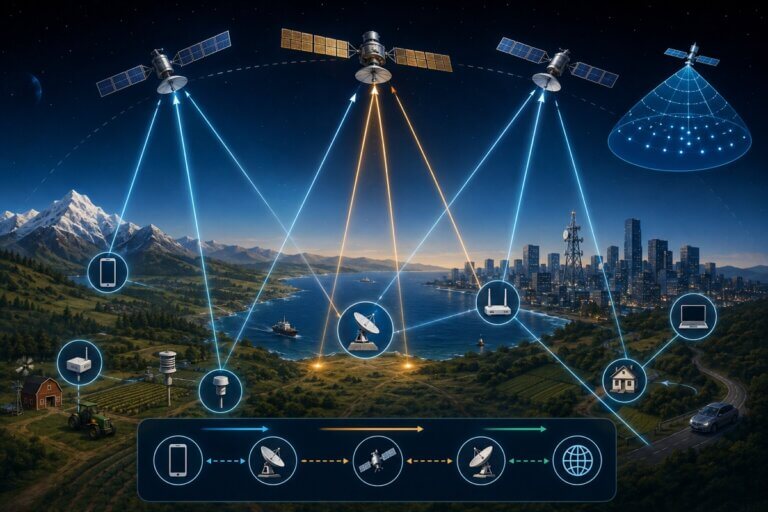
The company indicated that development and deployment efforts remain focused on scaling its space-based infrastructure to support commercial service. AST SpaceMobile’s approach is designed to enable standard mobile devices to connect directly to satellites without specialized hardware, extending coverage beyond terrestrial networks. The update reinforces the company’s strategy of working closely with telecom operators to integrate satellite connectivity into existing cellular ecosystems.
“Progress across our satellite deployment and partner ecosystem continues to position us for commercial service expansion,” the company noted, pointing to ongoing coordination with global MNO partners and preparations for next phases of network rollout. The BlueBird satellites are intended to provide broadband connectivity directly to smartphones, addressing coverage gaps in remote and underserved regions.
Key Points:
- Business update includes timing for Q1 2026 financial results
- Continued progress on BlueBird satellite constellation deployment
- Focus on direct-to-device connectivity using standard smartphones
- Ongoing integration with global telecom operator partners
- Advancing toward commercial-scale satellite cellular service
🌐 Analysis
AST SpaceMobile’s update reflects steady execution toward a new class of hybrid network architecture that blends terrestrial cellular infrastructure with space-based coverage. While incremental, these updates are important indicators of progress in a segment that has attracted significant industry attention, including parallel efforts from other satellite and mobile ecosystem players.
The direct-to-device model represents a departure from traditional satellite communications, which typically require specialized terminals. By targeting compatibility with standard smartphones, AST SpaceMobile is positioning its network as an extension of existing mobile infrastructure rather than a separate system. This approach could lower adoption barriers while enabling telecom operators to extend coverage without building additional terrestrial infrastructure.
From an infrastructure perspective, the key challenges remain scale, spectrum coordination, and integration with existing cellular networks. As deployment progresses, the competitive landscape will increasingly center on execution—satellite launches, network performance, and operator partnerships—rather than concept validation.
| Parameter | Specification |
|---|---|
| Satellite Platform (Current Generation) | BlueBird (first-generation commercial direct-to-device satellites; following BlueWalker 3 demonstration mission) |
| Production Batch | Initial BlueBird Block 1 satellites (first commercial deployment wave) |
| Orbit | Low Earth Orbit (LEO) |
| Primary Function | Direct-to-device cellular broadband using standard smartphones |
| Spectrum Model | Licensed terrestrial cellular spectrum via MNO partners (sub-6 GHz) |
| Antenna Architecture | Large deployable phased-array |
| Antenna Size | ~64 m² class (based on BlueWalker 3; BlueBird expected comparable or larger) |
| Connectivity Model | Direct connection to unmodified 4G/5G devices |
| Network Integration | Integrated into mobile operator core networks |
| Backhaul | Satellite-to-gateway links into terrestrial infrastructure |
| Latency | LEO-class (tens of milliseconds) |
| Constellation Plan | Phased deployment: initial dozens of satellites scaling toward global coverage (hundreds-class) |
| Satellites in Orbit | BlueWalker 3 operational; BlueBird satellites entering initial commercial deployment phase |
| Launch Providers | Multiple providers including SpaceX (Falcon 9); additional agreements include Blue Origin (New Glenn) and ISRO (India) for future launches |
| Key Telecom Partners | AT&T, Vodafone, and other global MNO partners |
| Key Differentiator | Direct use of standard cellular spectrum for connectivity to everyday smartphones |