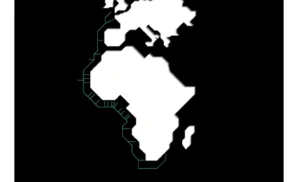
Africa’s Atlantic Coast Set for New High-Capacity Subsea Cable
A new Atlantic subsea cable initiative aims to reshape digital connectivity between Europe and Africa by adding a fresh high-capacity route designed to improve…

A journal for networking and telecoms
Subsea network coverage
Tracking cable systems, landing stations, marine routes, coherent transmission, financing and the cloud-driven expansion of global capacity.
Coverage architecture
Converge Digest follows the submarine cable systems carrying international traffic between continents. Coverage spans new routes, cable ownership, hyperscaler investment, landing stations, wet-plant technology, coherent transmission, marine installation and geopolitical resilience.
New routes, consortium structures, ownership and capacity design.
See the companies ↓02Fiber pairs, repeaters, branching units and marine engineering.
See the companies ↓03Cable landing stations, terrestrial backhaul and data center interconnection.
See the companies ↓04Financing, route diversity, regulation, repair and geopolitical risk.
See the companies ↓Latest reporting
A new Atlantic subsea cable initiative aims to reshape digital connectivity between Europe and Africa by adding a fresh high-capacity route designed to improve…

Sparkle, the international services arm of TIM Group, signed a memorandum of understanding with Jordan-based NaiTel and advisory firm iLevant to extend the GreenMed…

NEC Corporation has completed construction of the East Micronesia Cable System (EMCS), a 2,250 km subsea cable connecting the Federated States of Micronesia (FSM),…

Ooredoo Group and du announced plans to land the Fibre in the Gulf (FIG) subsea cable system at a du cable station in the…
Cerberus Capital Management raised $2.3 billion in new capital for SubCom through a continuation vehicle, extending its ownership and adding fresh equity to support the company’s…
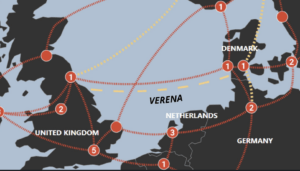
Altibox Carrier confirmed that the Verena subsea cable project between the United Kingdom and Denmark has entered the delivery phase, with the contract now…

A new high-capacity subsea cable system known as Candle is moving forward across the Asia-Pacific, targeting service activation in 2028 with a design capacity…

TIME dotCom Berhad deployed new coherent optical technology from Ciena across the FASTER submarine cable system, enabling 1 Tbps data transmission on a single…
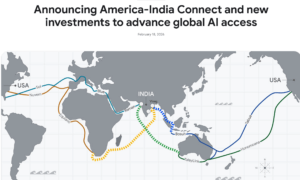
On India’s west coast, Google will deploy a direct fiber path between Mumbai and Western Australia. In combination with the TalayLink subsea cable system and Honomoana subsea…

Sparkle signed an agreement with Alcatel Submarine Networks and Elettra Tlc to build GreenMed, a new subsea cable system spanning the Central–Eastern Mediterranean. The project establishes a fresh corridor…
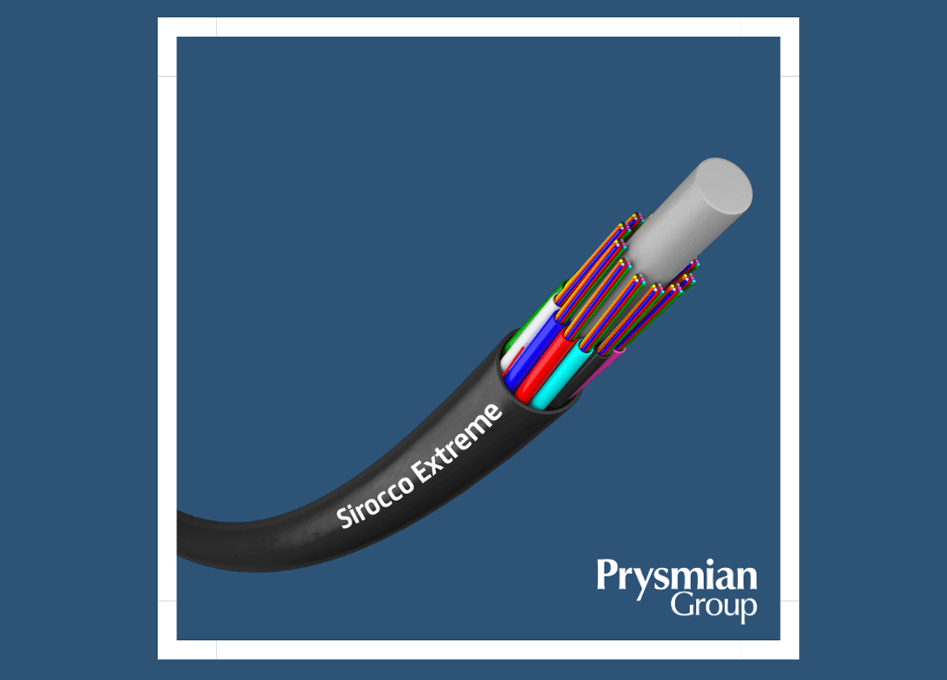
Prysmian announced plans to acquire ACSM, a Spain-based provider of submarine cable survey and installation services, in a transaction valued at €169 million. The deal, which…
Trans Pacific Networks (TPN) has selected Ciena optical technology to increase capacity and efficiency across the Echo and Tabua submarine cable systems, strengthening digital connectivity between…
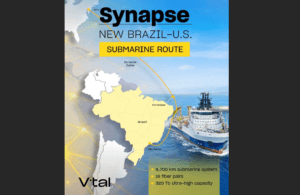
V.tal has unveiled Synapse, a next-generation submarine cable system designed to significantly expand digital connectivity between Brazil and the United States, addressing surging demand from AI, cloud,…
Topic explorer
Use these curated entry points to move from the category overview into specific technologies, markets and the reporting attached to them.
Industry ecosystem
Submarine cables carry effectively all intercontinental traffic. Five groups of companies build, light, lay and pay for them.
Turnkey suppliers delivering wet plant, terminal equipment and installation.
Coherent line terminals and the DSPs setting per-fiber-pair capacity.
Fiber, armouring and cable production for deep-water and shore-end segments.
Cable ship operators handling laying, burial and the repair fleet resilience depends on.
Hyperscalers now fund and own a majority of new transoceanic capacity.
An editorially curated view, not a complete industry directory. Selection reflects market leadership, technology transitions and Converge Digest coverage volume. Browse the full archive →