China Telecom Tests 260 Mbps FDD- TDD Carrier Aggregation with Nokia
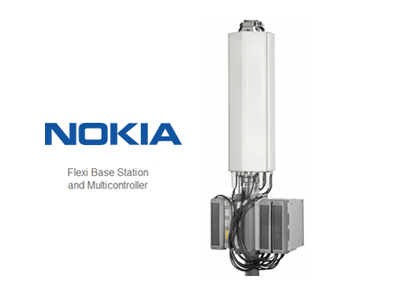
China Telecom, in partnership with Nokia Networks, has demonstrated the world-first FDD-TDD carrier aggregation including a user device chipset.
In the demo, Nokia’s LTE base station achieved interoperability with a commercial user chipset developed by Marvell. A stable peak download speed of 260 Mbps was achieved in the carrier aggregation demonstration with FDD 20 MHz in 1.8 GHz and TDD 20 MHz in 2.6 GHz spectrum. For the total speed, FDD spectrum contributed to 150 Mbps while TDD spectrum contributed to 110 Mbps.
“It’s highly satisfying to achieve yet another world-first* toward commercialization and globalization of FDD-TDD carrier aggregation,” said Zhang Qi, Vice President of TD-LTE, Nokia Networks. “This achievement with our partner China Telecom will also encourage other operators globally to look at further spectrum combination for FDD-TDD carrier aggregation into advanced 3GPP Rel-12. We are already working with many major operators globally to deliver FDD-TDD convergence for commercial use.”
Every article published by Converge Digest is researched, curated, fact-checked and editorially reviewed by Jim Carroll, Editor & Publisher. AI-assisted drafting may be used to accelerate production, but all content is reviewed, refined and approved prior to publication.
You just read about Nokia. One of the companies whose work it now carries:
Infinera built Coherent optical transport, photonic integration and DCI. What became of it?
Infinera brought Coherent optical transport, photonic integration and DCI to Optical. That work was distinctive enough to lead to its acquisition by Nokia for US$2.3B. The standalone name now passes into the archive — but the team and technology continue inside Nokia today. One of 430 names here whose work outlived the company.
You just read about LTE. Here is what it replaced:
iDEN served 1994–2013. What ultimately replaced it?
iDEN motorola's TDMA system that layered digital cellular voice, data, and near-instant push-to-talk (Direct Connect) onto fragmented SMR radio channels. Its job passed to LTE — but the problem it solved, and the ideas it proved, live on in what replaced it. The standard rests here in the archive. One of 198 technologies here that opened a door and then held it for the next.