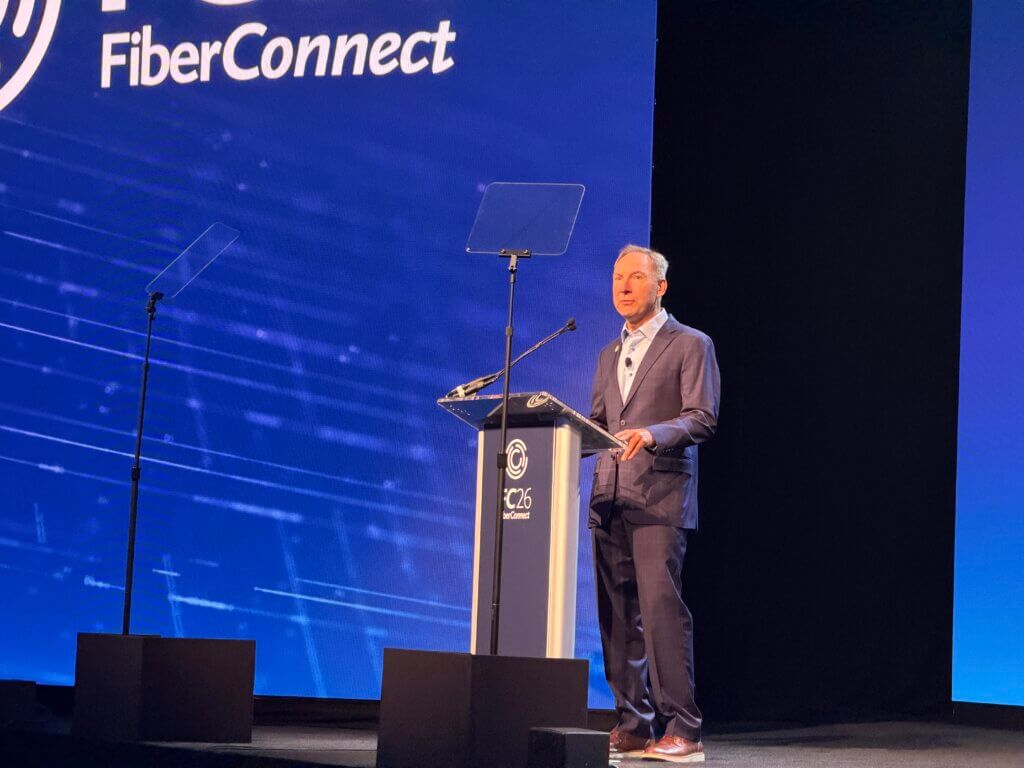
ORLANDO — Opening the Fiber Connect 2026, Gary Bolton articulated a broader strategic vision for the fiber industry: fiber infrastructure is no longer simply about delivering faster broadband access to homes and businesses. Instead, Bolton argued that fiber is becoming foundational infrastructure for AI platforms, hyperscale computing, and what he repeatedly described as an emerging “thinking economy.”
The keynote reflected a noticeable shift in tone across the broadband sector. In previous years, industry discussions often centered on digital divide policy, rural deployment challenges, and federally subsidized broadband expansion programs. At Fiber Connect 2026, the emphasis moved decisively toward private investment, AI infrastructure, optical interconnect density, and large-scale compute architectures. Bolton barely referenced BEAD or other federal funding initiatives during the session. Instead, he highlighted the scale of private capital now flowing into fiber infrastructure and positioned the industry as a core enabler of the next generation of AI-driven economic growth.
“We are no longer in an information economy,” Bolton said during the keynote. “We are entering a thinking economy.”
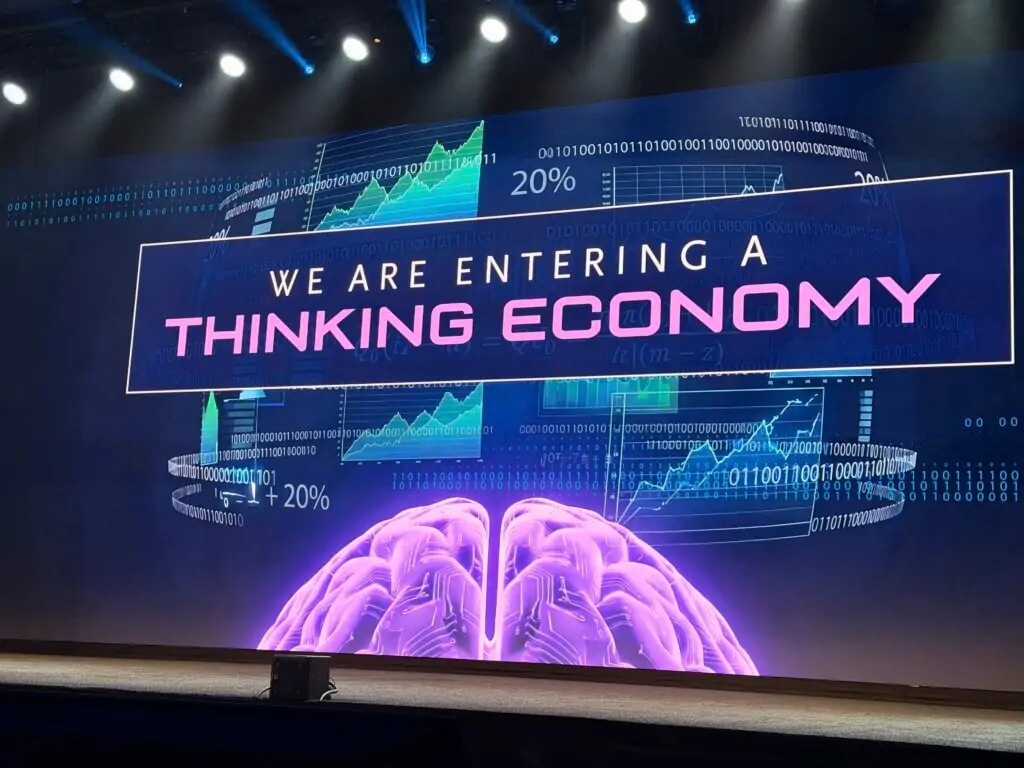
Bolton argued that the value of future networks will increasingly depend not simply on transporting data, but on enabling intelligence to move instantly and reliably between cloud platforms, AI clusters, businesses, and consumers. He described fiber infrastructure as “the nervous system of a thinking world,” linking residential broadband deployments directly to hyperscale AI systems and cloud infrastructure.
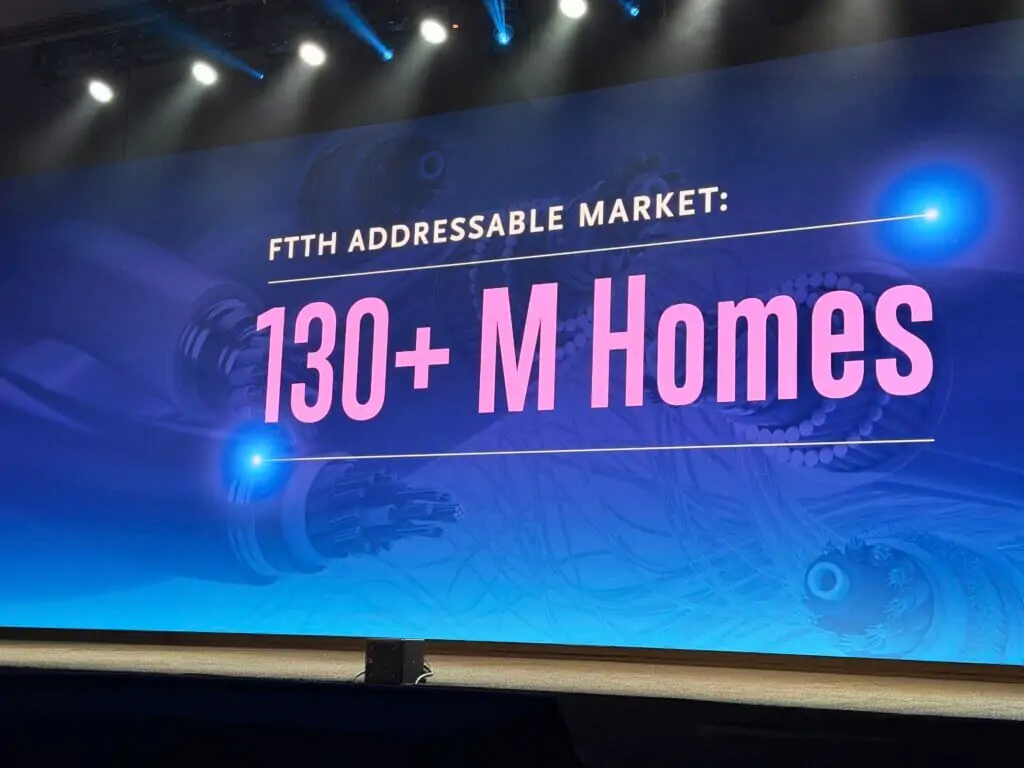
The keynote presented updated deployment figures intended to demonstrate the scale of the current investment cycle. According to Bolton, the United States added 45.9 million fiber passings over the last five years, bringing the national total above 100 million homes passed. The industry passed a record 11.8 million homes during 2025 and is expected to exceed that pace again this year. Bolton projected another 60 million unique homes could receive fiber access over the next five years and estimated the total U.S. FTTH addressable market at more than 130 million homes.
He characterized the expansion as “one of the largest infrastructure expansions in modern American history.”
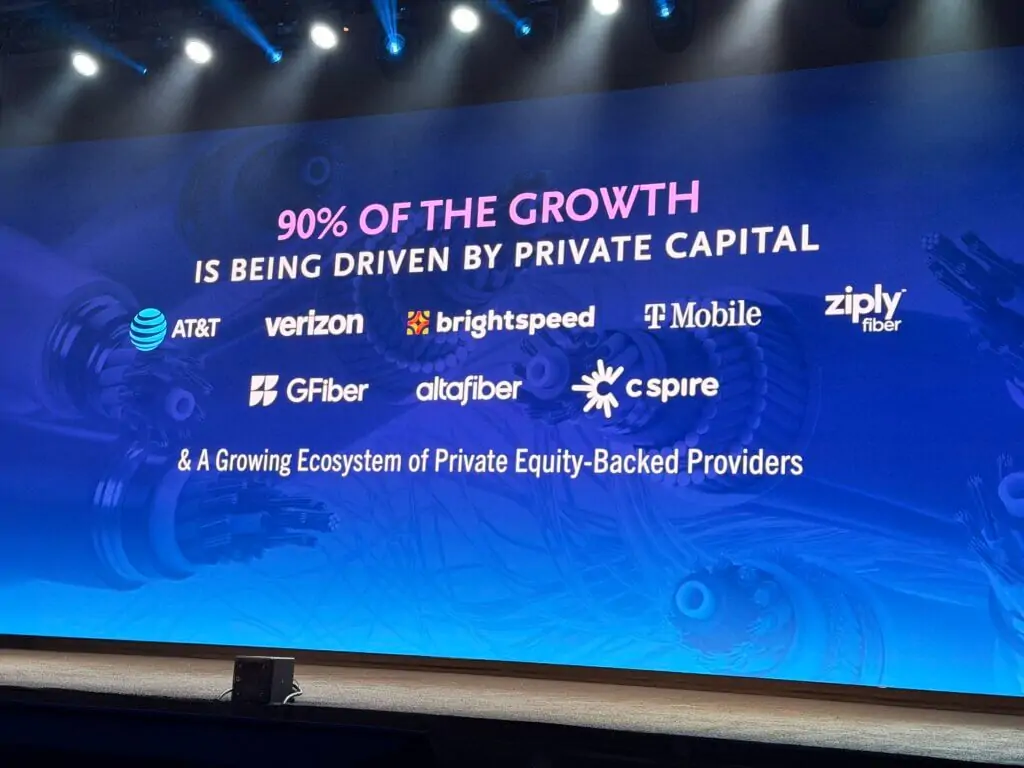
The keynote also emphasized that much of the current momentum comes from private investment rather than government subsidies. Bolton said approximately 90% of current fiber growth is being funded by private capital, citing deployment initiatives from operators including AT&T, Verizon, Brightspeed, T-Mobile, GFiber, Altafiber, C Spire, and Ziply Fiber, alongside an expanding ecosystem of infrastructure and private-equity-backed providers.
Bolton highlighted AT&T’s previously announced goal of reaching more than 60 million fiber locations by 2030 as evidence that large operators continue to see long-term economic returns from fiber expansion. His remarks suggested that the broadband industry increasingly views fiber not merely as an access technology, but as strategic infrastructure supporting cloud-scale compute, AI inference, edge intelligence, and optical interconnection between distributed data center environments.
AI infrastructure formed the keynote’s second major pillar. Bolton cited annual AI infrastructure spending from Microsoft, Amazon, Google, and Meta at roughly $370 billion collectively. He argued that AI workloads require dense fiber architectures, resilient optical connectivity, low-latency transport, and massive east-west bandwidth scaling between hyperscale campuses.
“The same fiber connecting homes is part of the same system that connects AI data centers,” Bolton said.
That convergence theme appeared throughout the conference opening. Rather than treating consumer broadband, enterprise connectivity, and hyperscale AI as separate markets, the keynote framed them as components of a single integrated infrastructure platform. The implication was that future fiber investment will increasingly be justified not only by residential subscriber growth, but also by the rising demands of AI infrastructure, cloud providers, and distributed compute systems.
Bolton also acknowledged several constraints facing the industry, including power availability for AI campuses, permitting complexity, and workforce shortages. He cited estimates that more than 200,000 additional workers may be required to sustain the pace of U.S. fiber deployment now underway.
Attendance at Fiber Connect 2026 appeared to reflect the industry’s broader transition. Conference organizers described this year’s event as the largest in the organization’s history, drawing broadband operators, hyperscalers, optical networking suppliers, infrastructure investors, cloud ecosystem firms, and AI-focused technology vendors into a common discussion about next-generation infrastructure.
The broader mood surrounding the event also felt notably more optimistic than in previous years. Rather than focusing primarily on subsidy programs or rural deployment gaps, the conversation increasingly centered on long-term infrastructure demand driven by AI, cloud computing, optical networking, and the continued expansion of digital systems across the economy.
🌐 We’re tracking the latest developments in AI infrastructure and broadband networking. Follow our ongoing coverage at: https://convergedigest.com/category/