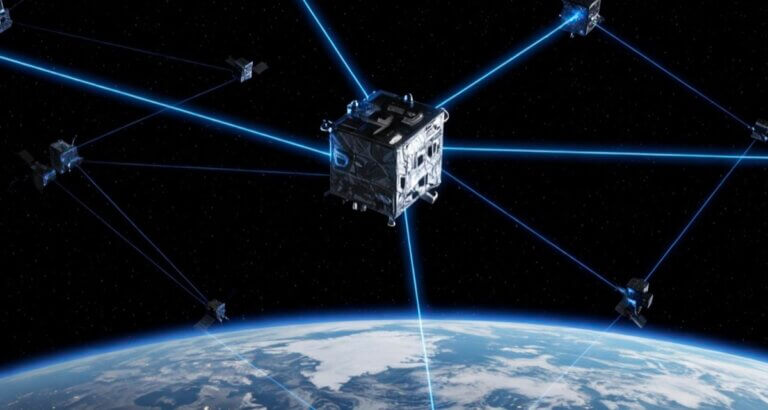
Infleqtion is preparing to deploy a quantum system aboard the International Space Station in collaboration with NASA, marking a new step toward space-based quantum sensing and future quantum networking infrastructure. The mission will place advanced quantum hardware in orbit to test precision timing, sensing, and communications capabilities in a microgravity environment.
The deployment is part of a broader effort to explore how quantum systems can operate beyond terrestrial constraints, where reduced noise and unique environmental conditions may enable higher performance for certain classes of measurements. The system is expected to support experiments in quantum sensing and timing—both foundational elements for next-generation secure communications and distributed quantum networks.
“Operating quantum systems in space opens new possibilities for precision measurement and networking that are difficult to achieve on Earth,” the company noted, highlighting the role of orbital platforms as testbeds for emerging quantum infrastructure. The work aligns with ongoing research into quantum-secure communications, including quantum key distribution (QKD) and future quantum repeater architectures that could extend secure links over global distances.
Key Points:
- Quantum system deployment to the ISS for sensing and networking research
- Focus on precision timing, measurement, and future secure communications
- Microgravity environment may enable enhanced quantum system performance
- Early step toward space-based quantum networking infrastructure
🌐 Analysis
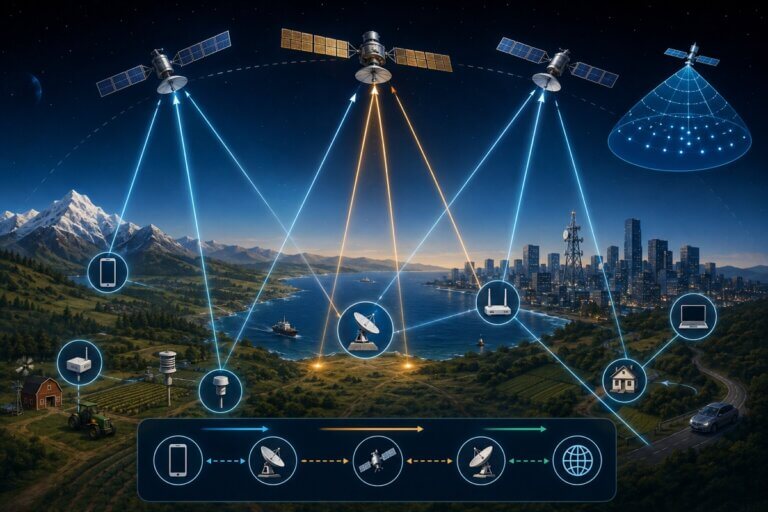
The Infleqtion–NASA effort reflects a growing convergence between quantum technologies and space infrastructure. While still experimental, placing quantum systems in orbit directly addresses one of the key challenges in quantum networking: extending secure links over long distances. Space-based platforms offer a potential pathway to bypass terrestrial limitations such as fiber attenuation and environmental noise.
At the same time, this announcement underscores how quantum networking is evolving alongside broader AI and data infrastructure trends. Precision timing and synchronization—critical for distributed AI workloads and high-performance networking—are also core use cases for quantum sensing. As a result, early experiments like this may ultimately influence not just secure communications, but also the synchronization and coordination of large-scale compute systems.
In practical terms, this remains a research-stage development. However, it signals increasing alignment between space agencies and private quantum companies, and reinforces the notion that future networking architectures—particularly those focused on security and global reach—may span both terrestrial and orbital domains.