• Home
  • About
  • Events Calendar
  • Blueprint Guidelines
  • Privacy Policy
  • Manage Email Delivery
  • NextGenInfra.io
No Result
View All Result
Converge Digest
Thursday, June 4, 2026
  • Home
  • About
  • Events Calendar
  • Blueprint Guidelines
  • Privacy Policy
  • Manage Email Delivery
  • NextGenInfra.io
No Result
View All Result
Converge Digest
No Result
View All Result

Home » Intel's Flash NAND Promises 5X Performance Boost, Targets USB 3.0

Intel's Flash NAND Promises 5X Performance Boost, Targets USB 3.0

February 3, 2008
in Uncategorized
A A

Intel and Micron Technology unveiled a jointly-developed high speed NAND flash memory technology that is five times faster than conventional NAND, reaching speeds up to 200 megabytes per second (MB/s) for reading data and 100 MB/s for writing data. The performance is achieved by leveraging the new ONFI 2.0 specification and a four-plane architecture with higher clock speeds. In comparison, conventional single level cell NAND is limited to 40 MB/s for reading data and less than 20 MB/s for writing data.

The companies cited a number of advantages of their high speed NAND:

  • When used in a hybrid hard drive, high speed NAND can allow the system to read and write data anywhere between two or four times the speed when compared to conventional hard drives.
  • With the popularity of digital video cameras and video on demand services, high speed NAND can enable a high-definition movie to be transferred five times faster than conventional NAND.
  • With the pending USB 3.0 interface, high speed NAND is expected to effectively deliver on the increased data transfer rates of the new specification, where conventional NAND would act as the bottleneck in system performance. USB 3.0 is aiming for 10 times the bandwidth of current USB 2.0 solutions, or approximately achieving 4.8 Gbps (gigabits per second).
  • As NAND continues to move into the PC platform, the Non-Volatile Memory Host Controller Interface (NVMHCI) can take advantage of high speed NAND in solutions such as Intel Turbo Memory, allowing for even better system performance. NVMHCI is designed to provide a standard software programming interface allowing operating system drivers to access NAND flash memory storage in applications such as hard drive caching and solid-state drives.

http://www.micron.com/highspeednandhttp://www.intel.com

Tags: AllSilicon
ShareTweetShareSummarizeSummarize
Previous Post

Co-Founder of Zhone Technologies Killed in Plane Crash

Next Post

NFL Network Leverages Signiant's Digital Media Distribution Solution

Staff

Staff

Related Posts

Data Centers

Montage Technology Samples PCIe 6.x/CXL 3.x Retimer Chips

January 22, 2025
Semiconductors

Intel marks first EUV light at Fab 34 in Ireland

December 30, 2022
All

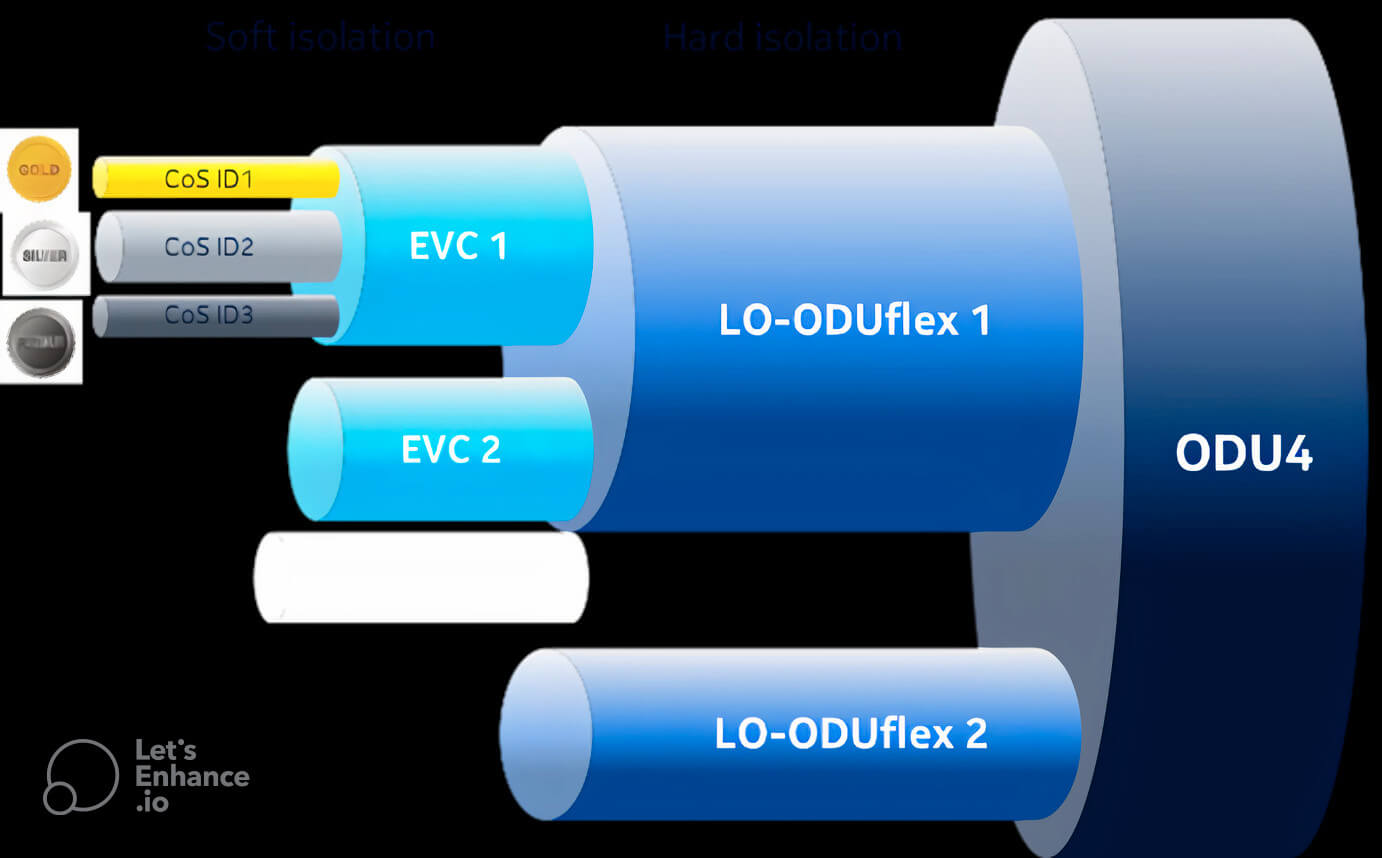
Blueprint: Building wholesale networks with OTN

December 20, 2022

Huawei and Orange achieve 157 Tbps over 120km fiber link

December 20, 2022
All

Oracle opens cloud region in Chicago

December 20, 2022
All

BT trials C-RAN in Leeds

December 19, 2022
Next Post

Vitesse Embeds Waveform Viewing in ICs

Please login to join discussion

Categories

  • 5G / 6G / Wi-Fi
  • AI Infrastructure
  • All
  • Automotive Networking
  • Blueprints
  • Clouds and Carriers
  • Data Centers
  • Enterprise
  • Explainer
  • Feature
  • Financials
  • Last Mile / Middle Mile
  • Legal / Regulatory
  • Optical
  • Quantum
  • Research
  • Security
  • Semiconductors
  • Space
  • Start-ups
  • Subsea
  • Sustainability
  • Video
  • Webinars

Archives

Tags

5G All AT&T Australia AWS Blueprint columns BroadbandWireless Broadcom China Ciena Cisco Data Centers Dell'Oro Ericsson FCC Financial Financials Huawei Infinera Intel Japan Juniper Last Mile Last Mille LTE Mergers and Acquisitions Mobile NFV Nokia Optical Packet Systems PacketVoice People Regulatory Satellite SDN Service Providers Silicon Silicon Valley StandardsWatch Storage TTP UK Verizon Wi-Fi
Converge Digest

A private dossier for networking and telecoms

Follow Us

  • Home
  • About
  • Events Calendar
  • Blueprint Guidelines
  • Privacy Policy
  • Manage Email Delivery
  • NextGenInfra.io

© 2026 Converge Digest - A private dossier for networking and telecoms.

No Result
View All Result
  • Home
  • About
  • Events Calendar
  • Blueprint Guidelines
  • Privacy Policy
  • Manage Email Delivery
  • NextGenInfra.io

© 2026 Converge Digest - A private dossier for networking and telecoms.

This website uses cookies. By continuing to use this website you are giving consent to cookies being used. Visit our Privacy and Cookie Policy.
Go to mobile version