• Home
  • About
  • Events Calendar
  • Blueprint Guidelines
  • Privacy Policy
  • Manage Email Delivery
  • NextGenInfra.io
No Result
View All Result
Converge Digest
Friday, June 5, 2026
  • Home
  • About
  • Events Calendar
  • Blueprint Guidelines
  • Privacy Policy
  • Manage Email Delivery
  • NextGenInfra.io
No Result
View All Result
Converge Digest
No Result
View All Result

Home » Palo Alto Networks Firewall Blocks Facebook Social Plug-ins

Palo Alto Networks Firewall Blocks Facebook Social Plug-ins

May 4, 2010
in Uncategorized
A A

Palo Alto Networks has upgraded its firewall with new functionality that enables enterprises to control Facebook Social Plug-ins.

The company said Facebook users in enterprises are susceptible to having their confidential data shared with third parties because of changes at Facebook that can cause behavioral data from its users to be made available to others unless a user explicitly opts out. The new default Facebook privacy settings are designed to share private and corporate information with advertisers and other third parties. In enterprises, this policy has major implications, as there is no central way for IT security teams to protect their users from the unknown and – in almost all cases – unwanted privacy impact, which involves the sharing of behavioral and website information with Facebook and its advertising customers.

Palo Alto Networks’ new App-ID allows IT security teams to protect their Facebook users against the undesired data sharing while transparently preserving Facebook functionality and not breaking the functionality of other websites that rely on the Facebook Social Plug-ins. Palo Alto Networks combines three identification technologies to provide visibility and control over Facebook-related functionality, users and content:

  • App-ID identifies exactly which Facebook functionality is running on the network, as well as the associated risks, so administrators can deploy comprehensive application usage control policies for inbound and outbound traffic.
  • User-ID integrates with Microsoft Active Directory and LDAP directories to link Facebook use to users and groups – not just IP addresses – for visibility, policy creation, logging and reporting.
  • Content-ID combines a real-time threat prevention engine with a comprehensive URL database to detect and block a wide range of threats, limit unauthorized transfer of files and data, enabling customers to scan permitted Facebook traffic for threats and confidential data.

http://www.paloaltonetworks.com

Tags: AllPacket Systems
ShareTweetShareSummarizeSummarize
Previous Post

AT&T Puts U-verse Content Online for PC Streaming

Next Post

Aviat Networks Posts Revenue of $120 Million

Staff

Staff

Related Posts

All

Blueprint: Building wholesale networks with OTN

December 20, 2022

Huawei and Orange achieve 157 Tbps over 120km fiber link

December 20, 2022
All

Oracle opens cloud region in Chicago

December 20, 2022
All

BT trials C-RAN in Leeds

December 19, 2022

BT to combine Enterprise and Global units to create BT Business

December 19, 2022

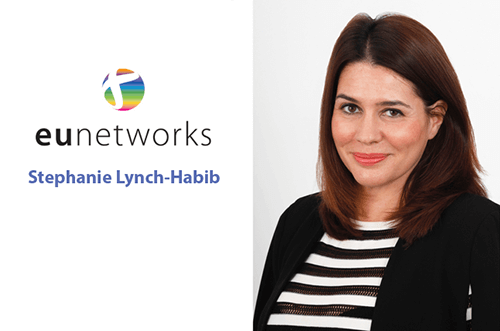
euNetworks appoints Stephanie Lynch-Habib to President

December 19, 2022
Next Post

Telegent Ships 80 Million Mobile TV Chips, Withdraws IPO

Please login to join discussion

Categories

  • 5G / 6G / Wi-Fi
  • AI Infrastructure
  • All
  • Automotive Networking
  • Blueprints
  • Clouds and Carriers
  • Data Centers
  • Enterprise
  • Explainer
  • Feature
  • Financials
  • Last Mile / Middle Mile
  • Legal / Regulatory
  • Optical
  • Quantum
  • Research
  • Security
  • Semiconductors
  • Space
  • Start-ups
  • Subsea
  • Sustainability
  • Video
  • Webinars

Archives

Tags

5G All AT&T Australia AWS Blueprint columns BroadbandWireless Broadcom China Ciena Cisco Data Centers Dell'Oro Ericsson FCC Financial Financials Huawei Infinera Intel Japan Juniper Last Mile Last Mille LTE Mergers and Acquisitions Mobile NFV Nokia Optical Packet Systems PacketVoice People Regulatory Satellite SDN Service Providers Silicon Silicon Valley StandardsWatch Storage TTP UK Verizon Wi-Fi
Converge Digest

A private dossier for networking and telecoms

Follow Us

  • Home
  • About
  • Events Calendar
  • Blueprint Guidelines
  • Privacy Policy
  • Manage Email Delivery
  • NextGenInfra.io

© 2026 Converge Digest - A private dossier for networking and telecoms.

No Result
View All Result
  • Home
  • About
  • Events Calendar
  • Blueprint Guidelines
  • Privacy Policy
  • Manage Email Delivery
  • NextGenInfra.io

© 2026 Converge Digest - A private dossier for networking and telecoms.

This website uses cookies. By continuing to use this website you are giving consent to cookies being used. Visit our Privacy and Cookie Policy.
Go to mobile version