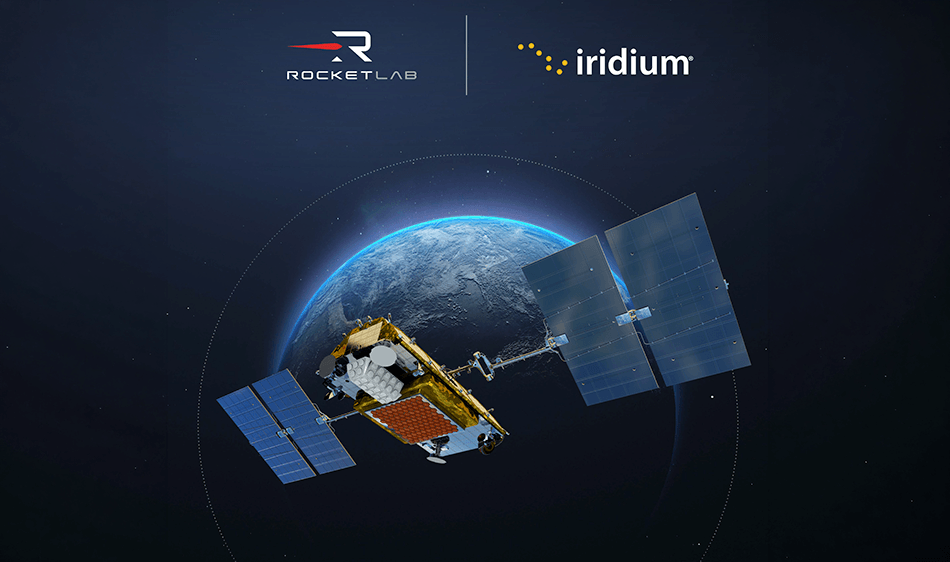
LONG BEACH, Calif. — Rocket Lab announced an agreement to acquire Iridium Communications in a cash-and-stock transaction valued at approximately $8.0 billion, marking one of the largest mergers in the commercial space industry. Under the terms of the agreement, Iridium shareholders will receive $54.00 per share, consisting of $27.00 in cash plus Rocket Lab shares, subject to an exchange ratio collar. The transaction, unanimously approved by both companies’ boards, is expected to close in mid-2027, pending shareholder and regulatory approvals.
The acquisition combines Rocket Lab’s launch services, spacecraft manufacturing, satellite components, and space systems businesses with Iridium’s global L-band satellite communications network, licensed spectrum, and customer base of more than 2.55 million active subscribers. The combined company will design, manufacture, launch, and operate its own satellite constellations while expanding into recurring communications services including satellite IoT, direct-to-device (D2D), positioning, navigation and timing (PNT), and government communications. Rocket Lab said integrating Iridium’s network with its own launch capabilities will reduce constellation deployment costs by eliminating reliance on third-party launch providers while accelerating development of Iridium’s next-generation satellite system.
Financially, the transaction significantly expands Rocket Lab’s recurring revenue base. Iridium generated $871.7 million in revenue during 2025, including approximately $495 million in OEBITDA, representing a 57% OEBITDA margin. Rocket Lab secured commitments for a $3.6 billion senior secured bridge loan facility from Deutsche Bank and Wells Fargo to finance the cash portion of the acquisition. The company intends to combine existing cash with additional debt and equity financing.
| Rocket Lab + Iridium (Pro Forma) | |
| Headquarters | Long Beach, California (Rocket Lab) / McLean, Virginia (Iridium) |
| Transaction Value | $8.0 Billion Enterprise Value |
| Offer | $54/share ($27 cash + Rocket Lab stock) |
| CEO | Sir Peter Beck (Rocket Lab) |
| Combined Capabilities | Launch • Satellite Manufacturing • Spacecraft Components • LEO Communications Network • L-band Spectrum • Satellite Services |
| Subscribers | 2.55+ million |
| 2025 Iridium Revenue | $871.7 million |
| 2025 OEBITDA | $495 million (57% margin) |
| Expected Close | Mid-2027 (subject to approvals) |
Peter Beck, founder and CEO of Rocket Lab, said: “This is a defining moment for the space industry and the start of a new era of strategic, accelerated growth for Rocket Lab and Iridium. By marrying Iridium’s deep heritage, trusted infrastructure, and highly sought-after spectrum with Rocket Lab’s extensive and proven launch and manufacturing capabilities, we have the capability to unlock entirely new markets.”
🌐 Analysis: The acquisition represents Rocket Lab’s evolution from a launch provider into a fully integrated space infrastructure company with recurring communications revenue. Rather than depending primarily on launch cadence and spacecraft manufacturing contracts, Rocket Lab gains ownership of a global operating satellite network, licensed spectrum assets, and long-term subscription revenue. This mirrors the industry’s broader shift toward vertically integrated space companies that combine launch, satellite production, and network operations.
Beyond the financial rationale, Rocket Lab gains access to two strategically important technology platforms. First, Iridium has been positioning its network for the emerging 3GPP Non-Terrestrial Network (NTN) ecosystem through its Iridium NTN Direct initiative. Rather than relying on proprietary satellite handsets, NTN Direct is designed to support standards-based direct-to-device (D2D) communications using compatible consumer smartphones and IoT devices, enabling global messaging, telemetry, and emergency SOS services over Iridium’s licensed L-band spectrum. The company has also introduced increasingly compact satellite modules, including the Iridium 9604 multi-mode transceiver, reducing the size, power consumption, and cost required to integrate global satellite connectivity into vehicles, industrial equipment, sensors, wearables, and other connected devices. Together, these developments position the Iridium network to participate in the broader convergence of terrestrial 5G and satellite communications.
Equally important is Iridium’s growing role in resilient Positioning, Navigation, and Timing (PNT). As concerns rise over GPS jamming, spoofing, and electronic warfare, governments and critical infrastructure operators are seeking independent timing and navigation sources. Iridium’s low Earth orbit constellation provides an alternative PNT capability using signals that are substantially stronger at the Earth’s surface than traditional medium Earth orbit GNSS signals, making them more resistant to interference. These services can provide backup timing and synchronization for defense operations, aviation, maritime navigation, financial trading networks, telecommunications infrastructure, electric power grids, and other mission-critical systems when conventional GPS or other GNSS services are degraded or unavailable. This capability has become increasingly significant as resilient PNT emerges as a national security priority in the United States and allied countries.
| 📡 Iridium Communications History, Spectrum & Strategic Assets • Updated: June 2026 | |
| Founded | 1987 by Motorola to build the world’s first truly global mobile satellite network. |
| Original Constellation | 66 operational LEO satellites (plus in-orbit spares), giving rise to the “Iridium” name, originally based on element 77 before the design was reduced to 66 satellites. |
| Bankruptcy & Revival | Filed for bankruptcy in 1999. Assets were purchased in 2000 by private investors for approximately $25 million, preserving the constellation and government customer base. |
| Current Headquarters | McLean, Virginia, USA |
| Current CEO | Matt Desch (since 2006) |
| Satellite Network | Iridium NEXT constellation consisting of 66 operational satellites plus on-orbit and ground spares in low Earth orbit (~780 km). |
| Orbital Architecture | 6 polar orbital planes providing true global coverage, including oceans and polar regions. |
| Inter-Satellite Links | Cross-linked satellites route traffic directly through space without requiring continuous ground station visibility. |
| Spectrum Assets | Globally coordinated L-band MSS spectrum, one of the industry’s most valuable mobile satellite spectrum holdings, supporting voice, IoT, D2D, aviation, maritime and government communications. |
| Subscribers | 2.55+ million active subscribers worldwide. |
| Major Markets | Defense • U.S. Government • Maritime • Aviation • Emergency Services • Industrial IoT • Critical Infrastructure • Scientific Expeditions |
| Key Technologies | Satellite Voice • Narrowband IoT • Satellite Messaging • Certus Broadband • PNT Services • NTN Direct (Direct-to-Device) |
| Strategic Assets | Globally licensed spectrum, worldwide gateway infrastructure, patented satellite technology, long-term government contracts, resilient cross-linked constellation and more than 500 ecosystem partners. |
| Financial Profile (2025) | Revenue: $871.7M • OEBITDA: $495M • Margin: 57% |
| 2026 Milestone | Agreed to be acquired by Rocket Lab in an approximately $8.0 billion transaction, creating a vertically integrated launch, satellite manufacturing and communications company. |
| Why It Matters: Iridium’s greatest strategic asset is not simply its satellites—it is its globally coordinated L-band mobile satellite spectrum, cross-linked LEO architecture, trusted government relationships, and nearly three decades of uninterrupted worldwide operations. These assets would take many years and billions of dollars to replicate. | |