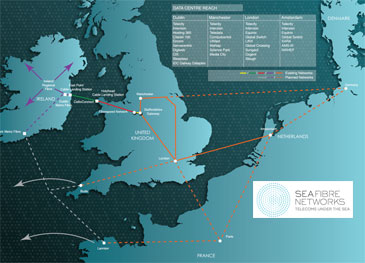
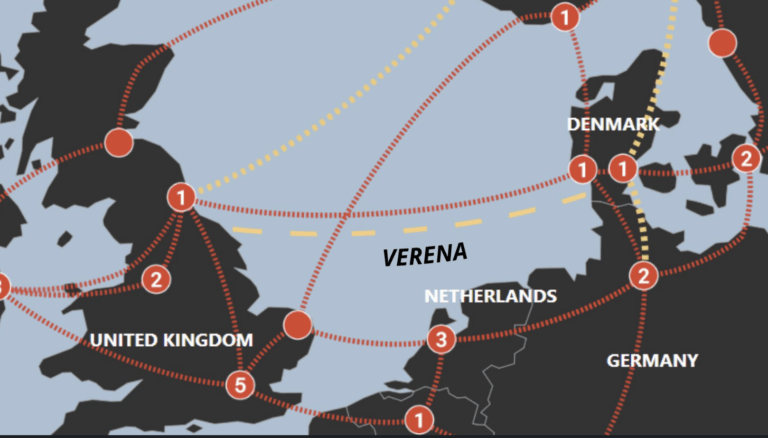
Sea Fibre Networks, which owns and operates the CeltixConnect sub-sea cable between the UK and Ireland, has activated a new route from the greater Dublin area to Amsterdam. The link, which uses selected third party fibre, delivers an end-to-end fibre solution from Dublin to Amsterdam, via London, while remaining carrier-neutral.
Amsterdam’s AMS-IX carries an average 1.25 Tbps with a year high peak of 2 Tbps.
Dublin is a central Internet hub in Europe, hosting major data centres of Google, Amazon and Microsoft.
Every article published by Converge Digest is researched, curated, fact-checked and editorially reviewed by Jim Carroll, Editor & Publisher. AI-assisted drafting may be used to accelerate production, but all content is reviewed, refined and approved prior to publication.
You just read about Cable. Here is what it replaced:
LMDS / MMDS served 1998–2000. What ultimately replaced it?
LMDS / MMDS fixed broadband over microwave: rooftop antennas linked to line-of-sight base stations in the 2 GHz (MMDS) or 28/31 GHz (LMDS) bands, but rain fade and line-of-sight limits capped reach. Its job passed to Cable — but the problem it solved, and the ideas it proved, live on in what replaced it. The standard rests here in the archive. One of 198 technologies here that opened a door and then held it for the next.