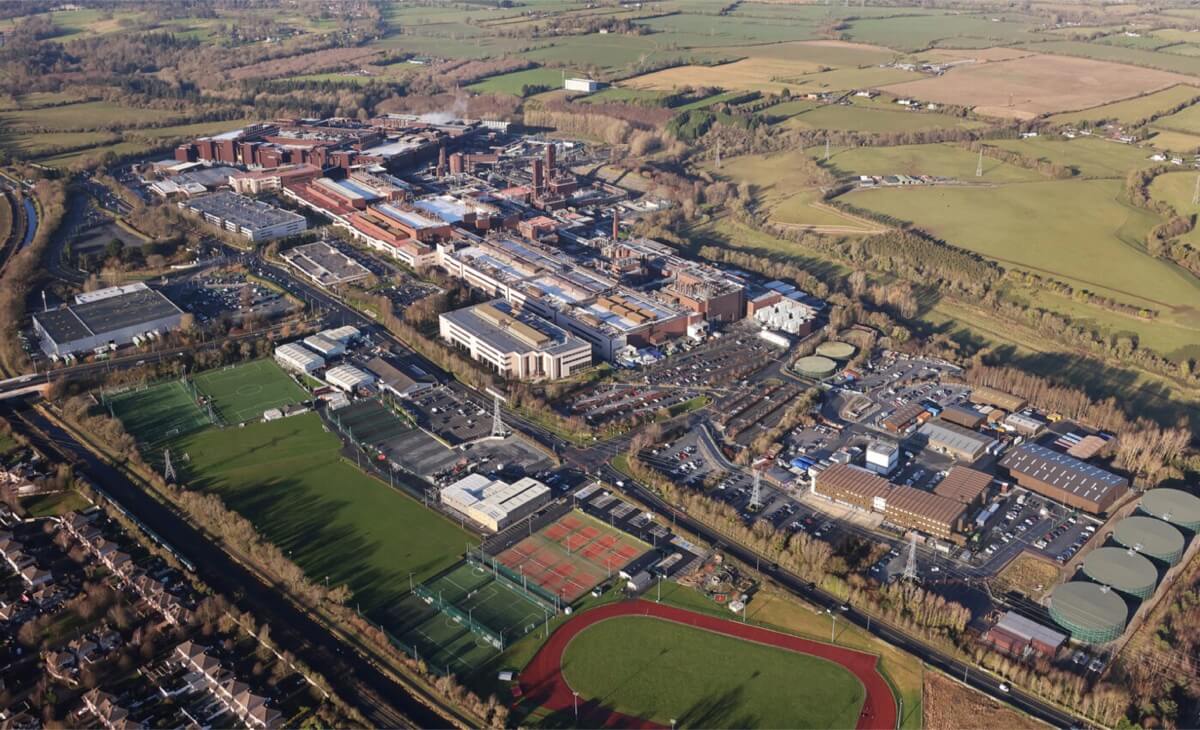
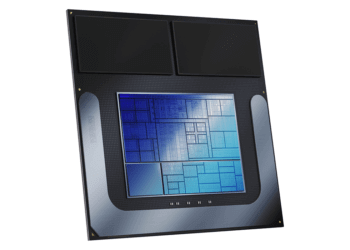
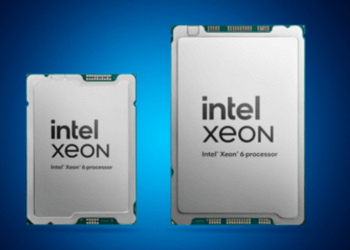
Intel announced a €5 billion ($5.7 billion) capital investment at its Leixlip campus in Ireland to expand semiconductor manufacturing capacity for Intel Xeon 6 and next-generation Xeon processors built on the Intel 3 process node. The program expands production output, advances research and development activities, and installs new manufacturing equipment within existing cleanroom space as Intel responds to demand for processors used in AI and high-performance computing infrastructure.
The expansion includes upgrades to existing fabrication facilities and the installation of advanced semiconductor manufacturing tools. Intel will also extend the campus automated track system to connect previously separate manufacturing modules into a unified production environment designed to increase wafer movement and manufacturing velocity. Execution of the capital expenditure program began earlier in 2026.
Intel said the project will create permanent high-tech jobs and employ specialized tradespeople for construction and equipment installation. The Leixlip campus currently employs 4,900 people, and Intel has invested more than €30 billion in Ireland since establishing operations there in 1989. The latest investment also expands semiconductor production capacity within the European Union as policymakers pursue greater regional manufacturing capacity and semiconductor supply-chain resilience.
• Investment: €5 billion ($5.7 billion) capital expenditure program
• Location: Leixlip, County Kildare, Ireland
• Manufacturing technology: Intel 3 process node
• Products: Intel Xeon 6 and next-generation Intel Xeon processors
• Infrastructure: Existing fabrication facilities, cleanroom capacity, new manufacturing equipment, and an expanded automated track system
• Employment: Permanent high-tech positions and temporary demand for specialized construction and equipment-installation trades
• Existing workforce: 4,900 employees at the Leixlip campus
• Historical investment: More than €30 billion invested by Intel in Ireland since 1989
• Strategic role: Expands Intel’s advanced manufacturing capacity in Europe and supports regional semiconductor supply-chain resilience
“This €5 billion investment represents a definitive commitment to maximize capacity at our Leixlip campus and increase what we can deliver to Intel Foundry customers,” said Naga Chandrasekaran, Executive Vice President, Chief Technology and Operations Officer and General Manager of Intel Foundry.
🌐 Analysis: Intel’s investment concentrates additional capital on the Intel 3 manufacturing platform as the company expands production of Xeon processors for data center, AI, and high-performance computing deployments. The project also increases advanced semiconductor capacity inside the European Union at a time when Intel and other chipmakers continue to balance large capital requirements, manufacturing utilization, regional supply-chain policies, and growing compute demand from AI infrastructure.
🌐 We’re tracking the latest developments in networking silicon. Follow our ongoing coverage at: https://convergedigest.com/category/semiconductors/
| Intel Manufacturing Footprint in Europe and Israel | July 2026 |
| Ireland — Leixlip | Intel’s primary advanced semiconductor manufacturing site in Europe. The campus manufactures Intel 3-based products, including Xeon 6 and next-generation Xeon processors. Intel employs approximately 4,900 people at Leixlip and has invested more than €30 billion in Ireland since 1989. |
| Ireland — 2026 Expansion | Intel announced a €5 billion ($5.7 billion) capital investment to increase Intel 3 manufacturing capacity. The program adds semiconductor manufacturing equipment, expands production output and R&D activities, uses existing cleanroom space, and extends the automated material-handling track system connecting manufacturing modules across the campus. |
| Germany — Magdeburg | Intel announced plans in 2022 to build two advanced semiconductor fabs in Magdeburg as the centerpiece of a major European manufacturing expansion. The initial investment was approximately €17 billion, later expected to exceed €30 billion, supported by planned German government subsidies of nearly €10 billion. |
| Germany — Project Withdrawn | Intel delayed the Magdeburg project in 2024 as it reduced capital spending and restructured its manufacturing expansion plans. In July 2025, Intel said it would not proceed with the planned fabs, ending the proposed German manufacturing expansion before construction of the semiconductor factories began. |
| Poland — Wrocław Area | Intel announced plans in 2023 for an assembly and test facility near Wrocław with an investment of up to $4.6 billion. The project was intended to create a European semiconductor manufacturing chain linking wafer fabrication in Ireland and the proposed German fabs with packaging and test operations in Poland. Intel later cancelled the planned project as part of its restructuring and reduction in capital commitments. |
| Israel — Kiryat Gat | Intel operates a major semiconductor manufacturing campus in Kiryat Gat. The site includes Fab 28, a high-volume manufacturing facility producing advanced processors, and has served as one of Intel’s principal manufacturing locations outside the United States. |
| Israel — Fab 38 Plan | Intel agreed with the Israeli government in 2023 to invest $25 billion in a new manufacturing facility known as Fab 38 at Kiryat Gat. The project was planned to expand advanced wafer manufacturing capacity and operate into the 2030s. Intel subsequently slowed construction activity and reassessed the project amid its broader capital spending reductions and manufacturing restructuring. |
| Israel — R&D Presence | Beyond manufacturing, Israel remains one of Intel’s largest research and development centers outside the United States, with major operations in Haifa, Petah Tikva, Jerusalem, and Kiryat Gat. Intel’s Israeli engineering teams have contributed to processor architecture, connectivity, AI, autonomous driving, and semiconductor technology development. |
| European Manufacturing Strategy | Intel’s earlier strategy envisioned a geographically distributed semiconductor supply chain spanning wafer fabrication in Ireland and Germany and assembly and test operations in Poland. Withdrawal from the Germany and Poland projects shifted the center of Intel’s European manufacturing investment toward maximizing production capacity at its existing Leixlip campus. |
| Strategic Context | The €5 billion Leixlip investment marks a more targeted approach to semiconductor capital spending: expanding output from existing fabs and infrastructure rather than proceeding with the much larger greenfield manufacturing projects previously planned for Germany and Poland. |