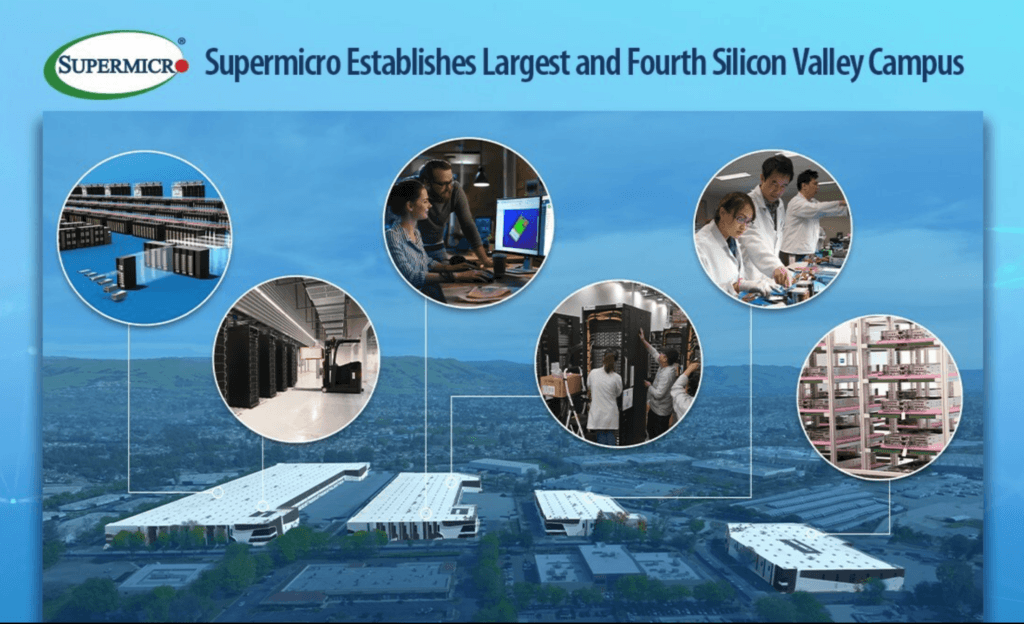
Supermicro is expanding its San Jose manufacturing base with a new 32.8-acre campus, adding its fourth Bay Area location as demand rises for AI servers, rack-scale systems, and U.S.-based data center infrastructure production. The new site spans more than 714,000 square feet, or about 66,300 square meters, and becomes the company’s largest U.S. location.
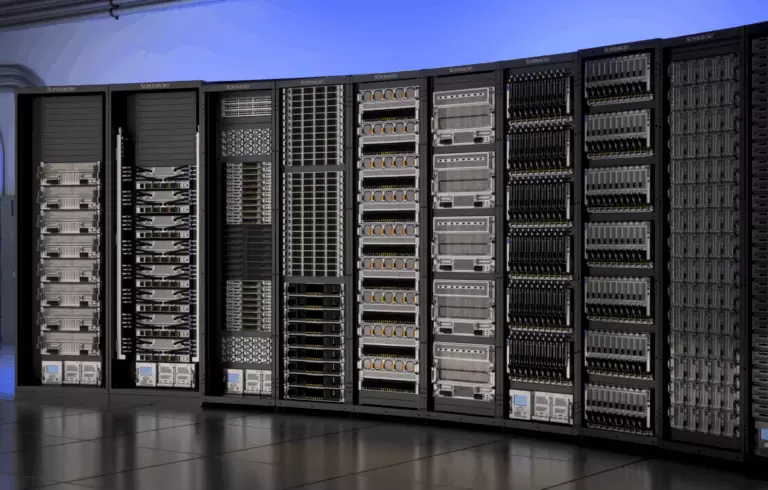
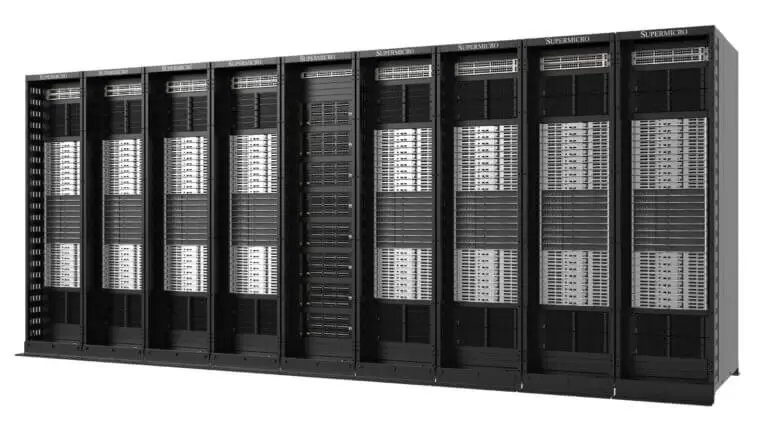
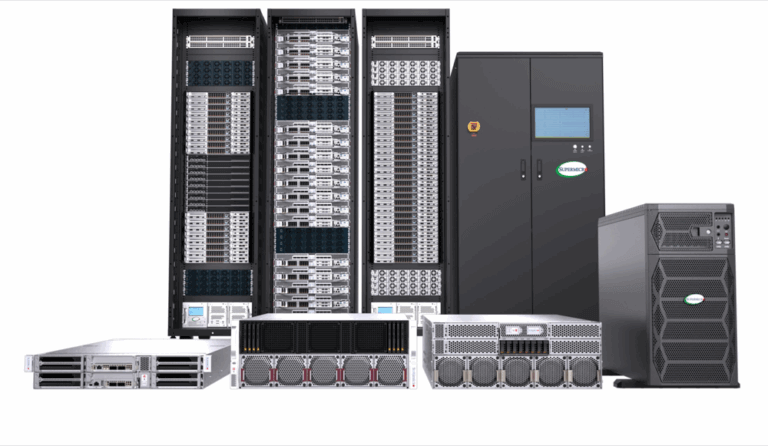
The new campus sits near Supermicro’s San Jose headquarters and raises the company’s regional footprint to nearly 4 million square feet. Supermicro said the facility will support system design, manufacturing, testing, service, and global distribution for its Data Center Building Block Solutions, or DCBBS, used in AI infrastructure deployments.
The company expects the expansion to create hundreds of U.S. jobs across engineering, manufacturing, and business functions. Supermicro is positioning the site around domestic production capacity, faster rack-scale deployment, and support for cloud, hyperscale, and enterprise customers building AI factories.
• New campus: 32.8 acres, or about 13.3 hectares
• Building area: more than 714,000 square feet, or about 66,300 square meters
• Location: San Jose, California
• Bay Area footprint after expansion: nearly 4 million square feet
• Function: design, manufacturing, testing, service, and distribution
• Target workloads: AI infrastructure, cloud, enterprise, edge, and high-performance computing systems
• Jobs impact: hundreds of new U.S. roles expected
“This new DCBBS campus, which becomes our largest in the U.S., is a direct investment in American innovation and manufacturing leadership,” said Charles Liang, president and CEO of Supermicro.
🌐 Analysis: Supermicro’s expansion reinforces a broader shift in AI infrastructure from component-level supply chains toward integrated, rack-scale production close to major engineering teams and customers. The move also gives Supermicro a domestic manufacturing narrative at a time when AI infrastructure buyers increasingly weigh supply chain resilience, deployment speed, and system-level integration alongside GPU availability.