Meta outlined plans to secure future AI data center power through early-stage energy partnerships, targeting both space-based solar generation and ultra-long-duration storage as part of a broader push to scale its infrastructure.
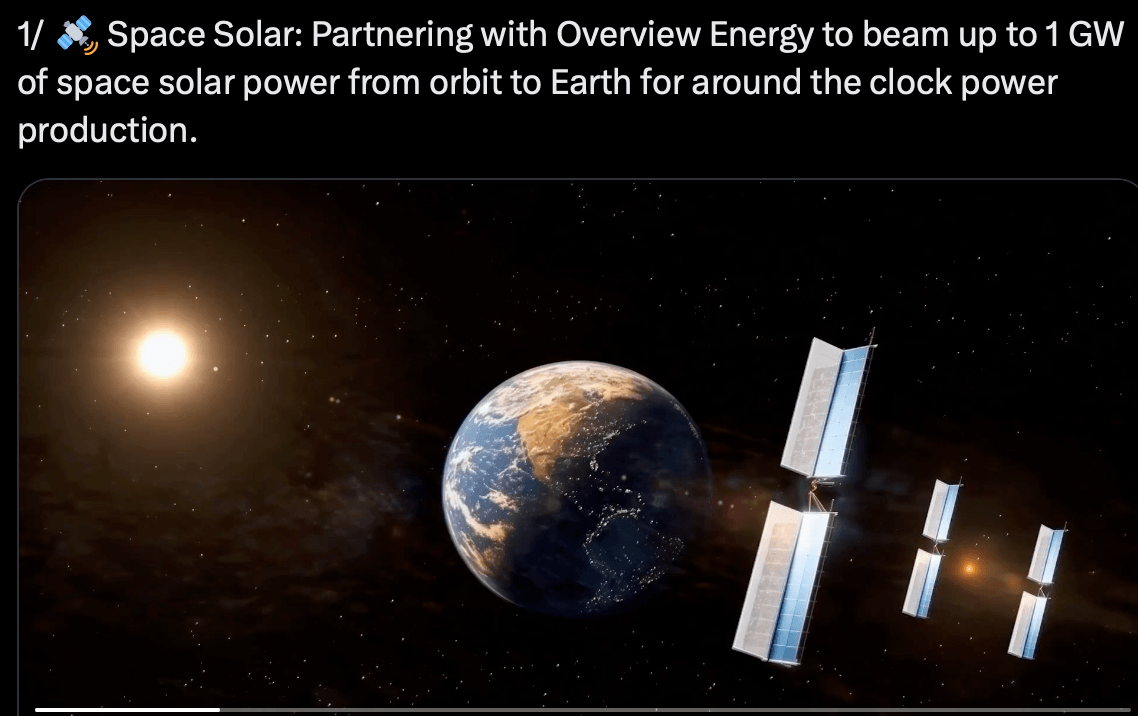
The company announced agreements with Overview Energy and Noon Energy to reserve up to 1 GW of capacity from each technology. Overview Energy proposes harvesting solar energy in geosynchronous orbit and transmitting it to Earth via near-infrared beams, enabling existing solar farms to generate power continuously. Noon Energy’s system uses reversible solid oxide fuel cells and carbon-based storage to deliver more than 100 hours of energy storage, with an initial 25 MW / 2.5 GWh pilot targeted for 2028.
Meta framed the partnerships as part of its strategy to address the growing energy demands of AI infrastructure, where intermittent renewables and short-duration batteries fall short. The company has already contracted more than 30 GW of clean energy and maintains agreements spanning nuclear, geothermal, and renewable sources. The new initiatives extend that portfolio into experimental technologies, with both partners targeting demonstration milestones in 2028 and potential commercial deployment around 2030.
- Meta reserves up to 1 GW of space-based solar energy capacity from Overview Energy
- Satellites would operate in geosynchronous orbit (~22,000 miles / ~35,400 km) to deliver continuous solar power
- Energy transmission relies on low-intensity near-infrared beams to existing solar facilities
- Meta commits to up to 1 GW / 100 GWh of long-duration storage from Noon Energy
- Noon’s system targets >100 hours of storage, significantly beyond lithium-ion capabilities
- Initial storage pilot: 25 MW / 2.5 GWh, expected by 2028
- Both technologies remain pre-commercial, with grid deployment projected around 2030
- Builds on Meta’s existing 30+ GW clean energy portfolio, including nuclear and geothermal
- No CAPEX guidance provided
“We’ll keep backing the ideas and partnerships that help build an energy system for what America is building next,” said Nat Sahlstrom, VP of Energy and Sustainability at Meta.
🌐 Analysis
Meta continues to position itself as a large-scale energy buyer and early sponsor of emerging technologies, but both initiatives carry significant execution risk. Space-based solar power has circulated for decades without achieving commercial viability due to challenges in orbital deployment costs, energy transmission efficiency, and regulatory frameworks. Similarly, ultra-long-duration storage remains in early deployment phases, with multiple competing chemistries and architectures still seeking cost and scalability validation.
This announcement fits a broader pattern in which Meta explores ambitious infrastructure concepts ahead of proven economics. Past efforts—including experimental connectivity platforms and highly publicized large-scale infrastructure concepts—have not consistently translated into sustained deployments. While the company’s scale allows it to place early bets, the timeline to meaningful contribution from these technologies likely extends well beyond the immediate AI capacity buildout cycle now underway across hyperscalers.