Top 20 Funding Deals of 2025 That Shaped Networking and AI Infrastructure
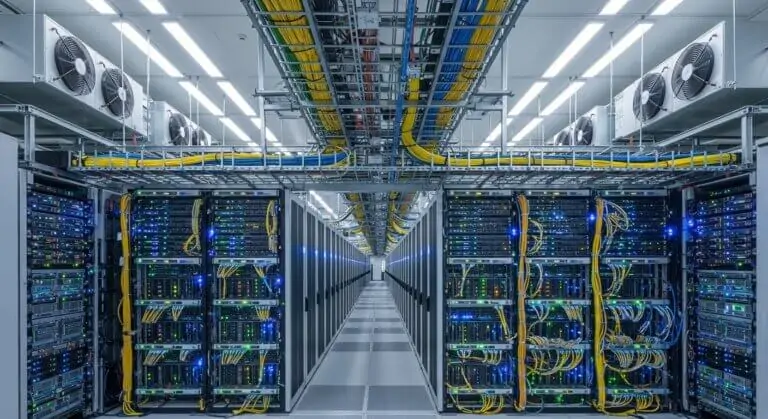
Capital flows in 2025 sent a clear signal: networking innovation has moved beyond incremental upgrades and into full-system scale. The year’s largest funding rounds targeted entire AI platforms, data-center campuses, power systems, and cloud infrastructure rather than isolated components. Investors prioritized speed of deployment, access to power and fiber, and the ability to deliver AI capacity at industrial scale.
Another defining feature of 2025 funding was the rise of “NeoCloud” and AI-first infrastructure providers. Rather than building proprietary silicon or isolated networking products, these companies raised capital to assemble tightly integrated stacks—compute, networking, storage, power, and facilities—optimized for large-scale AI workloads. This shift reinforced the idea that networking value increasingly sits inside broader infrastructure ecosystems rather than standalone products.
At the same time, a smaller but strategically important share of funding flowed into deep-tech enablers such as photonics, quantum, and fiber-to-chip interconnects. While these rounds were modest compared with multi-billion-dollar infrastructure financings, they underpin the next wave of bandwidth density, latency reduction, and energy efficiency that large AI systems will require over the rest of the decade.Capital flows in 2025 sent a clear signal: networking innovation has moved beyond incremental upgrades and into full-system scale. The year’s largest funding rounds targeted entire AI platforms, data-center campuses, power systems, and cloud infrastructure rather than isolated components. Investors prioritized speed of deployment, access to power and fiber, and the ability to deliver AI capacity at industrial scale.
Another defining feature of 2025 funding was the rise of “NeoCloud” and AI-first infrastructure providers. Rather than building proprietary silicon or isolated networking products, these companies raised capital to assemble tightly integrated stacks—compute, networking, storage, power, and facilities—optimized for large-scale AI workloads. This shift reinforced the idea that networking value increasingly sits inside broader infrastructure ecosystems rather than standalone products.
At the same time, a smaller but strategically important share of funding flowed into deep-tech enablers such as photonics, quantum, and fiber-to-chip interconnects. While these rounds were modest compared with multi-billion-dollar infrastructure financings, they underpin the next wave of bandwidth density, latency reduction, and energy efficiency that large AI systems will require over the rest of the decade.
| Company / Article | Why it mattered |
|---|---|
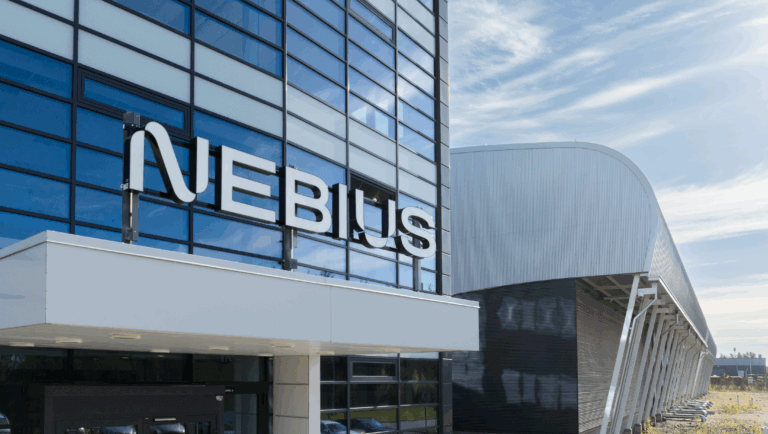
| Nebius secures $4.2B for AI infrastructure expansion | One of the largest AI-infrastructure financings of the year, this capital supports Nebius’ build-out of GPU-dense data centers and networking at hyperscale, reinforcing the rise of independent “NeoCloud” platforms outside the traditional hyperscalers. |
| Boldyn Networks secures $1.2B in debt financing | The financing accelerates global deployment of shared digital infrastructure—including fiber, neutral-host networks, and private connectivity—supporting the dense access networks required for AI, enterprise, and smart-city applications. |
| Nscale raises $1.1B to build global AI data centers | Nscale’s record Series B highlights investor demand for purpose-built AI data centers, where networking, power, and cooling are designed together to support large-scale GPU clusters. |
| PsiQuantum raises $1B to scale photonic quantum chips | The funding validates photonics as a scalable path for fault-tolerant quantum computing, with spillover relevance for high-speed optical switching and integrated photonic manufacturing. |
| Groq raises $750M as AI inference demand surges | Groq’s funding reflects growing demand for low-latency inference at scale, which drives east-west traffic inside data centers and increases reliance on high-bandwidth optical fabrics. |
| Cologix raises $525M to expand hyperscale edge infrastructure | The investment supports expansion of interconnection hubs that link cloud, enterprise, and AI workloads, reinforcing the strategic value of dense fiber and optical interconnect at the network edge. |
| Takanock lands $500M for on-site data-center power | Power availability has become the primary constraint on AI networking scale; this capital targets on-site generation to shorten deployment timelines for large data-center and fiber-connected campuses. |
| Vultr secures $329M to expand AI infrastructure | Vultr’s financing highlights sustained demand for alternative AI cloud providers that integrate compute, networking, and global reach outside the largest hyperscale platforms. |
| Baseten raises $150M to scale AI inference | As inference workloads proliferate, Baseten’s funding reflects the need for software platforms that efficiently schedule AI jobs across high-bandwidth networked infrastructure. |
| Muon Space raises $146M to scale satellite constellations | The funding supports growth of space-based data and connectivity systems, increasing demand for terrestrial fiber backhaul and optical networking integration. |
| Armada secures $131M for modular data centers | Armada’s approach addresses rapid AI deployment in constrained locations, where modular facilities still require high-capacity optical links for regional and global connectivity. |
| Classiq raises $110M for quantum software | Quantum software funding complements hardware advances, supporting future workloads that will depend on ultra-low-latency optical and photonic interconnects. |
| TensorWave raises $100M for liquid-cooled GPU cloud | Liquid-cooled AI clusters intensify networking density requirements, driving demand for high-speed optical interconnects inside and between data centers. |
| Exowatt raises $70M for modular energy systems | Energy innovation increasingly determines where networking infrastructure can be deployed, making power-focused funding strategically relevant to AI networking expansion. |
| Scintil Photonics raises $58M to scale integrated photonics | Integrated photonics is a key enabler for higher-bandwidth, lower-power optical modules required in AI data-center networks. |
| Positron AI raises $51.6M for inference silicon | Specialized inference silicon influences network architecture by shifting traffic patterns and bandwidth demands within AI clusters. |
| Teramount secures $50M for fiber-to-chip interconnects | Fiber-to-chip connectivity addresses packaging and serviceability challenges as optics move closer to compute and switching silicon. |
| VSORA raises $46M for AI inference chip | New inference architectures can reduce compute bottlenecks but increase reliance on fast, low-latency networking between nodes. |
| Heron Power secures $38M for medium-voltage hardware | Medium-voltage power hardware supports larger, denser data centers, indirectly enabling higher-capacity optical and IP fabrics. |
| Multibeam raises $31M for advanced lithography | Advanced lithography underpins next-generation photonics and semiconductor manufacturing, supporting future optical networking components. |
Wrap-Up and Look Ahead to 2026
The funding landscape in 2025 underscored a decisive shift: networking investment followed infrastructure gravity. Capital flowed first to data-center platforms, AI-native clouds, power systems, and interconnection hubs—areas that directly determine how fast AI capacity can be deployed. Optical networking, photonics, and interconnect innovation remained essential, but increasingly as embedded capabilities within much larger systems rather than standalone investment targets.
Heading into 2026, expect funding to sharpen around execution and scale. Investors are likely to favor projects that demonstrate deployable capacity, operational efficiency, and measurable performance gains across power, cooling, and network fabrics. As AI workloads continue to push bandwidth, latency, and energy limits, the next wave of funding will likely concentrate on turning 2025’s big bets into repeatable, global infrastructure.