Trade Agreement Could Eliminate Next Gen Silicon Tariffs
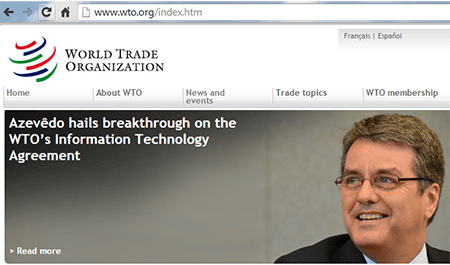
International trade negotiators and heads of governments appear to have reached a breakthrough in efforts to expand the WTO’s Information Technology Agreement, which eliminates tariffs on high-tech products among 54 economies, including the U.S. and China.
A deal between the U.S. and China reached this week in Beijing is expected to pave the way for continued ITA negotiations in Geneva.
The Office of the U.S. Trade Representative said many of the products that would see tariff elimination under an expanded ITA are in key U.S. industries, including next generation semiconductors, which would see current tariffs of up to 25 percent reduced to zero.
Every article published by Converge Digest is researched, curated, fact-checked and editorially reviewed by Jim Carroll, Editor & Publisher. AI-assisted drafting may be used to accelerate production, but all content is reviewed, refined and approved prior to publication.
You just read about All. A technology from the archive that helped get us here:
Google/Alphabet Project Loon served 2011–2021. What ultimately replaced it?
Google/Alphabet Project Loon solar-powered balloons drifting in the stratosphere (~20 km), steering by rising and falling into different wind layers, relaying LTE from ground stations to phones far below. Its job passed to Unit economics — but the problem it solved, and the ideas it proved, live on in what replaced it. The standard rests here in the archive. One of 198 technologies here that opened a door and then held it for the next.

 International trade negotiators and heads of governments appear to have reached a breakthrough in efforts to expand the WTO’s Information Technology Agreement, which eliminates tariffs on high-tech products among 54 economies, including the U.S. and China.