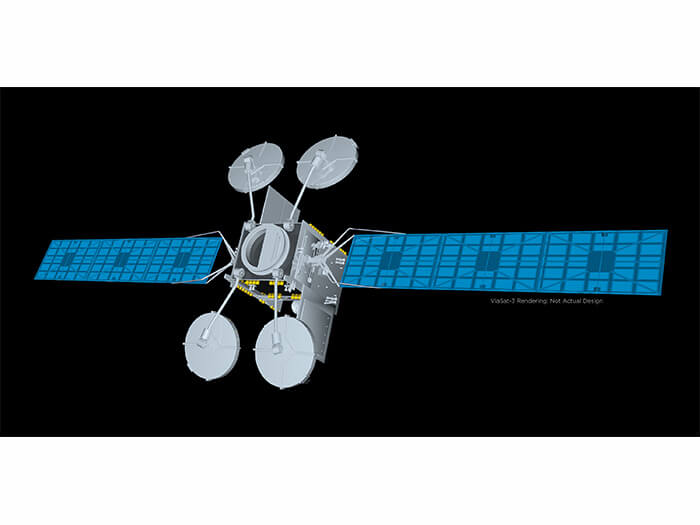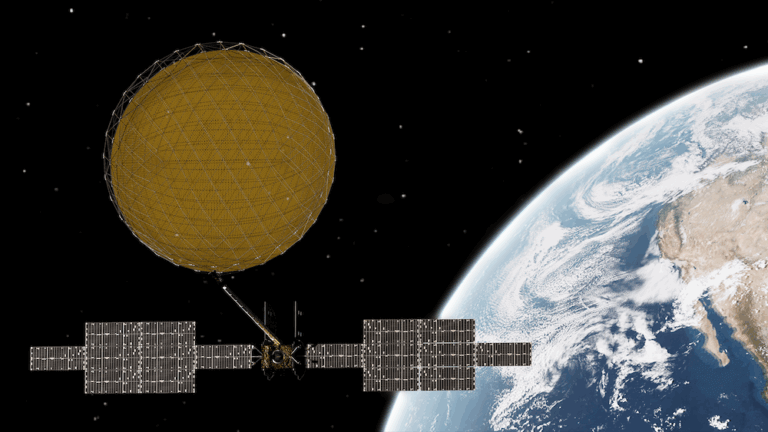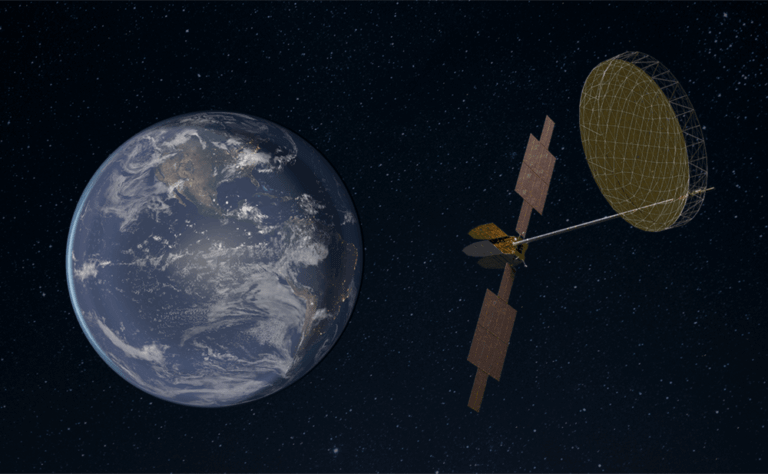
The recently launched ViaSat-3 Americas satellite encountered a malfunction in the deployment of its reflector, potentially limiting the usefulness of the satellite.
In a press statement, ViaSat said it is conducting a rigorous review of the development and deployment of the affected reflector. It is also working on potential remedial measures and contingency plans.
“We’re disappointed by the recent developments,” said Mark Dankberg, Chairman and CEO, Viasat. “We’re working closely with the reflector’s manufacturer to try to resolve the issue. We sincerely appreciate their focused efforts and commitment.”
Contingency plans are currently being refined to minimize the economic effect to the company. Potential options include redeploying satellites from Viasat’s extensive fleet to optimize global coverage, and/or reallocating a subsequent ViaSat-3 class satellite to provide additional Americas bandwidth. The initial service priority for ViaSat-3 Americas has been to facilitate growth in the company’s North American fixed broadband business.”

- In April, SpaceX successfully launched the ViaSat-3 Americas satellite to geostationary orbit aboard a Falcon Heavy rocket from Kennedy Space Center in Florida. Also on board this mission was Astranis’s first MicroGEO satellite and Gravity Space’s GS-1 satellite.
- ViaSat-3 Americas is the first of three geostationary satellites that will form a new constellation. Each of the satellites offers over 1 Tbps of onboard switching capacity with the ability to redirect bandwidth as needed. Each of the satellites in the upcoming ViaSat-3 global constellation is expected to be able to temporarily concentrate capacity at geographic points of demand, reducing coverage to places that need less capacity. Enormous solar panels will offer 25 kilowatts of power.
ViaSat-3 also features anti-jamming capabilities for government and defense applications. - ViaSat-3’s ground network will be composed of hundreds of Satellite Access Nodes (SANS), ensuring redundancy.