
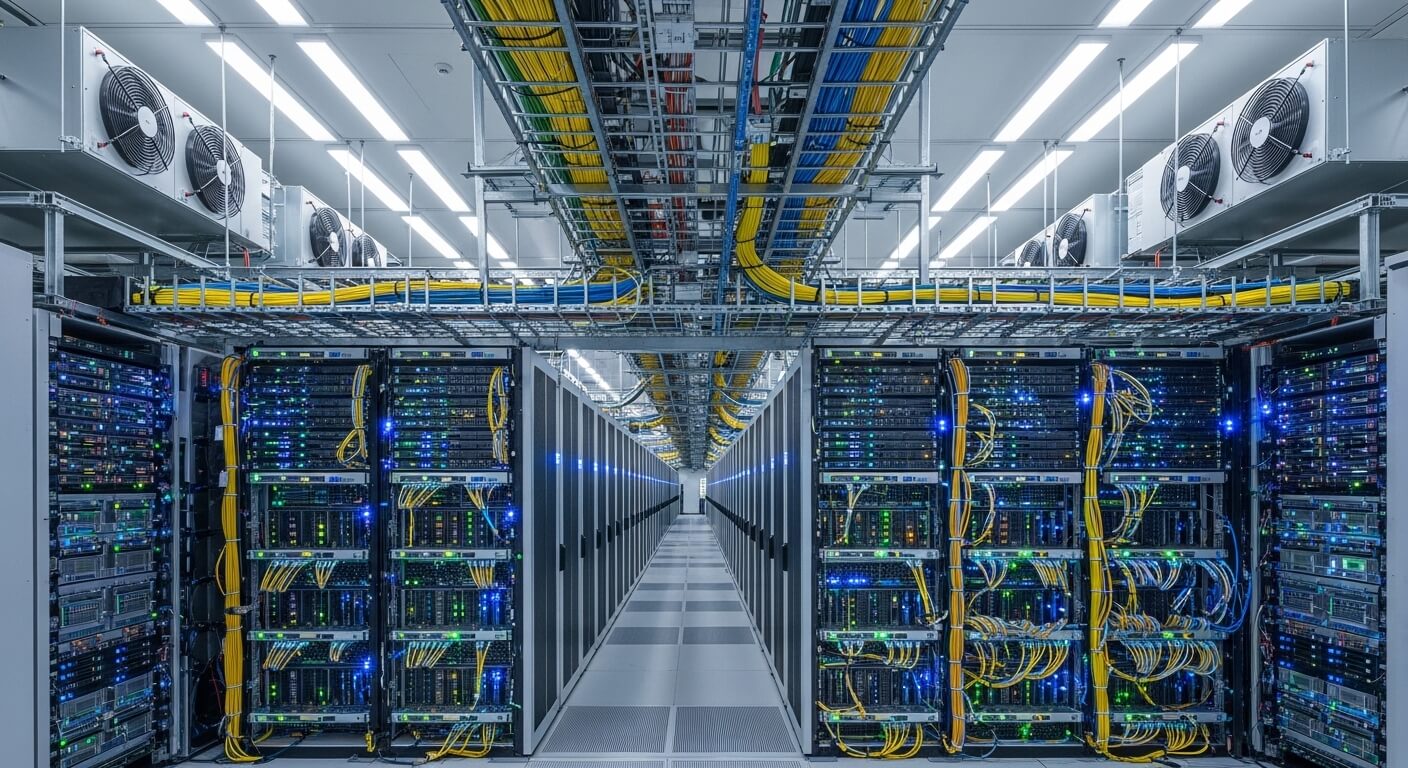
DartPoints is expanding its infrastructure footprint with the acquisition of a large data center campus in Lexington, positioning the company to serve rising demand for AI, neo-cloud, hyperscale, and enterprise deployments across the central U.S. The newly acquired brownfield campus spans approximately 343,000 square feet across 29.5 acres and includes about 81,000 square feet of existing raised-floor data center space. The site also includes an owned on-site substation, a strategic asset as operators increasingly prioritize access to power-ready capacity.
DartPoints said the campus offers an immediate path to 20–30 MW in an initial development phase, with long-term expansion potential reaching 70 MW. The company is designing the facility to support dense next-generation compute environments, including up to 200 kW per rack, 415V power distribution, and cooling infrastructure capable of handling both conventional air-cooled deployments and direct-to-chip liquid cooling using closed-loop, low-water-use heat rejection. That profile aligns with current requirements for inference AI, GPU clusters, and high-performance computing workloads that increasingly demand higher rack densities and more advanced thermal management.
The Lexington campus also gives DartPoints a strategically placed platform between major interconnection corridors including Ashburn, Chicago, and Atlanta. The company said the site’s existing zoning, utility support, and available infrastructure could accelerate deployment timelines compared with a new greenfield build. Additional redevelopment work is now underway, with ready-for-service dates expected to be announced as planning advances.
- Approximately 343,000 sq. ft. campus across 29.5 acres
- Roughly 81,000 sq. ft. of existing raised-floor data center capacity
- Immediate path to 20–30 MW; expansion potential to 70 MW
- Designed for up to 200 kW per rack
- Supports both air cooling and direct-to-chip liquid cooling
- Includes an owned on-site electrical substation
- Positioned to serve AI inference, neo-cloud, hyperscale, HPC, and enterprise workloads
“Lexington gives us a rare combination of existing infrastructure, a supportive power environment and the ability to scale in a meaningful way,” said Scott Willis, president and CEO of DartPoints. “As AI, neo-cloud and hyperscale demand continue to reshape the market, customers need sites that can support larger power footprints, denser deployments and long-term growth. Lexington gives us that platform.”
🌐 Analysis: DartPoints’ move reflects a broader shift toward acquiring power-advantaged brownfield sites as data center operators race to secure capacity for AI infrastructure. Existing campuses with substations, zoning approval, and expandable land have become highly attractive because they shorten time-to-market compared with greenfield development. The Lexington site also fits a growing trend of regional markets emerging as alternatives to traditional Tier-1 hubs, especially for inference AI and neo-cloud providers looking for lower-cost land, strong utility access, and proximity to major network routes.
Profile: DartPoints
| Metric | Details |
|---|---|
| Company | DartPoints |
| Headquarters | Dallas, Texas |
| CEO | Scott Willis |
| Core Business | Regional colocation, cloud, interconnection, and managed infrastructure |
| Target Markets | Mid-sized/Secondary markets (Enterprise, AI/ML inference, Neo-cloud, and Hyperscale) |
| New Campus Expansion | Lexington, Kentucky (343,000 sq. ft. facility with owned on-site substation) |
| Initial Power Phase | 20–30 MW (Supports up to 200 kW rack density with liquid cooling) |
| Long-Term Capacity | Up to 70 MW |
| Primary Investor | NOVA Infrastructure |
🌐 We’re tracking the latest developments in data center infrastructure and AI networking. Follow our ongoing coverage at: https://convergedigest.com/category/data-centers/


