
Hurricane Electric has expanded its North American backbone with a new Point of Presence (PoP) at Lincoln Data Centers, extending high-capacity IP connectivity options for enterprises, cloud providers, carriers, and content networks across Nebraska and the broader Midwest. The deployment adds direct access to Hurricane Electric’s IPv4 and IPv6 global backbone from the downtown Lincoln facility.
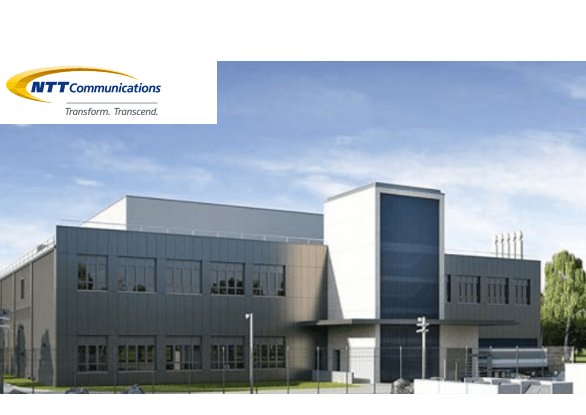
Located at 206 South 13th Street, Lincoln Data Centers operates as a carrier-neutral colocation and interconnection hub with access to regional and long-haul fiber providers, meet-me-room interconnection, and flexible infrastructure for scalable deployments. Hurricane Electric said the new PoP improves network resilience, fault tolerance, load balancing, and congestion management for customers requiring low-latency connectivity in the central United States. Customers at the site can connect to Hurricane Electric through 100GE, 10GE, and GigE interfaces.
The expansion underscores the growing role of central U.S. markets in digital infrastructure development, driven by fiber route diversity, enterprise demand, and proximity to major population centers. Based in Fremont, California, Hurricane Electric operates one of the world’s largest IPv6-native backbones, with more than 40,000 BGP sessions across over 10,500 networks and connectivity through more than 320 major exchange points worldwide. The company continues to add regional PoPs to support direct IP transit access for enterprises, cloud platforms, research institutions, and service providers.
- New Point of Presence established at Lincoln Data Centers in Lincoln, Nebraska
- Access to Hurricane Electric’s IPv4 and IPv6 backbone via 100GE, 10GE, and 1 GigE ports
- Supports enterprises, cloud providers, carriers, content platforms, and network operators across the Midwest
- Hurricane Electric reports more than 40,000 BGP sessions with over 10,500 networks globally
- Connected through more than 320 major exchange points worldwide
- Expansion adds additional route diversity and lower-latency connectivity options in the central United States
“We are pleased to expand Hurricane Electric’s presence in the Midwest with this new Point of Presence at Lincoln Data Centers,” said Mike Leber, President of Hurricane Electric. “Lincoln’s central location, strong business climate, and growing digital infrastructure ecosystem make it an ideal site to support customers requiring reliable, high-capacity Internet connectivity across the region.”
| Attribute | Verified Details |
|---|---|
| Company | Hurricane Electric |
| Autonomous System | AS6939 |
| Headquarters | Fremont, California, USA |
| Founded | 1994 |
| President | Mike Leber |
| Core Business | Global IPv4 and IPv6 Internet backbone, IP transit, colocation, and interconnection services. (Widely recognized as the largest IPv6 backbone in the world). |
| Global Reach | Connected to 320+ major Internet Exchange Points (IXPs) worldwide. |
| Network Scale | 10,500+ directly connected networks; 40,000+ active BGP sessions. |
| Transport Infrastructure | Resilient global fiber-optic topology featuring five redundant 100G paths across North America, four separate 100G paths between the U.S. and Europe, 100G rings in Europe, Asia, and Australia, and a fiber ring surrounding Africa. |
| Latest Expansion | Established a new Point of Presence (PoP) at Lincoln Data Centers (206 South 13th Street) in Lincoln, Nebraska, offering 1G, 10G, and 100G port connectivity. |
🌐 Market Analysis: Edge Architecture & The Midwest Expansion
Hurricane Electric’s strategic deployment at Lincoln Data Centers underscores a broader shift in digital infrastructure: the deliberate deepening of metro edge footprints in secondary U.S. markets. As enterprise applications increasingly rely on distributed interconnection capacity, relying solely on traditional coastal tier-1 hubs creates unnecessary backhaul latency.
Why Lincoln Matters to the Grid:
- Transit Corridor Advantage: Lincoln’s central U.S. geography provides an optimal geographic intersection for low-latency, east-west fiber routes, making it an ideal anchor for regional cloud connectivity, content delivery networks (CDNs), and complex network redundancy strategies.
- Next-Gen IP Services: For Hurricane Electric, this PoP expands the immediate regional reach of its IPv6-first transit platform. By offering localized 1G, 10G, and 100G port connectivity right at the source, they can seamlessly ingest high-capacity traffic from growing midwestern enterprise and data ecosystems.
The Bottom Line: This move significantly strengthens regional fault tolerance and traffic load balancing, proving that the technical “edge” is no longer just about major coastal hubs—it’s about intercepting data where regional infrastructure demands it.