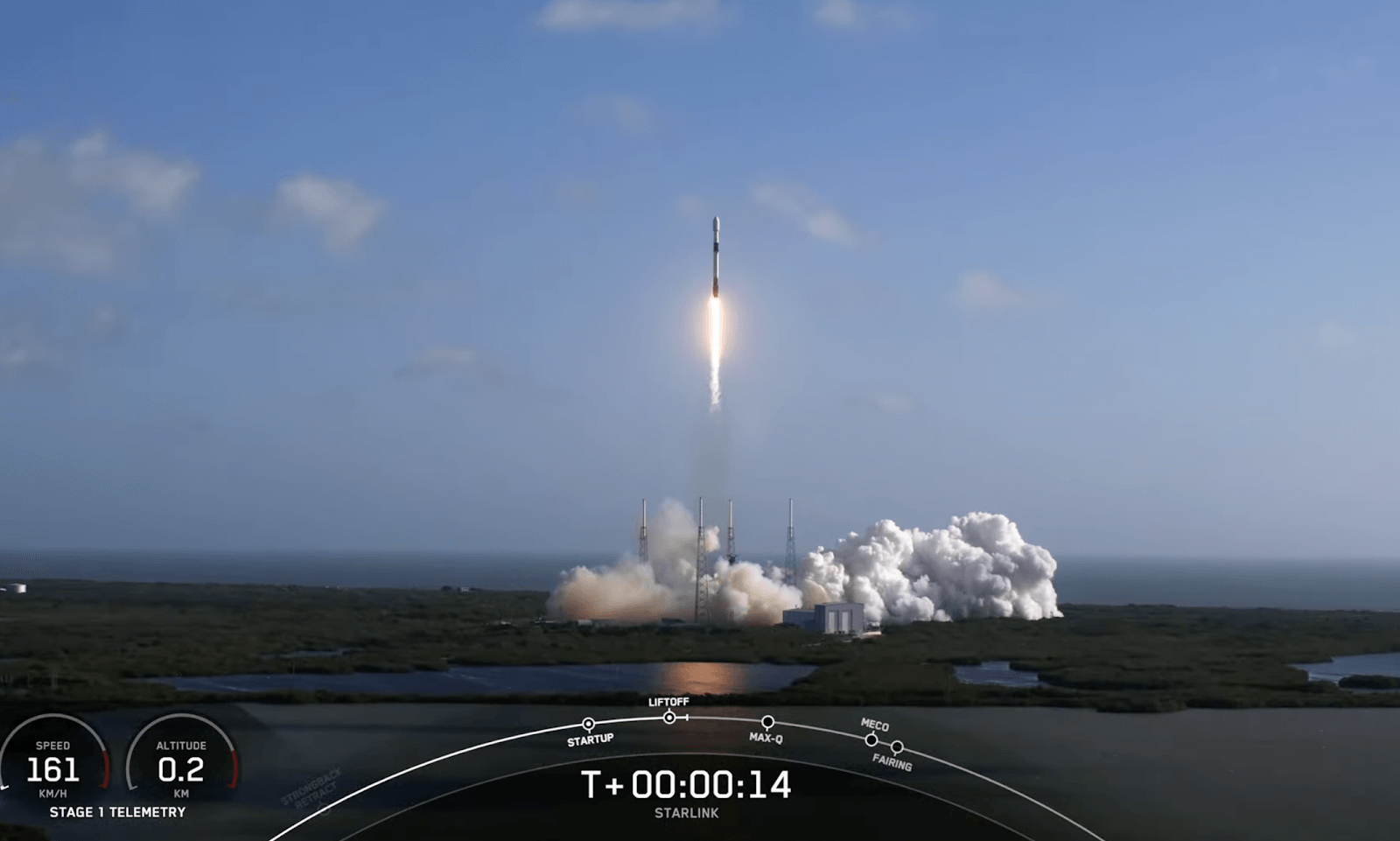
SpaceX launched 53 Starlink satellites from Space Launch Complex 40 (SLC-40) at Cape Canaveral Space Force Station in Florida. The booster was successfully recovered.
This was the 13th flight for the Falcon 9 first stage booster supporting this mission, which previously launched Crew Demo-2, ANASIS-II, CRS-21, Transporter-1, Transporter-3, and now eight Starlink missions.
The mission was the 28th this year for SpaceX. It was also the 100th time that SpaceX has reflown a first stage.
Every article published by Converge Digest is researched, curated, fact-checked and editorially reviewed by Jim Carroll, Editor & Publisher. AI-assisted drafting may be used to accelerate production, but all content is reviewed, refined and approved prior to publication.
You just read about Space Networking & Orbital Data Centers. A name from the archive that helped shape it:
OPNET Technologies built Network modeling, application performance and traffic analysis. What became of it?
OPNET Technologies brought Network modeling, application performance and traffic analysis to Networking. That work was distinctive enough to lead to its acquisition by Riverbed Technology for US$1B. The standalone name now passes into the archive — but the team and technology continue inside Riverbed Technology today. One of 430 names here whose work outlived the company.
You just read about Space Networking & Orbital Data Centers. A technology from the archive that helped get us here:
Omega served 1971–1997. What ultimately replaced it?
Omega eight very-low-frequency stations gave worldwide position fixes by comparing signal phase between stations. Its job passed to GPS — but the problem it solved, and the ideas it proved, live on in what replaced it. The standard rests here in the archive. One of 198 technologies here that opened a door and then held it for the next.