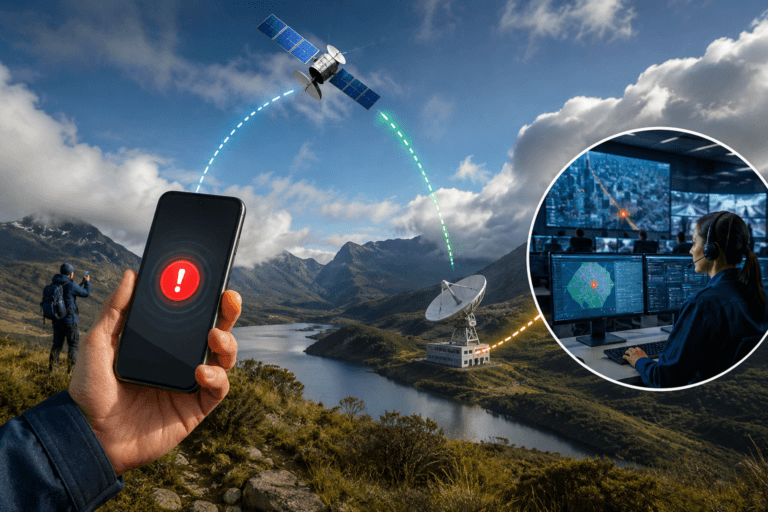
Altera used Mobile World Congress 2026 to highlight how its programmable FPGA portfolio and Open RAN reference designs support next-generation 5G-Advanced and early 6G wideband radio platforms. The company focused on ecosystem partnerships that integrate Agilex FPGAs with leading radio silicon, enabling infrastructure providers to scale from advanced 5G deployments to emerging Non-Terrestrial Network (NTN) use cases.
A key collaboration pairs Altera’s Agilex 7 FPGAs with Broadcom’s BroadPeak radio SoC platform. The companies completed interoperability testing across wideband radio configurations using JESD204C connectivity at 32.44 Gbps, validating deterministic, high-throughput performance. The joint solution supports O-RAN 7.2x functional splits and scales from 8T8R to 128T128R Massive MIMO configurations. It targets next-generation 3GPP FR1 and FR3 bands while partitioning baseband and RF processing to streamline system integration and address power and thermal constraints in dense radio designs.
Altera also detailed Open RAN collaborations with NEC, Microelectronics Technology Inc. (MTI), and Wisig Networks. NEC developed a sub-6 GHz 5G Massive MIMO radio using Agilex 7 FPGAs, reporting more than 40% power reduction compared to prior designs. MTI introduced macro high-power 4T4R radio units based on Agilex 5 E-Series FPGAs, supporting 25GbE fronthaul while reducing system cost and form factor. In India, Wisig Networks built 32TR n78 Massive MIMO and 8T8R macrocell platforms aligned with domestic manufacturing requirements and designed to support enhanced uplink and scalable Open RAN deployments.
• Agilex 7 FPGA interoperability validated with Broadcom BroadPeak SoC at 32.44 Gbps via JESD204C
• Supports O-RAN 7.2x splits from 8T8R to 128T128R Massive MIMO
• Targets 3GPP FR1 and FR3 bands for 5G-Advanced and early 6G
• NEC radio platform reports >40% power reduction using Agilex 7
• MTI solution supports 25GbE fronthaul with reduced cost and footprint
• Wisig platforms designed for n78 band and India localization mandates
“As mobile networks evolve toward higher bandwidths, larger antenna arrays, and increasingly intelligent RAN architectures, the industry requires deep, open, and highly optimized partnerships across silicon platforms,” said Venkat Yadavalli, head of Altera’s Business Management Group.
🌐 Analysis: Altera’s push into 5G-Advanced and early 6G radio infrastructure reflects the growing role of programmable logic in Layer 1 acceleration, beamforming, and O-RAN split implementations. As operators explore FR3 spectrum and AI-assisted RAN processing, FPGA-based platforms provide flexibility for evolving standards without full silicon redesign cycles. Competitors including ASIC vendors and custom SoC suppliers continue to target high-volume radio platforms, but programmability remains attractive for early 6G prototyping and NTN adaptation where standards and use cases remain fluid.