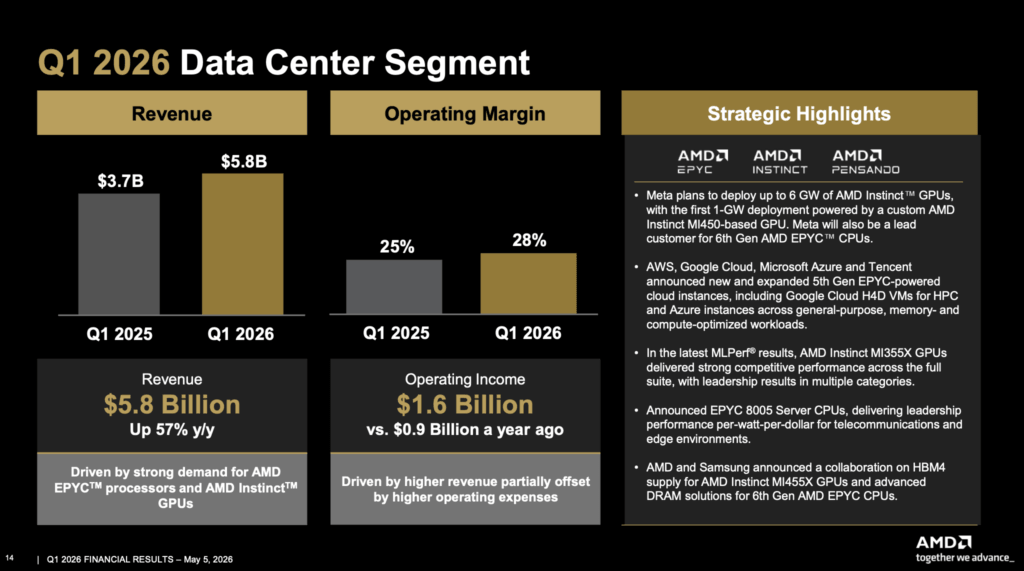
AMD reported first quarter 2026 revenue of $10.3 billion, up 38% year-over-year, as demand for EPYC CPUs and Instinct GPUs pushed Data Center revenue to $5.8 billion. The company said Data Center now drives its revenue and earnings growth, reflecting expanding demand for AI infrastructure, inference, and agentic AI workloads.
GAAP gross margin rose to 53%, operating income increased 83% year-over-year to $1.5 billion, and net income nearly doubled to $1.4 billion. On a non-GAAP basis, AMD reported gross margin of 55%, operating income of $2.5 billion, net income of $2.3 billion, and diluted earnings per share of $1.37. AMD also guided Q2 revenue to approximately $11.2 billion, plus or minus $300 million, implying about 46% year-over-year growth at the midpoint.
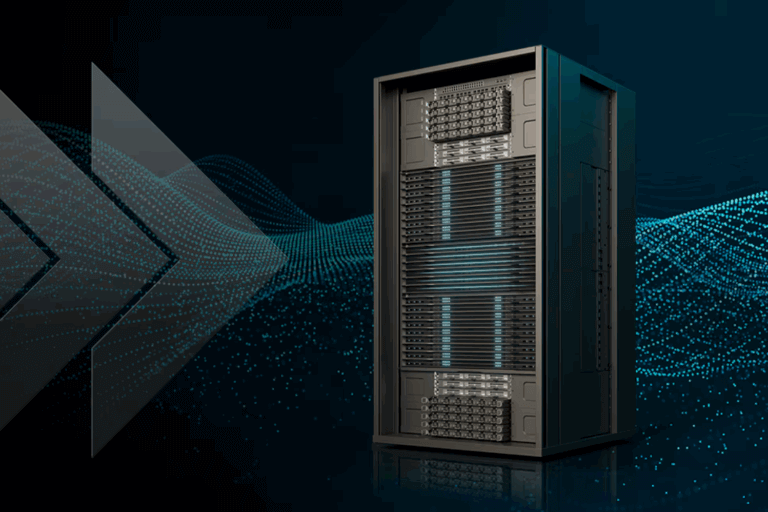
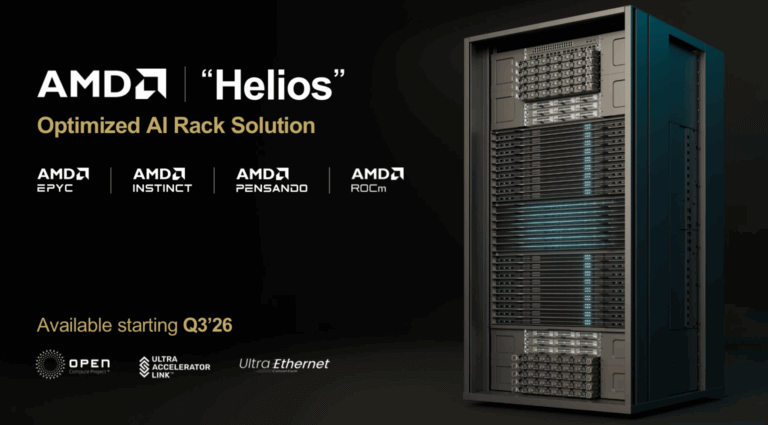
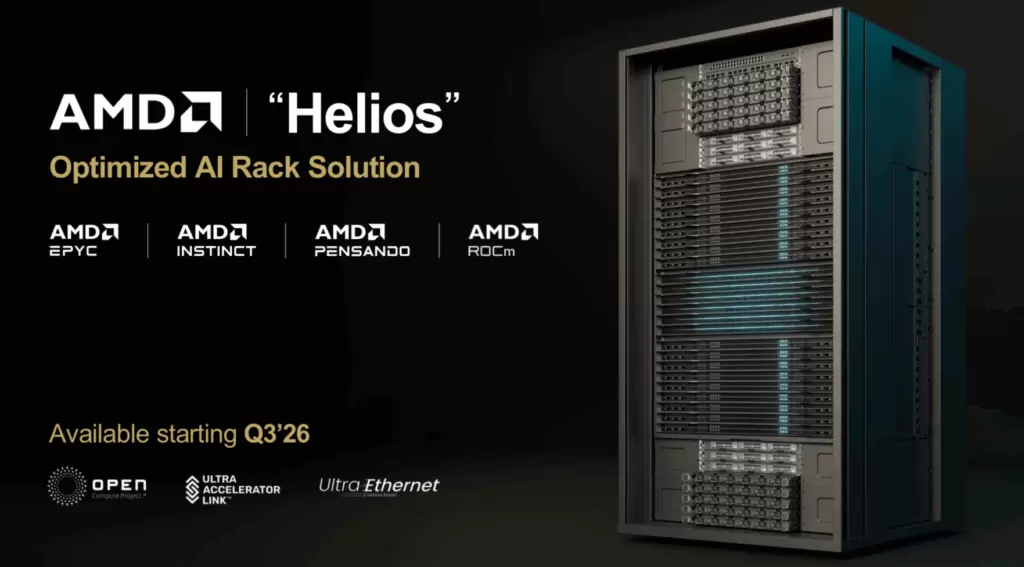
The quarter highlighted AMD’s push into rack-scale AI infrastructure. Meta and AMD announced plans to deploy up to 6 GW of AMD Instinct GPUs, beginning with a 1 GW deployment based on a custom MI450 GPU. AMD also cited growing customer engagement around MI450 Series and Helios, expanded EPYC cloud instances across AWS, Google Cloud, Microsoft Azure, and Tencent, and new collaborations with TCS, Samsung, NAVER Cloud, Upstage, and GSMA’s Open Telco AI initiative.
• Q1 revenue: $10.3 billion, up 38% year-over-year
• Data Center revenue: $5.8 billion, up 57% year-over-year
• Client and Gaming revenue: $3.6 billion, up 23% year-over-year
• Client revenue: $2.9 billion, up 26% year-over-year
• Gaming revenue: $720 million, up 11% year-over-year
• Embedded revenue: $873 million, up 6% year-over-year
• GAAP gross margin: 53%, up 3 percentage points year-over-year
• Non-GAAP gross margin: 55%, up 1 percentage point year-over-year
• Q2 2026 revenue outlook: approximately $11.2 billion, plus or minus $300 million
“We delivered an outstanding first quarter, driven by accelerating demand for AI infrastructure, with Data Center now the primary driver of our revenue and earnings growth,” said Dr. Lisa Su, AMD chair and CEO. “We are seeing strong momentum as inferencing and agentic AI drive increasing demand for high-performance CPUs and accelerators.”
Addendum: Investor Call Notes
• AMD said server CPU revenue grew more than 50% year-over-year in Q1, marking its fourth consecutive quarter of record server CPU revenue.
• Cloud and enterprise server CPU sales each grew more than 50%, with AI workloads driving cloud demand across general-purpose compute, data processing, accelerator head nodes, and agentic applications.
• EPYC-powered cloud instances increased nearly 50% year-over-year to more than 1,600.
• AMD raised its view of the server CPU market, now expecting the TAM to grow at more than 35% annually and exceed $120 billion by 2030, compared with its prior view of roughly 18% annual growth.
• Lisa Su said agentic AI changes the CPU-to-GPU ratio in AI infrastructure. Instead of CPUs serving mainly as host nodes in 1:4 or 1:8 CPU-to-GPU configurations, some workloads could move closer to 1:1 or even require more CPUs than GPUs.
• AMD expects server CPU revenue to grow more than 70% year-over-year in Q2, with robust growth continuing through the second half of 2026 and into 2027.
• Sixth-generation EPYC “Venice” remains on track to launch later this year. AMD described “Verano” as its first EPYC CPU purpose-built for AI infrastructure.
• AMD said Venice is attracting more customer validation and platform ramp activity at this stage than any prior EPYC generation.
• Data center AI revenue declined modestly sequentially in Q1 because China revenue stepped down from Q4, but AMD expects both server and data center AI revenue to grow double digits sequentially in Q2.
• Helios production shipments remain on track for the second half of 2026, with initial volume in Q3, a larger ramp in Q4, and continued ramping into Q1 2027.
• AMD said it now has deployment visibility down to the data-center level for some 2027 GPU installations, reflecting tighter coordination with customers around power, capacity, and supply-chain planning.
• MI450-series GPUs have begun sampling to lead customers.
• AMD said most large MI450/Helios deployments center on inference, though customers also plan to use the platform for training.
• AMD is also engaging customers on the MI500 series, indicating multi-generation planning beyond MI450.
• ROCm development cadence accelerated through higher software investment and agent-based coding workflows.
• AMD expects client revenue to grow year-over-year in 2026, but it is planning for softer second-half PC shipments because of higher memory and component costs.
• Ryzen PRO PC sell-through increased more than 50% year-over-year, helped by broader Dell, HP, and Lenovo offerings.
• Gaming revenue faces second-half pressure from memory and component costs. AMD expects second-half gaming revenue to decline more than 20% versus the first half.
• Embedded design wins grew by a double-digit percentage year-over-year, with billions of dollars in new wins across adaptive, embedded x86, and semi-custom solutions.
• AMD ended Q1 with $12.3 billion in cash, cash equivalents, and short-term investments, and $9.2 billion remaining under its share repurchase authorization.
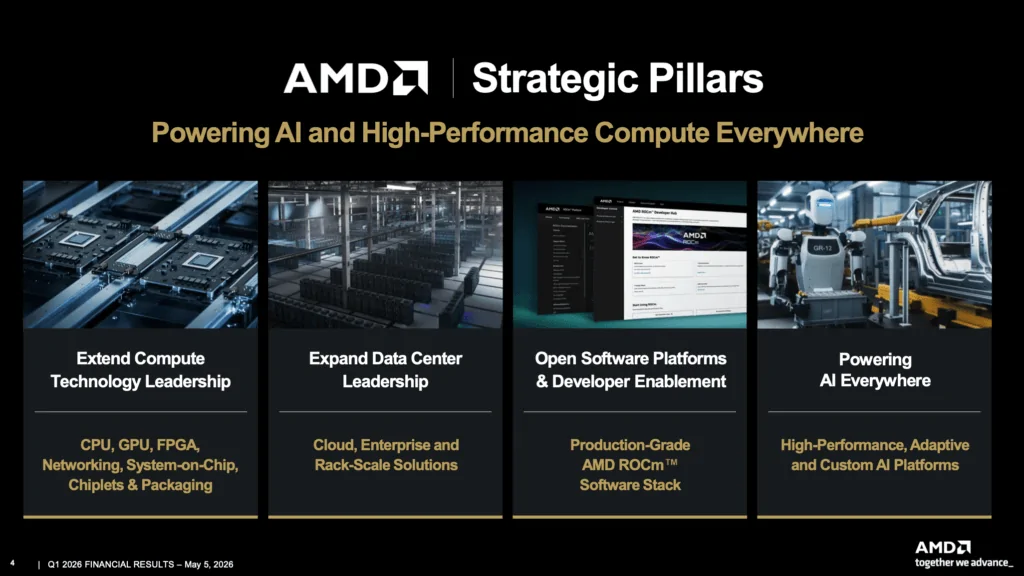
🌐 Analysis: AMD’s Q1 results reinforce the shift from component-level competition to full AI infrastructure platforms, where GPU supply, CPU attach, memory partnerships, rack-scale systems, and cloud deployment pipelines matter together. The MI450, Helios rack architecture, and Meta’s planned 6 GW deployment put AMD more directly into the large-scale AI cluster roadmap conversation alongside NVIDIA, hyperscale custom silicon, and emerging Ethernet-based AI networking architectures.