AT&T convened global telecom leaders at its headquarters to host meetings of FSAN (Full-Service Access Network) and ITU-T Study Group 15, bringing more than 35 operators, government representatives, and equipment vendors together to align on the future of optical access networks. The sessions focused on advancing Passive Optical Network (PON) standards that underpin next-generation broadband services worldwide.
FSAN and ITU-T Study Group 15 play central roles in defining international standards for optical access, from fiber architectures to interoperability and performance benchmarks. AT&T holds leadership positions in both organizations and continues to influence technical priorities as operators prepare for higher access speeds, stronger security requirements, and new service models driven by cloud and AI workloads.
During the meetings, participants advanced a forward-looking roadmap for optical access that addresses capacity scaling, security, and latency-sensitive applications. Discussions covered next-generation PON technologies, the role of AI in broadband networks, and emerging security approaches designed to keep fiber access infrastructure resilient as speeds and service complexity increase.
• Updated FSAN roadmap outlining the evolution of optical access networks
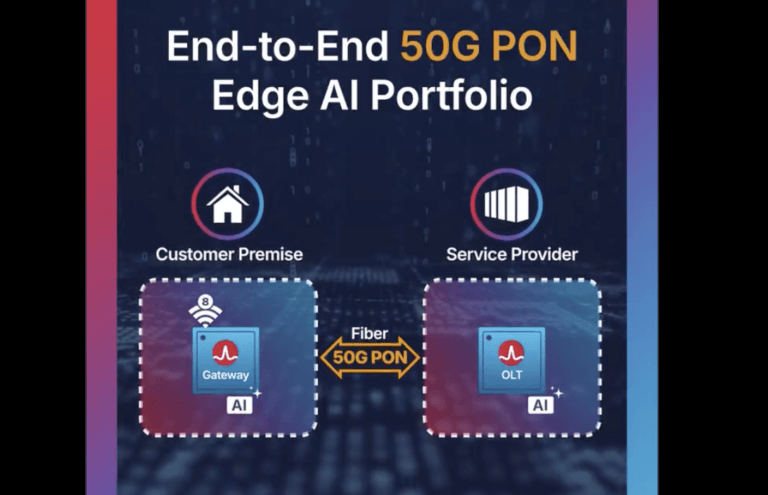
• Progress on 50G PON and 200G VHSP to support higher bandwidth and service density
• Evaluation of advanced security models, including quantum-related approaches
• Integration of AI into broadband networks for automation and performance optimization
• Exploration of low-latency use cases for gaming, streaming, and mission-critical services
“Global collaboration and setting common standards are essential to building a strong, interoperable ecosystem—from silicon to optics to systems—that enables high-quality, cost-effective broadband services,” said Eddy Barker, AVP of Access Architecture at AT&T.
🌐 Analysis
ireflyAT&T’s decision to host FSAN and ITU-T SG15 highlights how large operators continue to shape the optical access roadmap as the industry moves beyond mass FTTH rollouts toward capacity expansion and service differentiation. With peers across Asia and Europe already trialing 50G PON and higher-speed variants, aligning on standards now reduces fragmentation and accelerates vendor readiness across silicon, optics, and access platforms.