
• Home
  • About
  • Events Calendar
  • Blueprint Guidelines
  • Privacy Policy
  • Manage Email Delivery
  • NextGenInfra.io
No Result
View All Result
Converge Digest
Wednesday, June 3, 2026
  • Home
  • About
  • Events Calendar
  • Blueprint Guidelines
  • Privacy Policy
  • Manage Email Delivery
  • NextGenInfra.io
No Result
View All Result
Converge Digest
No Result
View All Result

Home » BT implements energy-saving ‘Cell Sleep’ at EE basestations

BT implements energy-saving ‘Cell Sleep’ at EE basestations

July 7, 2024
in 5G / 6G / Wi-Fi, All
A A

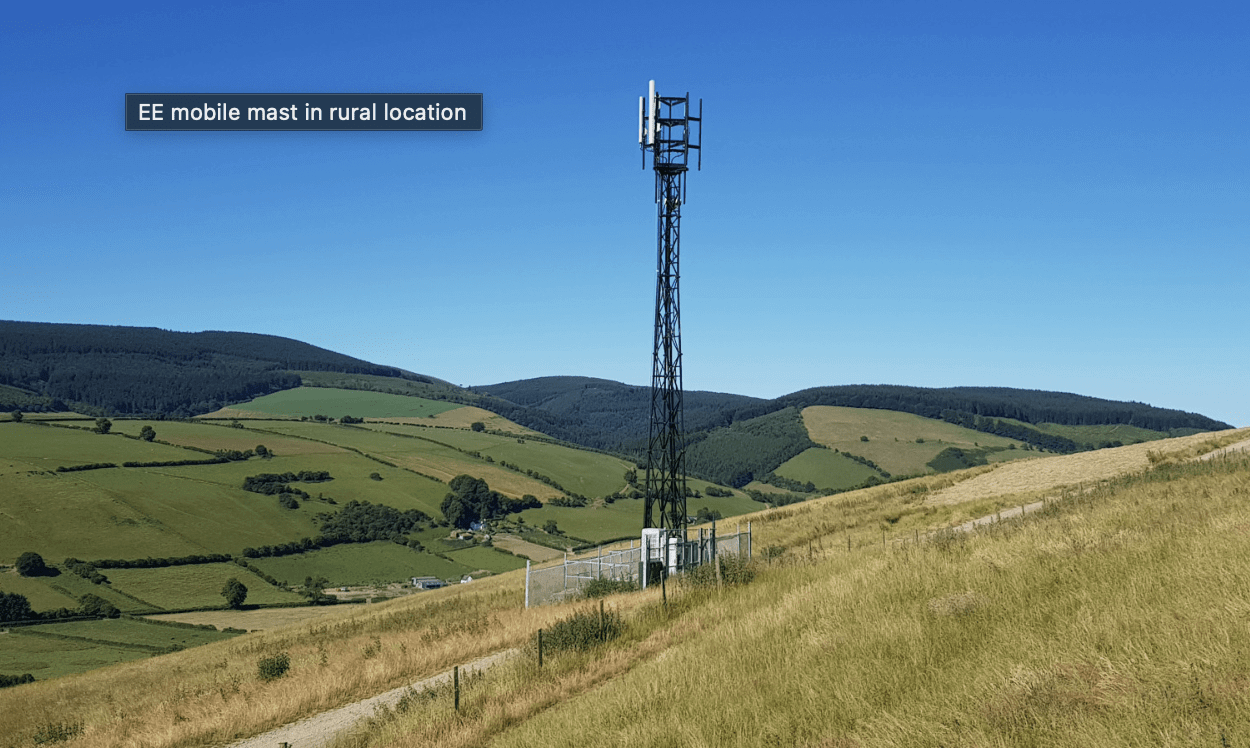
BT Group has successfully implemented energy-saving ‘cell sleep’ technology across its EE mobile sites nationwide. This move follows successful trials conducted across the UK.  The ‘cell sleep’ software reduces energy consumption by putting certain 4G LTE capacity carriers to sleep during predicted periods of low traffic, a prediction made possible through machine learning analysis of each site.

The system is designed to automatically wake up during busy periods and can respond swiftly to unexpected surges in demand, ensuring continuous service without interruptions. An even more efficient state, called ‘deep sleep,’ can be activated during extremely low demand periods, such as overnight. This dual functionality is provided by the RAN equipment suppliers at each EE site, utilizing BT Group’s site data to inform the statistical algorithms that manage these energy-saving measures.

BT Group’s Chief Networks Officer, Greg McCall, highlighted the significant energy savings potential across their networks, expecting the ‘cell sleep’ technology to save up to 2 KWh per site per day, amounting to 4.5 million KWh annually across EE’s network. This initiative aligns with BT Group’s broader efforts to increase network energy efficiency, which is crucial as the company’s networks account for 89% of its total energy consumption. These efforts are part of BT Group’s commitment to becoming a net-zero carbon emissions business by March 2031, complemented by the recent switch-off of its legacy 3G network and upgrades to more energy-efficient RAN equipment.

Key Points:

  • Nationwide Rollout:  ‘Cell sleep’ technology implemented across all EE mobile sites.
  • Energy Efficiency:  Expected savings of up to 2 KWh per site per day, totaling 4.5 million KWh annually.
  • Smart Activation:  Technology wakes up automatically during busy periods and can handle unexpected demand surges.
  • Deep Sleep Mode:  Further reduces power consumption during extremely low demand periods.
  • Net Zero Goal:  Part of BT Group’s strategy to achieve net-zero carbon emissions by March 2031.

Source: BT
Tags: BTGreenUK
ShareTweetShareSummarizeSummarize
Previous Post

Ericsson records US$1.1 billion impairment related to Vonage

Next Post

Multi-billion dollar deals are reshaping networking

Jim Carroll

Jim Carroll

Editor and Publisher, Converge! Network Digest, Optical Networks Daily - Covering the full stack of network convergence from Silicon Valley

Related Posts

Semiconductors

Fractile Raises $220M to Accelerate AI Inference Hardware

May 13, 2026
Subsea

New 512 Tbps North Sea Cable Targets UK–Nordic Connectivity Growth

April 15, 2026
Optical

Vector Photonics Demos PCSEL Free-Space Optical Link 

April 8, 2026
5G / 6G / Wi-Fi

Ericsson and Nokia Expand Roles in Virgin Media O2’s UK 5G RAN Modernization

March 31, 2026
Last Mile / Middle Mile

nexfibre to Create 8M-Premise UK Fibre Challenger in £2B Deal

February 23, 2026
Clouds and Carriers

BT Passes 21.4M FTTP Premises as Openreach Sustains Record Fiber Build

February 9, 2026
Next Post

Multi-billion dollar deals are reshaping networking

Categories

  • 5G / 6G / Wi-Fi
  • AI Infrastructure
  • All
  • Automotive Networking
  • Blueprints
  • Clouds and Carriers
  • Data Centers
  • Enterprise
  • Explainer
  • Feature
  • Financials
  • Last Mile / Middle Mile
  • Legal / Regulatory
  • Optical
  • Quantum
  • Research
  • Security
  • Semiconductors
  • Space
  • Start-ups
  • Subsea
  • Sustainability
  • Video
  • Webinars

Archives

Tags

5G All AT&T Australia AWS Blueprint columns BroadbandWireless Broadcom China Ciena Cisco Data Centers Dell'Oro Ericsson FCC Financial Financials Huawei Infinera Intel Japan Juniper Last Mile Last Mille LTE Mergers and Acquisitions Mobile NFV Nokia Optical Packet Systems PacketVoice People Regulatory Satellite SDN Service Providers Silicon Silicon Valley StandardsWatch Storage TTP UK Verizon Wi-Fi
Converge Digest

A private dossier for networking and telecoms

Follow Us

  • Home
  • About
  • Events Calendar
  • Blueprint Guidelines
  • Privacy Policy
  • Manage Email Delivery
  • NextGenInfra.io

© 2026 Converge Digest - A private dossier for networking and telecoms.

No Result
View All Result
  • Home
  • About
  • Events Calendar
  • Blueprint Guidelines
  • Privacy Policy
  • Manage Email Delivery
  • NextGenInfra.io

© 2026 Converge Digest - A private dossier for networking and telecoms.

This website uses cookies. By continuing to use this website you are giving consent to cookies being used. Visit our Privacy and Cookie Policy.
Go to mobile version