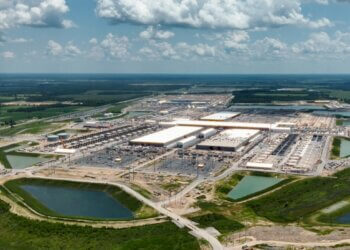
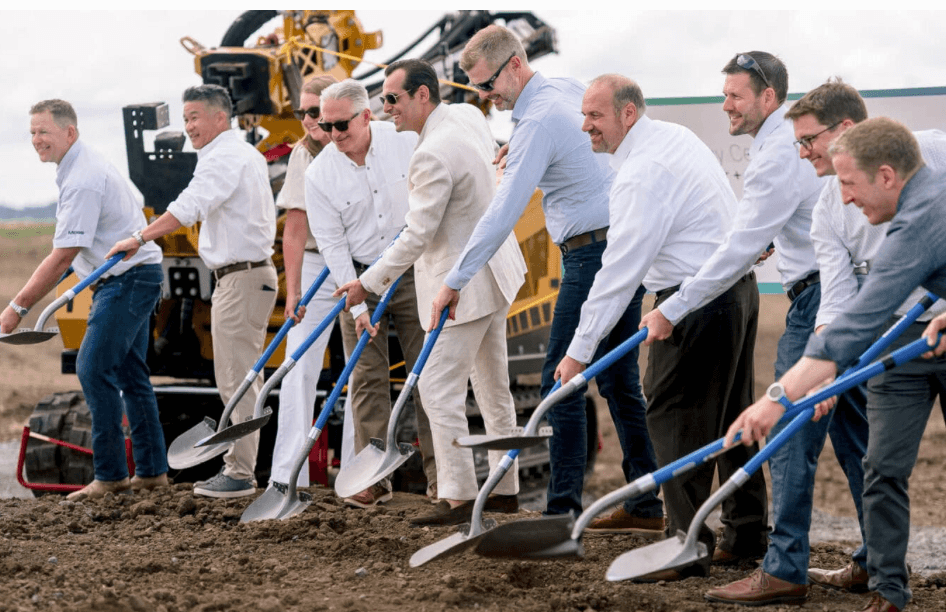
Cypress Creek Energy and Google have started construction on the first two phases of the Steel River Energy Center in Mississippi County, Arkansas, a project they describe as the largest solar energy development in the United States. The first phases will deploy 1.6 GWdc of solar generation and 1.9 GWh of battery energy storage, with the full three-phase development expected to reach 2.5 GWdc of solar capacity and 2.9 GWh of battery storage by 2029. Google has signed a power purchase agreement (PPA) covering the first two phases, making Steel River the largest solar and energy storage project in Google’s global energy portfolio. The project will supply electricity to the regional grid, supporting growing industrial demand from steel manufacturing, data centers, and other large energy users across Arkansas.
Steel River emphasizes domestic manufacturing throughout its supply chain. Cypress Creek said the project will use 100% U.S.-made solar modules from First Solar, battery storage systems from LG Energy Solution Vertech assembled in the United States with North American battery cells, solar trackers from Nextpower, and structural steel produced in Mississippi County, Arkansas. PACO Steel will manufacture more than 400,000 steel piles using over 142,000 tons of steel coil supplied by U.S. Steel’s Big River Steel facility. Cypress Creek estimates the project will create approximately 700 construction jobs during each construction phase and generate roughly $300 million in local tax revenue over its operating life.
Google and Cypress Creek also announced an $8 million community investment initiative alongside the project. Google will contribute $5 million toward energy affordability, weatherization, energy efficiency, and school programs across Arkansas, while Cypress Creek will invest $3 million through its community investment program, beginning with a $400,000 contribution for a new inclusive playground at Rivercrest Elementary School. Cypress Creek said it has commercialized 19 GW of renewable energy projects since its founding and currently operates or is constructing more than 6.8 GW of assets while maintaining a 19 GW development pipeline.
• First two phases: 1.6 GWdc solar generation and 1.9 GWh battery storage.
• Full project target by 2029: 2.5 GWdc solar and 2.9 GWh battery storage.
• Google signed a PPA covering the first two phases.
• Project will connect to the regional grid to support industrial growth, including data centers and steel manufacturing.
• Uses 100% U.S.-made First Solar modules.
• Battery systems supplied by LG Energy Solution Vertech and assembled in the United States.
• More than 400,000 structural steel piles manufactured by PACO Steel using Arkansas-produced steel.
• Approximately 700 construction jobs expected during each project phase.
• Estimated $300 million in local tax revenue over the project’s lifetime.
• Google and Cypress Creek committed a combined $8 million for community investment initiatives.
“Steel River is the largest solar project with energy storage in the country, and it’s being built with 100% U.S.-made solar panels and structural steel. That’s good for American manufacturing, good for Arkansas, and good for the country’s energy future,” said Kevin Smith, CEO of Cypress Creek Energy.
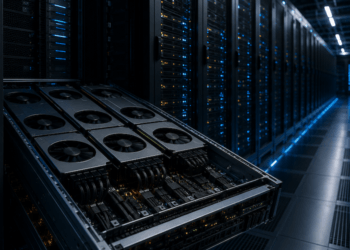
🌐 Analysis: The announcement reflects the accelerating convergence between AI infrastructure expansion and utility-scale energy development. As hyperscale cloud operators continue building new AI data centers, securing long-term power supplies through dedicated renewable generation and battery storage has become an increasingly important strategy. Google’s participation underscores how hyperscalers are moving beyond renewable energy procurement toward enabling large-scale generation projects that can support both grid reliability and rapidly growing AI workloads.
The project also highlights a broader industry trend toward domestic energy supply chains. By sourcing U.S.-made steel, solar modules, trackers, and battery systems, Steel River aligns with ongoing efforts to expand American manufacturing capacity while supporting the rapid deployment of utility-scale clean energy needed for data centers, industrial electrification, and grid modernization.