Intel and Google expanded a multiyear collaboration aimed at the next phase of AI and cloud infrastructure, with Intel Xeon CPUs continuing to power parts of Google Cloud and the two companies broadening co-development around custom ASIC-based infrastructure processing units, or IPUs. Intel said the effort will span multiple future Xeon generations and target performance, energy efficiency, and total cost of ownership across Google’s global infrastructure.
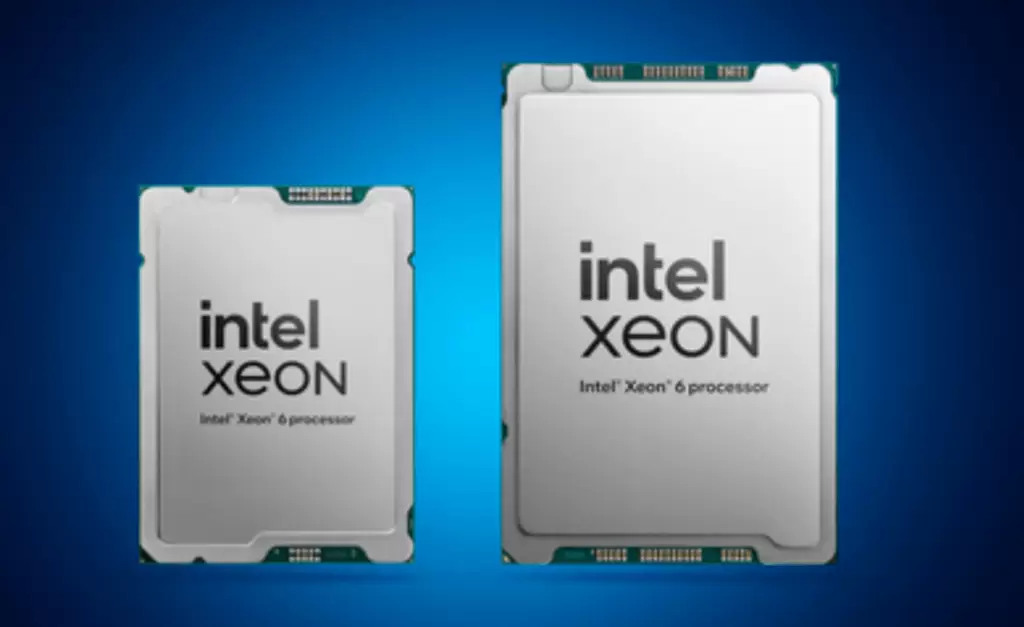
Google Cloud already deploys Intel Xeon 6 processors in its C4 and N4 instances, giving the announcement a concrete product base rather than a purely forward-looking roadmap. The companies framed the deal around the growing importance of CPUs in heterogeneous AI systems, where host processors manage orchestration, data movement, inference support, and general-purpose workloads that sit alongside accelerators.
Intel and Google also said they will expand work on IPUs that offload infrastructure tasks such as networking, storage, and security from host CPUs. Intel CEO Lip-Bu Tan said AI infrastructure needs balanced systems, not accelerators alone, while Google’s Amin Vahdat said Intel’s Xeon roadmap supports Google’s performance and efficiency requirements as AI workloads continue to scale.
- Intel Xeon processors will continue powering Google Cloud infrastructure across AI, inference, and general-purpose workloads.
- Google Cloud’s current Intel-based footprint includes C4 and N4 instances built on Xeon 6.
- The partners plan to align across multiple future Xeon generations.
- The collaboration also expands co-development of custom ASIC-based IPUs for offloading networking, storage, and security functions.
- Intel and Google positioned CPUs plus IPUs as a core control layer for heterogeneous AI systems, complementing accelerator-heavy architectures.
“CPUs and infrastructure acceleration remain a cornerstone of AI systems—from training orchestration to inference and deployment,” said Amin Vahdat, SVP & Chief Technologist, AI Infrastructure, Google. “Intel has been a trusted partner for nearly two decades, and their Xeon roadmap gives us confidence that we can continue to meet the growing performance and efficiency demands of our workloads.”
🌐 Analysis: This announcement fits a broader industry shift toward heterogeneous AI infrastructure, where value no longer sits only in GPUs or AI accelerators but also in the CPU, network, memory, and infrastructure-offload layers that keep large clusters fed and utilized. Google’s own AI infrastructure organization under Amin Vahdat spans custom silicon, data centers, networking, supply chain, and operations, which makes this partnership notable as a signal that Google still sees strategic value in x86 host compute and infrastructure offload even as it advances its own accelerator roadmap.
For Intel, the deal gives fresh evidence that Xeon remains relevant in AI-era system design, especially for orchestration, inference-adjacent tasks, and general cloud workloads. The collaboration also strengthens Intel’s argument that AI data centers will require balanced platforms built from CPUs, accelerators, and IPUs rather than a single-chip answer, a message that has also surfaced in other recent Intel AI infrastructure announcements.
🌐 We’re tracking the latest developments in networking silicon. Follow our ongoing coverage at: https://convergedigest.com/category/semiconductors/