Intel will repurchase the remaining 49% stake in its Fab 34 joint venture in Ireland from Apollo Global Management for $14.2 billion, restoring full ownership of one of its most advanced European manufacturing sites. The transaction reverses a 2024 deal in which Apollo invested $11.2 billion for a minority stake, providing Intel with capital flexibility during a critical phase of its process roadmap expansion.
Intel will fund the repurchase using cash on hand and approximately $6.5 billion in new debt. The company expects the move to be accretive to earnings per share and to strengthen its credit profile starting in 2027. The decision reflects improved financial discipline and a stronger balance sheet, as Intel aligns its capital structure with long-term manufacturing and foundry strategy priorities.
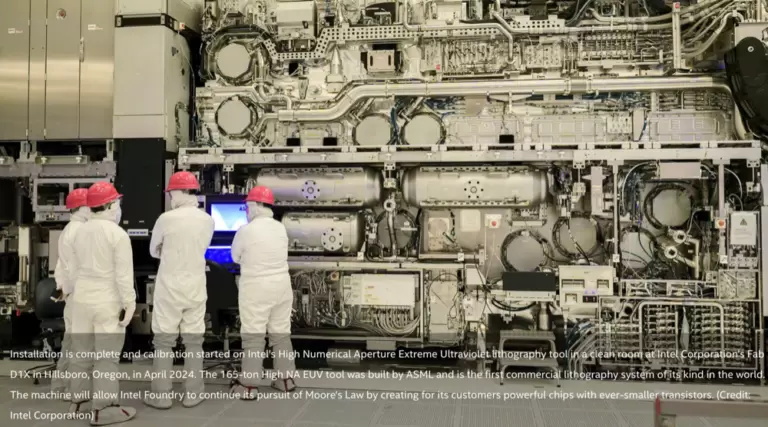
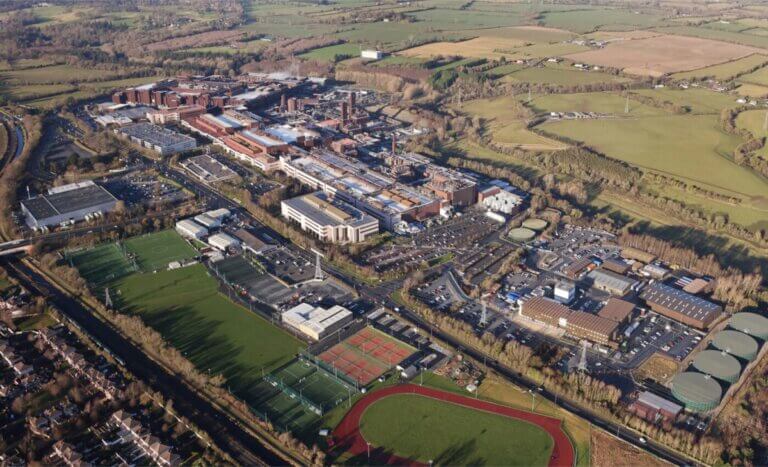
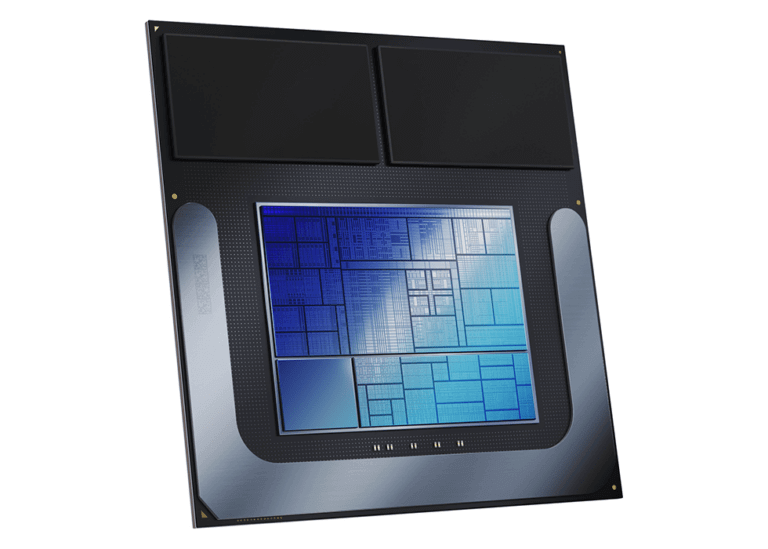
Fab 34 in Leixlip, Ireland, remains central to Intel’s global production footprint. The facility supports high-volume manufacturing of chips based on Intel 4 and Intel 3 process nodes, including processors such as Core Ultra and Xeon 6. Intel continues to expand capacity at the site as demand rises for AI-driven compute infrastructure, where advanced CPUs play a foundational role alongside accelerators.
- Intel will repurchase Apollo’s 49% stake in Fab 34 for $14.2 billion
- Original 2024 transaction valued the stake at $11.2 billion
- Funding includes cash plus ~$6.5 billion in new debt issuance
- Fab 34 produces chips on Intel 4 and Intel 3 process nodes
- Site supports products including Core Ultra and Xeon 6 CPUs
- Transaction expected to be EPS accretive and improve credit profile by 2027
“We thank Apollo for their ongoing partnership on our journey to build a world-class wafer fabrication and advanced packaging foundry anchored in trust, consistency, and execution,” said Intel CFO David Zinsner.
| Intel in Ireland: Timeline | |
| 1989 | Intel selects Leixlip, County Kildare, as the base for its European manufacturing operations, establishing what becomes one of the company’s most important international production campuses. |
| 1990 | Intel formally begins operations in Ireland and starts building out its Leixlip manufacturing base. |
| 1993 | Intel Ireland manufactures its first computer chip, marking the start of long-term semiconductor production at the site. |
| 1994 | Fab 10 opens officially, expanding Intel’s production footprint in Ireland. |
| 1995 | Intel announces plans for Fab 14, continuing the rapid scale-up of the Leixlip campus. |
| 1998 | Fab 14 opens, reinforcing Ireland’s role in Intel’s global manufacturing network. |
| 2000 | Intel announces a $2 billion investment to build Fab 24 in Leixlip, one of the largest industrial investments in Ireland at the time. |
| 2004 | Fab 24 opens and becomes a major 300mm wafer manufacturing facility in Intel’s worldwide network. |
| 2019 | Intel marks 30 years in Ireland, underscoring the long-run strategic importance of the Leixlip campus. |
| 2021–2022 | Intel commits roughly €17 billion to Fab 34, a next-generation expansion designed to bring EUV lithography and advanced process manufacturing to Ireland. |
| September 2023 | Intel officially opens Fab 34 and starts high-volume manufacturing on Intel 4. The company describes it as its first use of EUV lithography in high-volume manufacturing in Europe. |
| June 2024 | Apollo-managed funds agree to invest about $11 billion for a 49% equity interest in a joint venture related to Fab 34, giving Intel additional capital flexibility while Intel retains operational control. |
| April 1, 2026 | Intel announces a definitive agreement to repurchase Apollo’s 49% stake in the Fab 34 joint venture for $14.2 billion, restoring full ownership of the Ireland fab. |
🌐 Analysis: Intel’s decision to unwind the Fab 34 joint venture highlights a shift toward tighter control of strategic manufacturing assets as competition intensifies in advanced process nodes. The move follows broader industry patterns where chipmakers balance capital efficiency with supply chain sovereignty, particularly in regions like Europe.
Intel’s renewed ownership also aligns with its IDM 2.0 strategy and ongoing investments in leading-edge nodes such as Intel 18A, while competitors including Taiwan Semiconductor Manufacturing Company and Samsung Electronicscontinue expanding global foundry capacity.
🌐 We’re tracking the latest developments in networking silicon. Follow our ongoing coverage at: https://convergedigest.com/category/semiconductors/