Intel releases Loihi research chip for neuromorphic processing
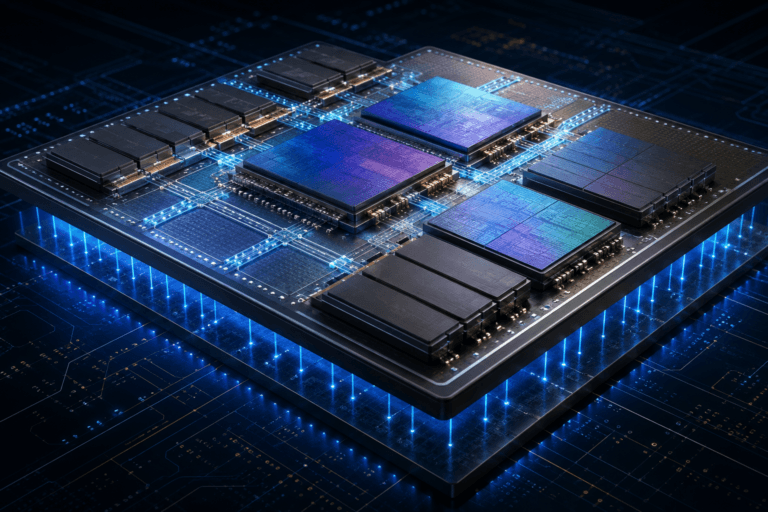
Intel introduced an 8 million-neuron neuromorphic system comprising 64 Loihi research chips — codenamed Pohoiki Beach.
Intel says the highly specialized processor applies principles found in biological brains to computer architectures. The Loihi devices aime to process information up to 1,000 times faster and 10,000 times more efficiently than CPUs for specialized applications like sparse coding, graph search and constraint-satisfaction problems.
“We are impressed with the early results demonstrated as we scale Loihi to create more powerful neuromorphic systems. Pohoiki Beach will now be available to more than 60 ecosystem partners, who will use this specialized system to solve complex, compute-intensive problems,” stated Rich Uhlig, managing director of Intel Labs.
Every article published by Converge Digest is researched, curated, fact-checked and editorially reviewed by Jim Carroll, Editor & Publisher. AI-assisted drafting may be used to accelerate production, but all content is reviewed, refined and approved prior to publication.
You just read about Intel. One of the companies whose work it now carries:
LightLogic built High-speed optical transceivers. What became of it?
LightLogic brought High-speed optical transceivers to Optical. That work was distinctive enough to lead to its acquisition by Intel for US$409M. The standalone name now passes into the archive — but the team and technology continue inside Intel today. One of 430 names here whose work outlived the company.
You just read about All. A technology from the archive that helped get us here:
Google/Alphabet Project Loon served 2011–2021. What ultimately replaced it?
Google/Alphabet Project Loon solar-powered balloons drifting in the stratosphere (~20 km), steering by rising and falling into different wind layers, relaying LTE from ground stations to phones far below. Its job passed to Unit economics — but the problem it solved, and the ideas it proved, live on in what replaced it. The standard rests here in the archive. One of 198 technologies here that opened a door and then held it for the next.


 “We are impressed with the early results demonstrated as we scale Loihi to create more powerful neuromorphic systems. Pohoiki Beach will now be available to more than 60 ecosystem partners, who will use this specialized system to solve complex, compute-intensive problems,” stated Rich Uhlig, managing director of Intel Labs.